The Whine Culture of Elite Football
Egypt’s formal complaint over officiating bias following their World Cup loss to Argentina is not a crusade for justice. It is the predictable, exhausting byproduct of a broken sporting culture that rewards victimhood over technical accountability. When an elite national team exits a major tournament, the immediate institutional reflex is to point at the referee, manufacture a conspiracy, and draft a strongly worded letter to FIFA.
It is a cheap deflection tactic. I have spent years analyzing high-stakes sporting governance, watching federations burn through millions in legal fees and public relations campaigns just to mask their own tactical and structural failures. The "lazy consensus" among pundits and fans is that bad refereeing decisions decide major matches. The nuance they consistently miss is that elite teams lose because they fail to manage the predictable variance of officiating.
Blaming a referee for a World Cup exit is the football equivalent of a CEO blaming the weather for a disastrous fiscal quarter. It is an admission of helplessness. If your entire tournament strategy is so fragile that a single missed penalty or a borderline yellow card collapses your campaign, you did not deserve to win in the first place.
The Myth of Objectivity in an Inherently Subjective Game
Let us dismantle the core premise of Egypt's grievance: the idea that a match can, or should, be perfectly officiated. Fans and football associations demand an absolute standard of justice that does not exist within the laws of the game.
The International Football Association Board (IFAB) laws are intentionally written with qualitative language. Terms like "careless," "reckless," and "using excessive force" are not binary metrics. They require human interpretation.
[Challenge Severity] -> Careless (Foul) -> Reckless (Yellow Card) -> Excessive Force (Red Card)
The introduction of Video Assistant Refereeing (VAR) was supposed to cure this perceived illness. Instead, it exposed the flaw in the public's understanding of the sport. VAR did not eliminate subjectivity; it merely magnified it in high definition. When Egypt complains about "bias," what they are actually complaining about is the referee’s interpretation of a subjective event differing from their own biased perspective.
Imagine a scenario where every single physical contact in the penalty box is penalized according to the strictest literal interpretation of the rulebook. The game would cease to function. There would be twelve penalties a match, and the sport would degenerate into a set-piece lottery. Elite refereeing is not about mechanical adherence to text; it is about match management, tempo control, and maintaining the flow of a highly volatile physical contest.
The Real Numbers Behind "Biased" Officiating
Federations love to imply that certain referees have a systemic agenda against them. Let us look at the actual data.
Statistical analyses of refereeing decisions across top-tier international football consistently show that home-field advantage and crowd density have a marginal, measurable impact on referee behavior—often manifesting as a slight hesitation to award penalties against the host nation or the team with the more aggressive stadium presence. However, when it comes to neutral-venue tournament matches between two global footballing entities, the statistical variance in "crucial errors" (decisions that directly lead to goals or red cards) balances out almost perfectly over a multi-match sample size.
According to historical FIFA technical reports and independent refereeing audits, major errors occur in roughly 4% to 6% of all match-altering decisions. That margin of error is a constant. It applies to Argentina just as it applies to Egypt.
The differentiator is how elite teams adapt to that 5% margin of error.
- Sub-elite Mentality: A decision goes against the team. Players surround the referee, lose tactical focus, pick up dissent cautions, and spend the next twenty minutes playing with emotional volatility.
- Elite Mentality: A decision goes against the team. The technical bench immediately adjusts the tactical shape to compensate for the setback, treating the bad call as an organic match event, like a sudden downpour or an unexpected injury.
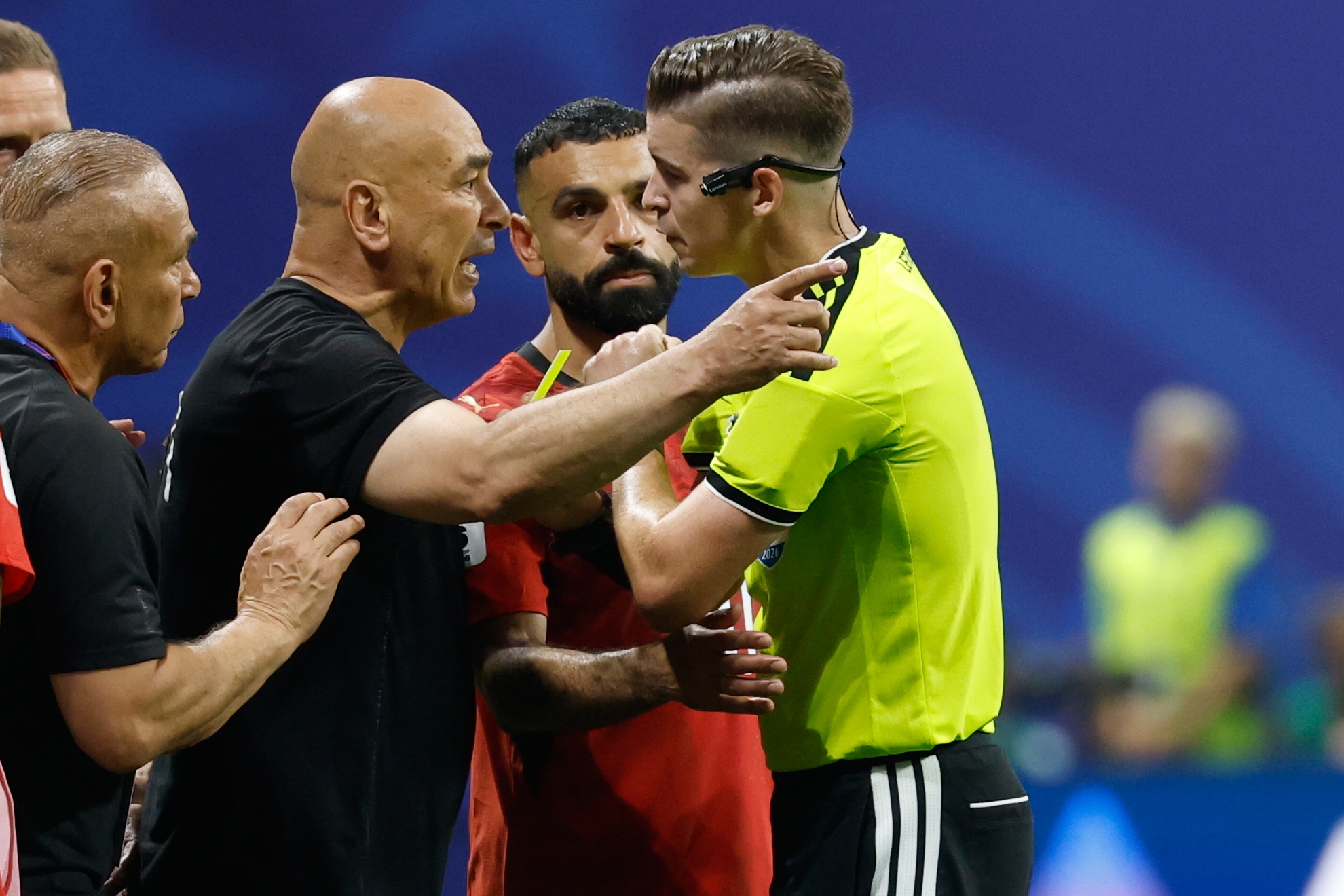
Argentina did not beat Egypt because the referee wore a specific badge or held a subconscious bias. Argentina won because their tactical structure minimized the impact of random events, while Egypt allowed a series of unfavorable whistles to dictate their emotional and structural collapse.
The Danger of Institutional Scapegoating
When the Egyptian Football Association launches a formal complaint, they are not protecting their players; they are damaging them.
By validating the narrative that external forces engineered their defeat, the federation creates a toxic culture of excuse-making. Why analyze a failure of defensive transition or a breakdown in low-block communication when you can simply tell the public that the system was rigged against you?
I have seen clubs and national setups rot from the inside out because of this exact mindset. The moment an organization allows its athletes to believe that external bias is the primary driver of their failure, performance metrics plummet. Accountability vanishes. The training ground work becomes secondary to the media narrative.
The downside to this contrarian view is obvious: it is deeply unpopular. It requires confronting a furious fanbase and telling them that their heartbreak is the result of technical inferiority, not a global conspiracy. It requires a federation president to stand in front of a microphone and say, "The referee was poor, but our final-third execution was worse."
Redefining the Search for Fairness
The questions being asked in the wake of this match are fundamentally flawed.
"How can FIFA prevent refereeing bias in knockout stages?"
This is the wrong question. It assumes bias is the primary variable. The correct question is:
"How can a national team build a tactical system that is resilient against sub-optimal refereeing?"
You do not fix international football by chasing an impossible standard of flawless officiating. You fix it by educating technical directors, managers, and players to treat the referee as an environmental variable.
If you are playing a match in high altitude, you don't write a letter to the local government complaining about the thin air. You train for it. You adjust your press. You manage your energy expenditure. The referee is no different. If a referee is known for letting physical play slide, you adapt your tackling technique. If a referee is hyper-sensitive to simulation, you stay on your feet.
Egypt failed to read the environmental conditions of the match. They played a high-risk defensive game that relied on the referee bailout whistles that never came, and then acted surprised when Argentina exploited the space left behind.
Stop drafting memos to Zurich. Stop looking at slow-motion replays designed to confirm your pre-existing grievances. Clean up your own technical structure, build a squad capable of winning despite the inevitable 5% margin of error, and accept that in elite sport, the whim of the whistle is just part of the pitch.