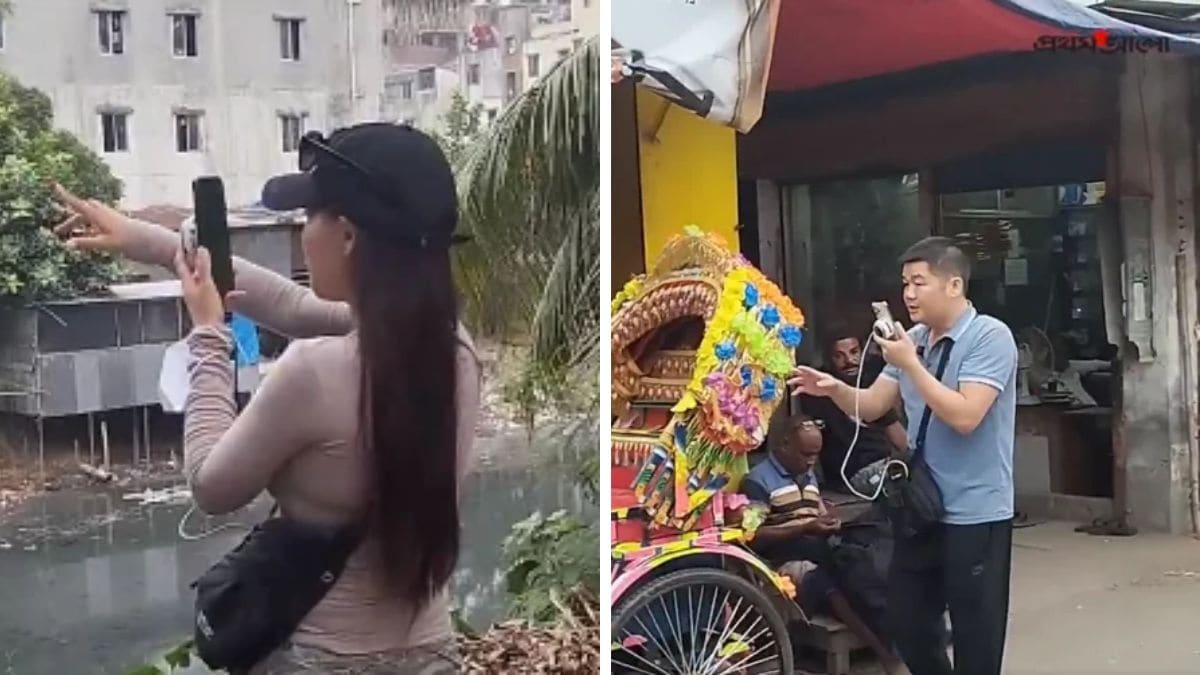
The digital outrage machine loves a simple villain. Right now, that villain is a handful of Chinese livestreamers wandering through the impoverished neighborhoods of Dhaka, pointing their cameras at open sewers and crumbling concrete, and telling their millions of viewers they are broadcasting live from New Delhi.
The lazy consensus is already written in stone. Western tech reporters and geopolitical commentators are framing this as a coordinated propaganda campaign, a malicious sequel to the exploitative "poverty porn" videos that got creators banned across sub-Saharan Africa a few years ago. They want you to believe this is purely a story about nationalist malice and rogue creators gaming geography for cheap heat.
They are completely missing the actual engine driving this train.
If you spend any real time analyzing the creator economy, cross-border monetization, and recommendation engines, you realize the Dhaka-as-Delhi grift is not an anomaly. It is the inevitable, mathematical output of how modern social platforms reward attention. Blaming the streamers while ignoring the architecture of the platforms is like blaming the dice for the casino taking your house.
The Economics of Digital Arbitrage
Let us look at the actual mechanics of what is happening on the ground in South Asia.
Following crackdowns by governments in Zambia, Malawi, and Kenya—sparked largely by high-profile investigations into creators exploiting local children for custom greeting videos—the low-hanging fruit of poverty content dried up. Platforms like Douyin, Kuaishou, and TikTok tightened moderation around explicit child exploitation in Africa.
Creators did not suddenly develop a conscience. They simply looked at a map and calculated their return on investment.
South Asia offers high population density, low operational costs, and an audience back home primed for geopolitical friction. Why film in Dhaka and label it New Delhi? Because the algorithm does not care about cartography. It cares about retention, comment velocity, and rage-bait engagement.
- Supply-side economics: Filming in Bangladesh is cheap, visa access is straightforward, and local authorities have been slower to police foreign livestreamers than their counterparts in India, where geopolitical tensions make a Chinese camera crew a magnet for immediate police scrutiny.
- Demand-side economics: Domestic viewers on Chinese social platforms have a high appetite for content that reinforces narratives of national superiority. A video tagged "New Delhi" showing extreme poverty generates ten times the nationalist chest-thumping and comment-section warfare than a video accurately tagged "Dhaka."
This is engagement arbitrage. The creator takes a low-cost asset (raw footage of urban poverty in Bangladesh) and rebrands it as a high-yield emotional trigger (the perceived rival power of India).
I have watched media companies and creator networks burn millions of dollars trying to manufacture organic reach through high-production storytelling, only to get crushed in the feeds by a guy with a cracked iPhone screen exploiting a geopolitical nerve. The algorithm is blind to truth. It only measures dwell time and emotional arousal. Anger and superiority are the two highest-converting emotions on the internet.
The Platform Complicity Nobody Wants to Admit
The mainstream coverage of this trend treats tech platforms as passive victims of bad actors. That is nonsense.
Recommendation engines operate on collaborative filtering and reinforcement learning. When a user pauses for three seconds on a video claiming to show the squalor of New Delhi, the system logs a positive signal. It immediately serves five more videos with similar metadata, similar visual markers, and similar audio cues.
If you want to understand why this happens, look at the foundational research on algorithmic amplification by scholars like Zeynep Tufekci or the internal leaks from major Silicon Valley firms over the past decade. Every major platform—whether based in Beijing or Menlo Park—relies on the exact same behavioral psychology. Outrage keeps eyeballs glued to glass. Eyeballs sell ads and virtual gifts.
When a streamer goes live from Dhaka under a fake location tag, the platform's backend infrastructure knows exactly where that IP address is pinging from. They have the GPS coordinates. They have the cell tower triangulation. They have the device metadata.
They do not shut it down immediately because the live stream is generating virtual roses, rockets, and super-chats, of which the platform takes a 30% to 50% cut. The platforms only step in when the geopolitical blowback threatens their regulatory standing or triggers an international PR crisis. Moderation is never proactive when the revenue counter is spinning upward.
Why Geopolitical Finger-Pointing is a Distraction
People ask whether this is state-sponsored disinformation. They wonder if Beijing is paying these streamers to smear India's global standing.
That question gives bureaucratic propaganda far too much credit and completely misunderstands how decentralized creator economies work. State propaganda is usually stiff, expensive, and painfully obvious. This is the opposite. It is agile, bottom-up, and driven entirely by micro-capitalism.
A twenty-four-year-old streamer with a gimbal and a translation app does not need a government directive to figure out that mislabeling Dhaka as New Delhi doubles his daily tips. He just looks at his creator dashboard. He sees the analytics spike. He sees the comments flooding in. He adjusts his title, alters his geotag, and hits "Go Live" again the next morning.
Imagine a scenario where every major social platform stripped away algorithmic amplification for unverified location tags and demonetized content relying on cross-border disparagement. Overnight, the Dhaka-to-Delhi pipeline would evaporate. Not a single streamer would stay in those neighborhoods if the financial incentive dropped to zero.
Instead, governments play whack-a-mole. They ban a few accounts, deport a handful of creators, and issue stern diplomatic statements. Meanwhile, the underlying reward structure remains completely untouched, waiting for the next batch of creators to find the next regulatory blind spot.
The Western Hypocrisy in the Room
Before anyone in the West gets too comfortable pointing fingers at Chinese platforms and creators, take a hard look at YouTube and Instagram.
For over a decade, Western "travel vloggers" have built massive, lucrative empires doing the exact same thing. They fly into the poorest districts of Mumbai, Manila, or Cairo, stick a wide-angle lens into the faces of locals living in extreme hardship, and slap a thumbnail on the video with glowing red arrows and titles like "INSIDE THE MOST DANGEROUS SLUM ON EARTH."
They monetize the exact same voyeurism. They sell the exact same illusion of superiority to an audience sitting comfortably in suburban living rooms. The only difference is that Western creators rarely need to fake the location because their audience is content to consume poverty as pure spectacle rather than geopolitical rivalry.
To be completely transparent about the flaws in my own argument: cracking down strictly on location spoofing and poverty tourism carries a massive collateral risk. Aggressive algorithmic filtering often ends up silencing legitimate citizen journalists, human rights activists, and local creators documenting real systemic failures in their own communities. If you build a system blind enough to catch every grifter in Dhaka, you will inevitably bury the local reporter trying to expose actual government corruption.
There is no clean technological fix for human voyeurism.
How to Actually Break the Cycle
If platforms, policymakers, and audiences actually care about stopping the exploitation of impoverished communities for digital clout, the current playbook is useless. Press releases and isolated bans do nothing. Real disruption requires attacking the mechanics of distribution and monetization.
- Enforce Cryptographic Location Verification for News and Commentary: If a creator tags a specific city or country while broadcasting live, the platform should require hardware-level GPS verification. If the metadata does not match the tag, the stream gets stripped of algorithmic distribution and demonetized automatically.
- Demonetize Voyeuristic Engagement: Platforms already demonetize copyrighted music within seconds using automated fingerprinting. They can easily deploy computer vision models to detect unconsented filming in extreme poverty zones and strip ad revenue and virtual gifting capabilities from those streams. Take the money out of the room, and the grifters leave.
- Shift Liability to the Distribution Layer: Stop treating social media companies as neutral telecom pipes when their algorithms actively promote fraudulent framing. When an engine pushes a mislabeled video to ten million people, the platform is acting as an editor, not a host.
Until the financial incentives of the feed are rewritten, nothing changes. The cameras will keep rolling, the tags will keep lying, and the outrage machine will keep printing money off the backs of people who cannot even afford the smartphones used to film them. Stop yelling at the actors on the stage and start cutting the power to the theater.