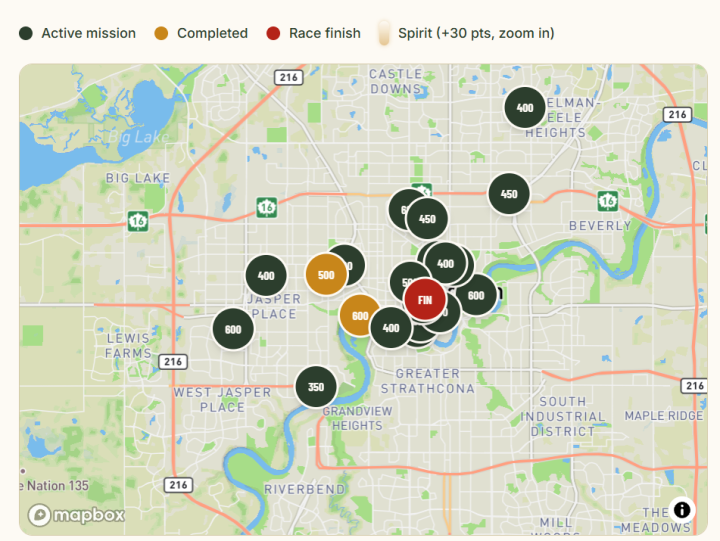
Every few months, a well-meaning local developer builds another digital tracker, map, or gamified platform designed to cure urban isolation. The premise is always the same: if we just put a shiny UI between a citizen and their sidewalk, they will suddenly become a passionate urban explorer.
It is a comforting fantasy. It is also entirely wrong.
I have spent the last decade watching civic tech startups burn millions of dollars in venture capital and municipal grants trying to code away a social problem with a software solution. They build leaderboards for neighborhood walks, hand out digital badges for visiting local cafes, and pitch city councils on the idea that sluggish civic engagement is merely a UX bottleneck.
Let me save you the trouble. People do not stay inside because they lack an interactive map of obscure murals. They stay inside because their environments are hostile, their schedules are punishing, and most neighborhood amenities are designed for cars, not human beings.
The Fallacy Of Forced Discovery
The lazy consensus in modern civic technology relies on a deeply flawed psychological model. It assumes human curiosity is a resource just waiting for an app notification to unlock.
If you download an application that tells you to walk down a random alleyway in sub-zero weather because a local historian tagged a heritage brick, you are not being an explorer. You are performing unpaid QA testing for a civic booster club.
Real exploration is friction-driven and necessity-based. People walk when their daily routines force them to interact with physical space. They stumble upon bakeries, bookstores, and quiet parks because they ran out of milk, missed a bus, or took a wrong turn while avoiding construction.
When you digitize discovery, you sanitize it. You turn a serendipitous human experience into a checklist. And nobody wants to treat their Saturday morning like an corporate sprint review.
"A city is not a database, and a neighborhood is not a video game waiting for a patch to make it engaging."
Why The Map Is Not The Territory
Let us look at the mechanics of what these neighborhood exploration apps actually do. They aggregate data from open municipal APIs, slap a vector-based map interface over it, and reward users with micro-dopamine hits for checking into specific coordinates.
This approach ignores the fundamental rules of behavioral economics.
First, notification fatigue is real. The moment an app pings you with "Discover a hidden gem near you!", your brain categorizes it as marketing noise. You swipe it away.
Second, intrinsic motivation always beats extrinsic rewards. If a person needs a digital sticker of a beaver to walk three blocks to a park, they will stop walking the moment the app stops handing out stickers. You have not built a community habit; you have built a temporary feedback loop that degrades as soon as the novelty wears off.
+----------------------------+-----------------------------------+
| The App Maker Approach     | The Reality On The Ground         |
+----------------------------+-----------------------------------+
| Gamified neighborhood maps | Car-centric stroads & bad zoning  |
| Digital achievement badges | Exhaustion from modern workloads  |
| Notification prompts       | Lack of human-scaled public benches|
+----------------------------+-----------------------------------+
The Real Problem With Our Concrete Boxes
If we want people to engage with their surroundings, we have to stop blaming human psychology and start looking at urban design.
I've watched cities spend six figures on localized mobile apps while refusing to fix the broken sidewalk outside a public library. They fund software incubators while cutting park maintenance budgets. It is institutional displacement of responsibility. It is easier to hire a developer to build a cute React Native interface than it is to zone out suburban strip malls, install benches, plant mature trees, or calm traffic on residential streets.
When a neighborhood is designed so that a gallon of milk requires a two-ton vehicle and a trip down a four-lane arterial road, no app in the world is going to make people walk there for fun.
The barrier to entry for urban exploration isn't a lack of information. It is infrastructure.
What Happens When You Remove The UI
Imagine a scenario where every civic engagement app is permanently deleted from every smartphone tonight. What changes?
For the average resident, absolutely nothing. They still walk their dog, grab coffee at the closest corner shop, complain about the potholes on 104th Avenue, and wave to the neighbor across the lane.
For the tech founders, it is a crisis because they realize their business model depended entirely on manufacturing a problem that architecture had already solved centuries ago: physical proximity.
When you remove the digital layer, you are forced to look at the physical reality of the place you live. Are there continuous sidewalks? Are there public restrooms? Is there a bench where an elderly person can sit without feeling like they are sitting in the middle of a highway?
Those are the questions that matter. An app does not answer them. An app hides them behind a clean vector interface.
Stop Building For The Persona
Product managers love personas. They invent fictional characters named "Curious Chloe" who wakes up on a Tuesday morning yearning to learn about the structural history of brutalist parkades.
Curious Chloe does not exist.
Real people are tired, busy, and overstimulated. When they step outside, they want efficiency, safety, and comfort. If a neighborhood offers those things, people explore it naturally. They wander because the streets are safe, narrow, and interesting. They linger because public spaces invite lingering.
If your neighborhood feels like a wind-swept parking lot surrounded by chain-link fences, no amount of gamified gamification will convince anyone to explore it.
Stop writing code for places that hate pedestrians. Fix the streets, turn off the push notifications, and let people find their own way home.