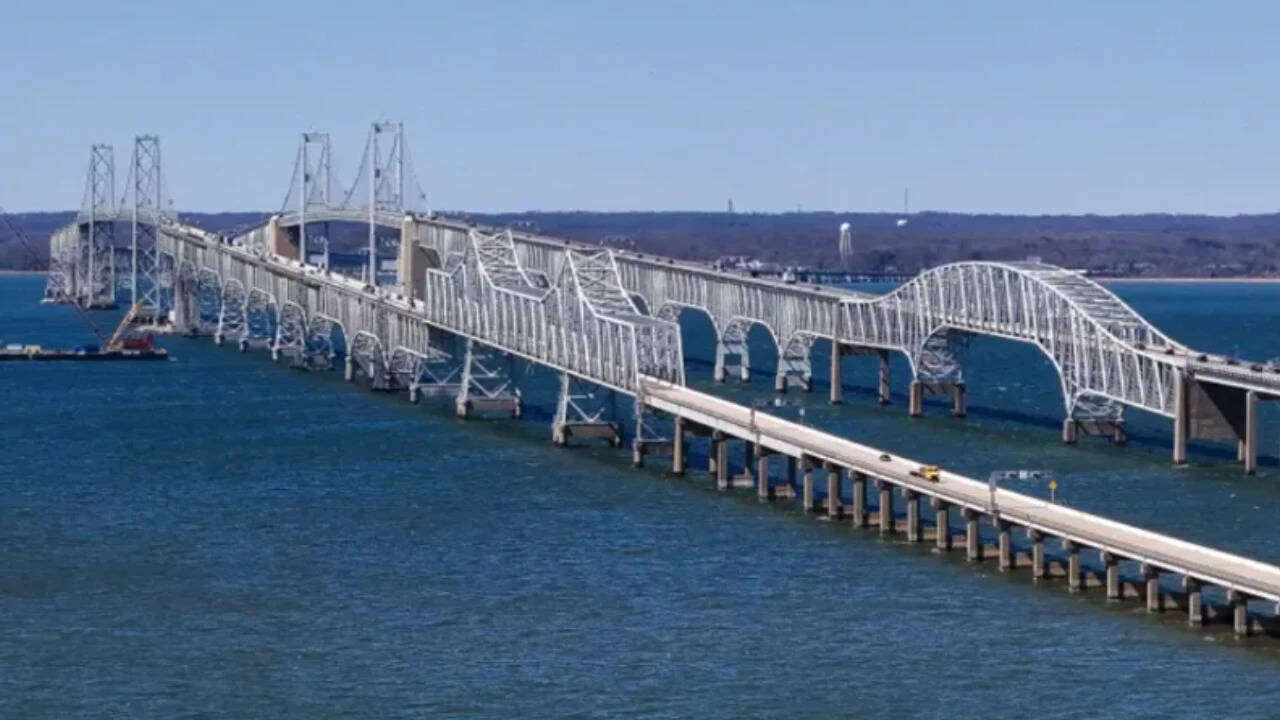
Every single summer, the ritual plays out with agonizing predictability. Tens of thousands of cars idle on Route 50, drivers bake in unmoving metal boxes, and local politicians step in front of television cameras to deliver the exact same tired monologue. They point toward the horizon, lament the bottleneck at the Chesapeake Bay Bridge, and demand another span of concrete. Maryland planners nod along, drafting blueprints for multi-billion-dollar megaprojects while agricultural groups on the Eastern Shore hold out their hands, demanding millions in preservation subsidies to protect farmland from the coming asphalt tide.
It is a masterclass in treating a symptom while terminal cancer eats the patient.
I have watched public infrastructure budgets bleed out across the mid-Atlantic for decades. The premise driving this entire debate is fundamentally flawed. We are told that the choke point on the Eastern Shore is a capacity problem. We are told that if we simply pour enough concrete, widen enough shoulders, and pave enough marshland, traffic will flow and rural heritage will be preserved.
The data says otherwise, and basic economics executes the rest.
The Induced Demand Trap Nobody Dares Name
Let us get something straight immediately. Building another bridge across the Chesapeake will not solve congestion. It will accelerate it.
Every transportation economist worth their salt understands induced demand, yet elected officials treat it like a dark art. When you decrease the friction of travel by expanding highway capacity, you do not permanently relieve traffic. You simply invite more volume until congestion returns to its equilibrium state of misery.
The competitor article frames this as a zero-sum war between concrete expansion and agricultural preservation. Farmers want millions to shield their acreage from development, while the state wants to drop anchors for a new span. It is a brilliant piece of political theater because both sides get to play the victim. The farmers clutch their pearls over lost soil, and the state pretends it is building a vital economic artery.
Meanwhile, the real crisis is that we are subsidizing sprawl on both sides of the water.
If you pump millions into preserving Eastern Shore farmland while simultaneously building a multibillion-dollar bridge to make commuting from tax-haven suburbs across the bay effortless, you are running a contradiction engine. You cannot pave the way for explosive residential growth and expect the local agrarian economy to stay pristine. The land values will spike, taxes will shift, and the generational family farm will be sold to logistics warehouses and housing developments regardless of how many bureaucratic preservation grants get handed out.
The Real Question Is Not How Many Lanes We Need
People ask: Where should the new span go, and how much federal funding can we secure to build it?
That is the wrong question entirely.
The question we should be asking is why we treat the Eastern Shore as a weekend backyard and bedroom community for Washington and Baltimore in the first place. By making cross-bay travel cheap, heavily subsidized, and frictionless for personal vehicles, we externalize the environmental and social costs onto local communities who get none of the tax revenue and all of the gridlock.
Look at the math. A new crossing does not move freight more efficiently; it moves commuters who refuse to live where they work. It subsidizes a lifestyle that requires driving fifty miles each way across a fragile estuarine ecosystem.
And let us address the agricultural lobby's demand for millions in protection money. Farming on the Eastern Shore is facing a structural crisis, but concrete bridges are not the primary threat to its survival—water management, nutrient runoff regulations, and shifting global commodity markets are. Throwing checks at landowners to not sell to developers is a band-aid on an amputation. If farming cannot stand on its own economic merits without state-sponsored golden handcuffs, pumping millions into preservation funds merely delays an inevitable reckoning.
The Uncomfortable Alternative
If we actually wanted to fix the Bay Bridge crisis, we would do the exact opposite of what the state planners and developers want.
We would stop expanding highway capacity. We would introduce dynamic, pain-inducing congestion pricing on the existing spans during peak hours, forcing people to internalize the true cost of dragging a two-ton SUV across a five-mile suspension bridge for a beach weekend. We would invest those toll revenues directly into high-speed, high-capacity alternative transit networks—ferry systems, freight rail upgrades, and regional mobility hubs—that do not require laying down miles of fresh asphalt.
Of course, that approach requires political courage. It means telling voters what they hate to hear: that mobility is not an unlimited right without consequence, and that you cannot sprawl your way to environmental sustainability.
The politicians will keep pushing for their shiny new bridge because it looks good on a ribbon-cutting flyer. The agricultural advocates will keep cashing preservation checks while watching their neighbors cash out to developers.
Stop waiting for a bigger bridge to save you. It is just a faster funnel to the same parking lot.