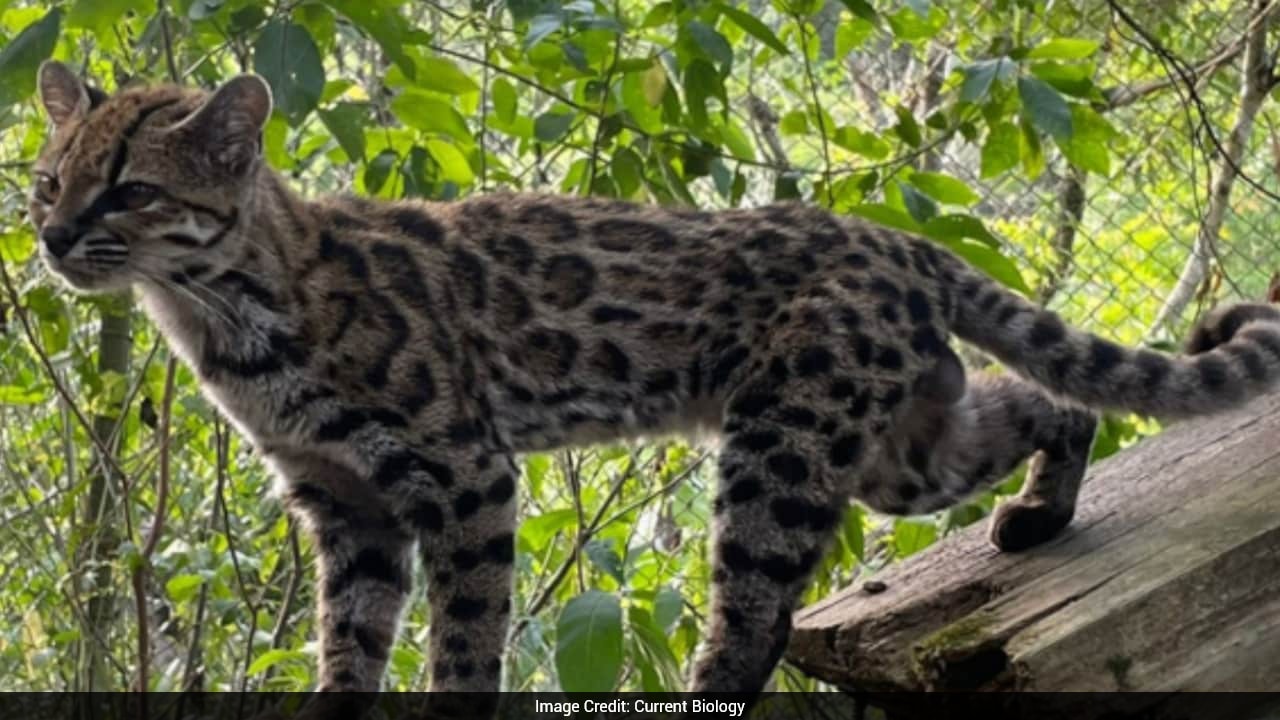
Every few months, a headline hits the wire claiming scientists have unearthed a brand-new cat species in some remote corner of the globe, complete with a leopard-like coat and breathless descriptions of its mysterious habits. Readers eat it up. Conservation groups cash the checks. And mainstream media outlets recycle the same tired narrative about nature's endless hidden inventory.
It is a comforting illusion. It makes us feel like the earth is still wild and vast, holding secrets just waiting for a guy with a telephoto lens to stumble upon them.
It is also largely garbage.
The recent frenzy over a newly flagged cat in Bolivia with a leopard-like appearance is a textbook case of taxonomic inflation driven by clickbait incentives. We are not watching the dawn of a biological renaissance. We are watching scientists and journal editors play a high-stakes rebranding game with populations that have been known to locals and field researchers for decades.
The Taxonomist Dilemma and the Funding Trap
Let us look at how modern conservation funding actually works. If you tell a donor or a government grant committee that you are going to spend three years monitoring a localized, slightly distinct subpopulation of an already documented cat species, your budget gets slashed. If you tell them you have discovered a distinct species, the money starts flowing.
Taxonomy used to be a conservative, agonizingly slow discipline. Today, it is heavily influenced by marketing.
When researchers pull DNA samples from a high-altitude feline population in the Andes and spot a few unique genetic markers or a coat variation resembling a miniature leopard, they face a choice. They can classify it as a regional variant—a clever adaptation to local topography and prey density—or they can elevate it to species status based on arbitrary genetic divergence thresholds.
Guess which choice gets published in high-impact journals? Guess which choice lands you on the evening news?
This is not a neutral academic debate. By hastily chopping continuous species complexes into isolated micro-species, we fracture conservation efforts. We create legal and bureaucratic hurdles that protect tiny, fragmented groups on paper while ignoring the broad ecological corridors they actually need to survive.
The Myth of the Untouched Wilderness
The lazy consensus in these discovery articles relies on the trope of the untouched paradise. The narrative assumes this cat was sitting quietly in the mist, hidden from humanity until a team of brave biologists parted the fronds and revealed it to the world.
Ask any indigenous guide or local farmer living near the range of these supposedly new cats, and they will give you a blank stare. They have known about these animals forever. To them, it is just the local spotted cat that occasionally raids a chicken coop or stays clear of livestock.
Pretending these animals are brand-new discoveries erases the people who coexist with them daily. It reframes local wildlife management as an elite scientific intervention rather than a shared ecological reality. Worse, it relies on a geographic chauvinism that assumes nothing real exists until a Western-trained researcher logs it into a digital database with a Latin binomial name.
The Genetic Reality Check
What does a leopard-like appearance actually mean in the high Andes? It means convergent evolution and camouflage optimization.
Nature does not care about our neat little filing cabinets. Cats evolve coat patterns that work for their immediate environment. High-altitude scrub, rocky outcroppings, and dappled sunlight demand specific disruptive coloration. When isolated populations adapt to similar micro-climates, they often develop similar phenotypes.
Calling every distinct phenotype a new species is like declaring every regional accent a new human language. It misunderstands the fluid, dynamic nature of genetics. Populations drift, mix, adapt, and shift. Gene flow is rarely a clean switch that flips from on to off just because a mountain range got a little steeper a million years ago.
When we rush to baptize every morphological variant as a new species, we freeze a moving picture into a still photograph. We pretend evolution has static finish lines.
The Real Cost of Paper Discoveries
Every time we celebrate a manufactured species discovery, we distract ourselves from the brutal mechanics of actual extinction.
We pour resources into redrawing maps and rewriting textbooks while the broader ecosystems supporting these cats are chewed up by mining, agriculture, and climate disruption. A fancy new Latin name on a placard does not stop a bulldozer. It does not regenerate depleted prey bases. It does not restore fragmented migratory routes.
If we spent half the energy on protecting the habitat connectivity of known felid populations that we spend on squabbling over phylogenetic species concepts, these animals might actually stand a fighting chance.
Stop treating biology like a Pokémon card collection where the goal is to catch 'em all and catalog every variation. Nature is not running out of surprises. We are just running out of patience for the messy, unglamorous work of keeping complex ecosystems intact.
The cat in Bolivia isn't a miraculous new chapter in the book of life. It is just a familiar animal wearing a different coat, trying to survive in a world we keep making smaller.