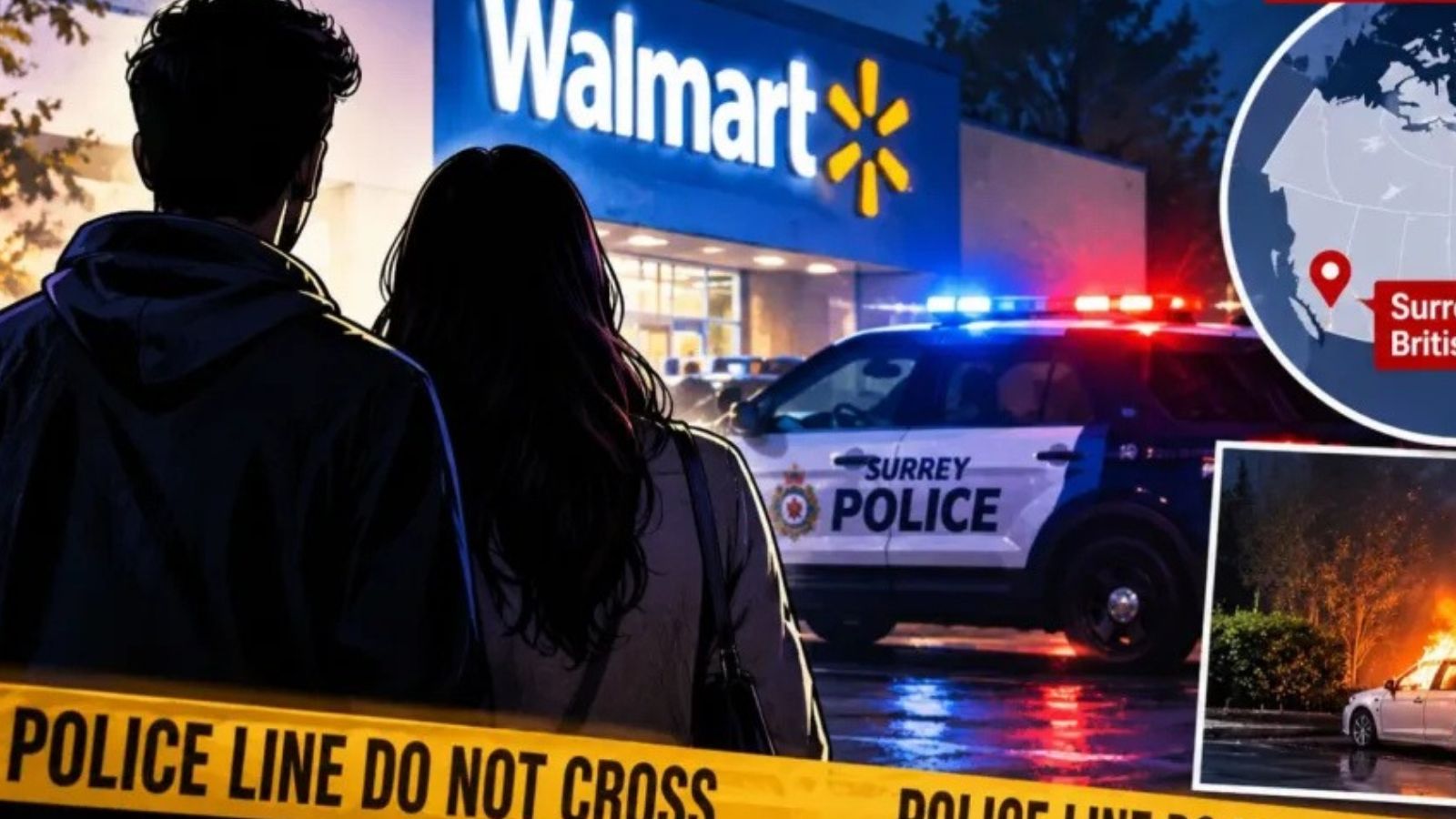
Two bodies are found in a burned-out SUV on a quiet residential street in Surrey, British Columbia. Within forty-eight hours, the Integrated Homicide Investigation Team (IHIT) holds a press conference, releases the names of the victims—usually men in their twenties with known police associations—and utters the magic words: "targeted and linked to the Lower Mainland gang conflict."
Every local news outlet prints the press release verbatim. Reporters dust off the exact same boilerplate paragraphs about "sophisticated criminal networks," "territorial disputes," and "cartel-level coordination." Readers shake their heads, lock their doors, and accept the narrative that Metro Vancouver is being run by shadowy, hyper-competent crime syndicates operating like Fortune 500 companies with assault rifles.
That narrative is convenient for police public relations. It is profitable for click-hungry newsrooms. And it is almost entirely wrong.
The lazy consensus surrounding Surrey double homicides treats every fatal ambush as a calculated chess move in a grand, strategic war. In reality, much of what gets stamped with the "organized crime" label in the Fraser Valley is the exact opposite of organized. It is decentralized, amateurish, reactive chaos driven by low-level street actors, disposable recruits, and profound operational stupidity.
The Myth of the Criminal Mastermind
When police immediately classify a double homicide as "gang-related," the public pictures The Godfather or Sicario. They imagine disciplined hierarchies, disciplined opsec, and cold, rational cost-benefit analyses.
Ask anyone who has actually spent years tracking Lower Mainland street networks, analyzing court disclosures, or working inside the justice system in British Columbia. The reality on the ground looks nothing like a syndicate. It looks like a gig economy for desperate twenty-somethings with burner phones and rented sedans.
In traditional organized crime—think the historic Five Families in New York or established outlaw motorcycle clubs—murder was a last resort. Killing someone brought heat. Heat disrupted cash flow. If you whacked someone without authorization from the top, you were next.
Surrey's street conflict operates on the inverse logic. Violence is not the final instrument of strategy; it is the primary currency of clout. Young men with zero long-term strategic vision use targeted shootings to settle petty personal slights, bad drug debts worth a few thousand dollars, or perceived disrespect on encrypted messaging apps.
When a double homicide occurs in Surrey, the presence of two victims doesn't automatically signal a high-level decapitation strike against a rival faction. Half the time, the second victim was simply sitting in the wrong passenger seat when a twenty-two-year-old shooter emptied a magazine without checking who else was in the car. Calling that "organized" is an insult to the English language.
Why Police and Media Love the "Organized Crime" Label
If these crimes are often messy, impulsive, and amateurish, why does the official narrative always frame them as the work of entrenched, sophisticated criminal enterprises?
Follow the incentives.
For law enforcement agencies like IHIT, the RCMP, and the Combined Forces Special Enforcement Unit (CFSEU-BC), framing a double homicide as an "organized crime hit" serves two immediate purposes:
- Public Pacification: The single most important phrase in any BC police press conference is "there is no ongoing risk to the general public." By categorizing victims as "known to police" and linking their deaths to gang conflict, authorities draw a comforting—if entirely illusory—chalk line between the victims and law-abiding taxpayers. It tells the suburban homeowner that the bullets were meant for someone else, so they can go back to mowing their lawn.
- Budgetary Justification: You do not get multi-million-dollar task force funding, specialized surveillance units, and legislative overhauls to stop impulsive kids making terrible decisions. You get those resources to fight "transnational organized crime." The threat must sound monolithic, coordinated, and existential to justify the institutional footprint required to combat it.
Meanwhile, legacy media outlets operate on skeleton crews with zero time for investigative depth. When IHIT sends out a media advisory naming two victims and citing "gang links," the reporter's job is done in twenty minutes. They copy the quote, paste in three paragraphs of background about the BC gang conflict, and hit publish. Nobody asks why a supposedly elite criminal organization left a trail of digital breadcrumbs, used a stolen vehicle with mismatched plates that screamed for a traffic stop, or burned the getaway car three blocks from a highway camera.
The Anatomy of a Modern Surrey Hit
To understand why the "mastermind" narrative collapses under scrutiny, you have to look at the mechanics of how these shootings actually happen.
Imagine a scenario where a mid-level fentanyl distributor in Surrey believes a former associate skimmed five ounces of product or disrespected him in a group chat. In a truly organized syndicate, an enforcer would quietly abduct the target, extract the money, or stage an untraceable disappearance.
In the Lower Mainland, the distributor hops on Telegram or Signal, puts out a bounty—sometimes as low as $20,000 to $50,000—and outsources the hit to a crew of wannabes looking to earn their stripes.
Here is what happens next:
- Recruitment: The shooters are often imported from out of province or pulled from the lowest rung of the local drug trade. They have no personal stake in the dispute and zero loyalty to the person paying them.
- Execution: They tail the target's vehicle into a strip mall parking lot or a residential cul-de-sac in Newton or Guildford. They open fire in broad daylight, hitting the target and whoever happens to be riding shotgun.
- The Getaway: They drive ten minutes away, douse the stolen Hyundai or Honda in gasoline, and set it ablaze—often burning themselves in the process or leaving behind unburned shell casings, DNA on a dropped lighter, and cell phone tower pings that map their exact route from the crime scene to their front door.
This is not criminal genius. It is operational incompetence masked by extreme violence.
Criminologists like Dr. Stephen Schneider, who has extensively documented Canadian organized crime, and veteran investigative journalists like Kim Bolan, who has covered the Lower Mainland conflict for decades, have repeatedly highlighted the fluid, fragmented nature of British Columbia's gang landscape. Unlike the rigid hierarchies of eastern Canada's traditional crime groups, BC's street networks are loose coalitions. Alliances shift weekly. Friends become targets overnight. Calling this fractured ecosystem a cohesive "organized crime" apparatus misses the fundamental instability that makes it so dangerous.
Answering the Questions Nobody Wants to Ask Honestly
When a double homicide hits the headlines in Surrey, search engines light up with the same predictable questions from worried residents. The standard media answers are sanitized. Here is the unvarnished truth.
Is Surrey actually safe for regular people?
The standard answer: Yes, because these shootings are targeted and the public is not at risk.
The honest reality: "Targeted" does not mean "accurate." When untrained shooters spray thirty rounds into a vehicle outside a busy restaurant, a gym, or a suburban home, the physics of ballistics do not care whether you are "known to police." Innocents have been killed in the Lower Mainland—from the Surrey Six massacre in 2007 to bystanders caught in crossfire in Burnaby, Coquitlam, and Vancouver. Saying the public isn't the intended target is true. Saying the public isn't at risk is a lie.
Why don't police arrest the people ordering these hits?
The standard answer: Complex investigations take time, and witness intimidation makes securing convictions difficult.
The honest reality: Police frequently know exactly who ordered the hit within days, if not hours. Knowing and proving are two different universes. Because the contract is routed through encrypted apps and executed by disposable cutouts, law enforcement often catches the twenty-year-old trigger-puller while the person who funded the contract sits untouched in a luxury condo in downtown Vancouver or overseas. Until the justice system finds a way to pierce encrypted communications without violating Charter rights, they will keep arresting pawns while the players buy new ones.
Does identifying the victims actually help solve the crime?
The standard answer: Yes, police release names to advance the investigation and prompt witnesses with dashcam footage to come forward.
The honest reality: Releasing the victims' names is primarily a signaling mechanism. It tells the rival faction that the score has been officially tallied, and it tells the victims' associates to prepare for retaliation—which is why police immediately brace for a second wave of shootings within seventy-two hours. Dashcam tips are a secondary bonus; the real purpose of the press conference is managing the immediate street temperature.
The Uncomfortable Downside of the "Amateur Chaos" Thesis
Pushing back against the "criminal mastermind" myth comes with a massive caveat that law enforcement officials are quick to point out—and they are right to do so.
If you accept that Surrey's double homicides are often driven by disorganized, impulsive actors rather than calculating syndicates, you also have to accept that deterrence becomes nearly impossible.
You can negotiate with a rational crime boss. You can squeeze their legitimate businesses, freeze their assets, and force them to calculate that murder is bad for the bottom line. You cannot reason with a nineteen-year-old who thinks shooting two rivals in a suburban driveway will earn him respect on Instagram and a bump in status within his crew.
Furthermore, while the street-level shooters are chaotic, the supply chains feeding their cash flow—specifically the synthetic opioid precursors, the cross-border smuggling routes, and the money laundering networks through real estate and luxury vehicles—require genuine transnational coordination. The error lies in conflating the sophisticated logistics of drug importation with the sloppy execution of street-level murder. The money at the top is organized. The blood on the asphalt in Surrey is mostly the byproduct of amateurs fighting over the scraps.
How to Actually Read the Next Surrey Homicide Report
The next time a press release drops announcing a double homicide in Surrey, strip away the institutional jargon and read between the lines. You can tell within three paragraphs whether you are looking at a high-level strategic hit or low-level street chaos:
- Look at the victims' ages and backgrounds. If they are in their early twenties with a string of minor possession or weapons charges, this wasn't a cartel power play. It was a local beef that escalated because nobody in the room had impulse control.
- Look at the location and time of day. Professional hits happen in isolation with clean exit routes. Shootings in crowded strip malls, outside community centers, or on busy commuter corridors during rush hour are the hallmark of panicked, amateur shooters acting on a sudden tip.
- Look at the vehicle recovery. A burned-out car found miles away near a highway on-ramp shows basic planning. A torched vehicle abandoned three blocks away in a residential cul-de-sac—the exact kind of trap where police helicopters box in suspects within minutes—tells you the shooters didn't even bother to look at a map before pulling the trigger.
Stop giving street-level thugs the cinematic prestige of organized crime syndicates. When you call reckless, impulsive violence "organized," you flatter the perpetrators, excuse the systemic failures that keep putting guns in the hands of teenagers, and blind the public to the real nature of the threat.
Surrey doesn't have a criminal mastermind problem. It has an accountability vacuum filled by kids with cheap guns and zero fear of tomorrow.