Politicians love a victory lap, especially when they had almost nothing to do with the race. The sudden celebration surrounding the India-UK Comprehensive Economic and Trade Agreement (CETA) set to take effect on July 15, 2026, is a masterclass in political theater. British MP Bob Blackman is already warning everyone that future UK negotiations with the European Union could "countermand" the glorious benefits of this shiny new trade pact. He insists that Britain must build on this momentum and not go backward.
The anxiety is misplaced. The assumption that a UK-EU realignment will ruin the benefits of the India trade pact is based on an outdated understanding of international economics. The truth is much more sobering: the India-UK trade deal is largely irrelevant before it even starts. It is a 20th-century solution applied to a 21st-century economic reality. For another view, check out: this related article.
The Tariff Illusion
The celebratory press releases trumpet big numbers. Enthusiastic trade officials point out that over 99% of India's tariff lines will drop to zero duty, providing an additional tariff advantage of 7% to 10% for exporters. This sounds like an economic victory until you look at what actually drives modern economic growth.
Tariffs are no longer the primary barrier to global trade. The global average for industrial tariffs is already low. Shaving 8% off the cost of shipping physical goods between Mumbai and London matters very little when compared to the crushing weight of non-tariff barriers, regulatory friction, and supply chain inefficiencies. Further reporting regarding this has been shared by MarketWatch.
I have watched corporate executives pour millions into shifting production lines to exploit new free trade agreements, only to see those margins instantly wiped out by domestic regulatory updates, local compliance bottlenecks, and volatile maritime shipping costs. If a business relies entirely on a 7% tariff reduction to make its export model viable, that business was already failing.
Worse, the political obsession with physical goods ignores the composition of modern trade between these two nations. Look at the latest NITI Aayog data for the final quarter of the financial year. India's merchandise exports actually declined by 2.8%, while its services exports jumped by 9%, driving a massive services trade surplus of $60.4 billion. India is rapidly evolving into a services superpower. Yet, standard trade pacts spend 90% of their negotiating energy haggling over agricultural access, whiskey tariffs, and automotive parts.
The Services Standoff
The real battlefield is services, and that is precisely where this agreement remains stubbornly weak. Professional services—legal, accounting, medical, and architecture—are heavily protected by domestic guilds and national regulatory frameworks on both sides.
Consider a practical example. A top-tier Indian data analyst or corporate lawyer cannot easily practice or consult for British firms without jumping through endless regulatory hoops. Conversely, British financial architects face massive compliance walls when trying to deploy capital or offer services directly within the Indian domestic market. MP Blackman himself admitted that professionals on both sides are constantly complaining about these exact restrictions.
What did the fifteen rounds of negotiations actually achieve to fix this? Very little. They established committees to "look into" mutual recognition agreements. In the language of international diplomacy, creating a committee is what you do when you want to look busy without actually surrendering any domestic regulatory control.
True economic integration requires aligning regulatory systems, standardizing data privacy laws, and allowing qualified professionals to work across borders without friction. This agreement leaves those massive hurdles virtually untouched because doing so would require tackling powerful domestic lobbies. Lowering the tariff on a container of machinery is politically easy; telling the national bar association or medical council to accept foreign qualifications is a political nightmare.
The Myth of the EU Conflict
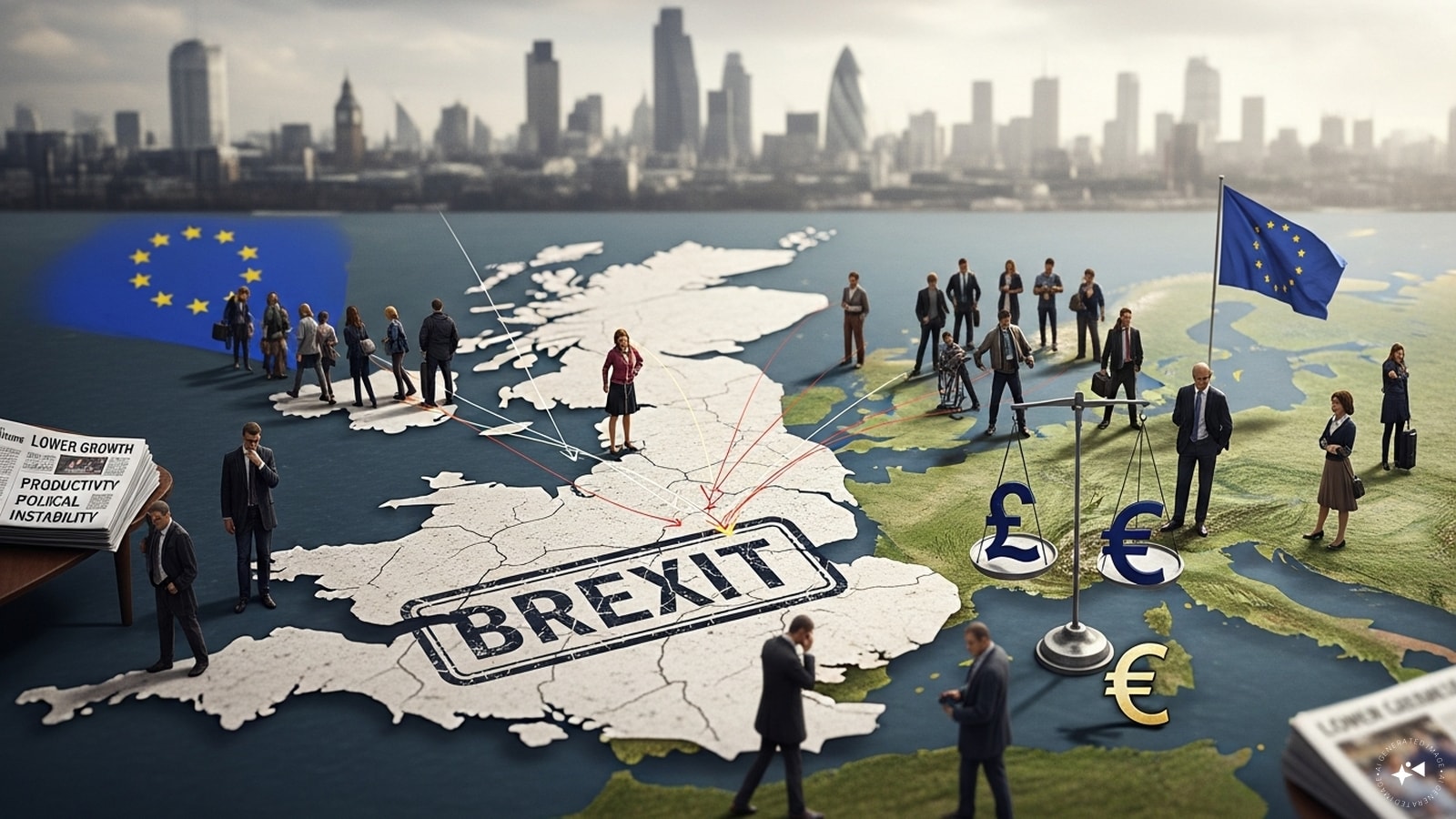
The core of the current political panic is that any future trade deal between the UK and the European Union will automatically break the India deal. This perspective assumes that international trade is a zero-sum game where a nation must choose a single orbit.
Imagine a scenario where the UK government negotiates a closer regulatory alignment with Brussels to ease the daily border chaos at Dover. Critics claim this alignment will force the UK to adopt EU-wide standards that conflict with its commitments to India.
This argument is flawed. The UK's trade with India is structurally distinct from its trade with Europe. The European Union is an interconnected supply chain ecosystem relying on just-in-time logistics for manufactured goods and highly integrated agricultural markets. India is a long-distance partner defined by technology services, back-office outsourcing, pharmaceuticals, and direct investment. Tightening rules with Europe on food safety or automotive components does not inherently neutralize a trade arrangement with India regarding software development or pharmaceutical exports.
The fear of incompatibility is an excuse used by politicians to hide a deeper structural failure: Britain's domestic productivity crisis. No trade deal with India, Canada, or the Trans-Pacific Partnership can compensate for a domestic economy struggling with stagnant capital investment and aging infrastructure. A trade agreement merely opens a door; it does not force your industries to be competitive enough to walk through it.
The Actionable Reality for Businesses
For corporate strategists and investors, the lesson is clear: stop waiting for government treaties to save your cross-border strategy. The businesses winning the India-UK corridor are not waiting for tariff drops on physical goods. They are building around the regulatory barriers.
- Decentralize Professional Services: If regulatory bodies refuse to recognize cross-border qualifications, structure your operations around localized hubs that employ dually certified executives or use domestic entities as compliance wrappers.
- Pivot to Digital IP Assets: Physical supply chains are vulnerable to political whim and tariff updates. Digital products, proprietary software, and localized operational knowledge move across borders far more efficiently than physical components.
- Ignore the Political Noise: Treat the July 15 implementation date as a public relations event, not a strategic milestone. Base your supply chain calculations on current logistical realities and non-tariff regulatory compliance, assuming the tariff changes provide nothing more than a minor cash flow buffer.
The era of the sweeping, transformative bilateral trade agreement is over. What remains is a world dictated by regional regulatory blocks and domestic industrial policies. Celebrating a traditional tariff-cutting deal today is like upgrading a fax machine while the rest of the world moves to quantum computing.