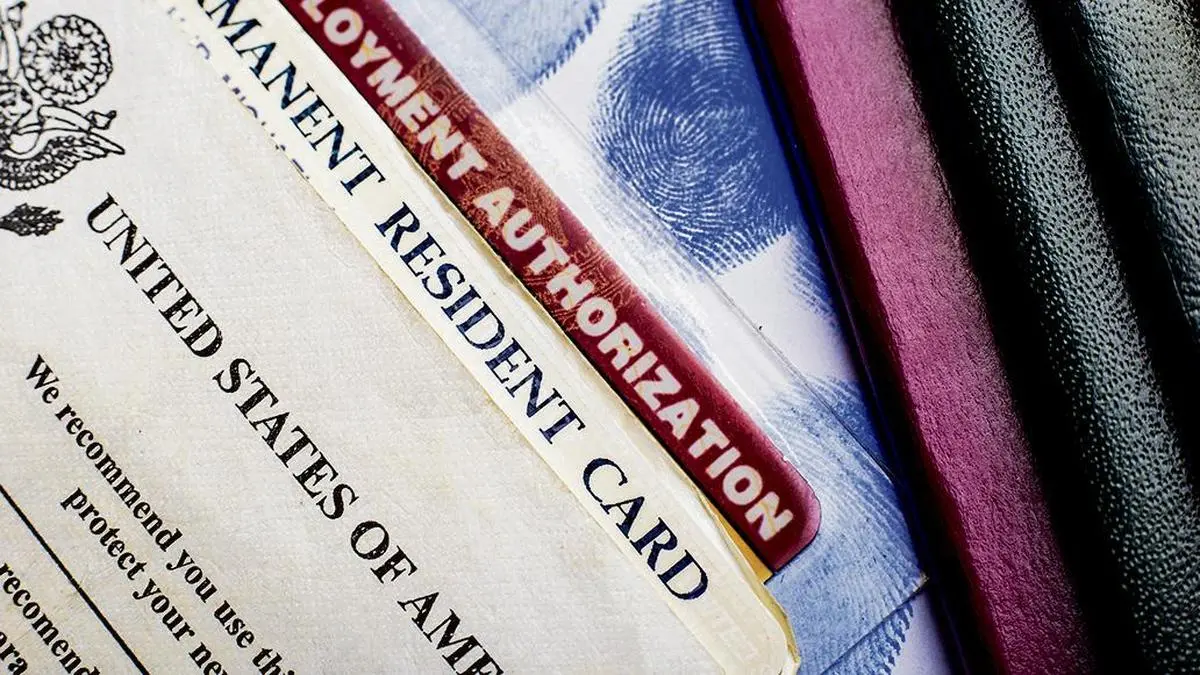
Corporate boardrooms and immigration law firms are having a collective meltdown over a single memo from U.S. Citizenship and Immigration Services (USCIS). The May 21 policy update, which frames the "adjustment of status" process as an extraordinary act of administrative grace rather than an automatic right, sent shockwaves through the tech sector. Panic peddlers claim that hundreds of thousands of high-skilled legal immigrants will be summarily dumped out of the country to process visas at backlogged consulates abroad.
Then came the inevitable walk-back. Over the weekend, the Department of Homeland Security issued a soothing clarification, stating the policy will have "no noticeable impact on highly qualified applicants and skilled professionals."
The mainstream press bought the damage control hook, line, and sinker. They are reporting on this as a classic story of administration walk-backs, back-and-forth rhetoric, and temporary relief for corporate America.
They are completely missing the point.
The lazy consensus is that this weekend clarification saves high-skilled immigration. The media treats the exemption for those providing an "economic benefit" or serving the "national interest" as a victory for the status quo.
It is not. It is an administrative trap.
By creating an arbitrary distinction between those who "merit" a favorable exercise of discretion and those who do not, the administration has successfully injected systemic uncertainty into the executive pipeline. The panic was not a mistake; it was the intended product. Waiting for the dust to settle or relying on boilerplate legal strategies is a fast track to losing your key engineering talent.
The Discretion Delusion
For thirty years, general counsels have treated adjustment of status as a purely bureaucratic checkbox. You file the Form I-485, you pay the fees, you wait out the processing backlog, and the green card arrives. It was treated as an entitlement for anyone holding a valid H-1B or L-1 visa.
The new reality is that the era of predictable entitlement is dead.
When USCIS calls adjustment of status an "act of administrative grace," they are re-weaponizing a statutory truth that corporate lawyers chose to forget: adjustment of status has always been discretionary under Section 245 of the Immigration and Nationality Act. By raising the bar and requiring applicants to affirmatively prove they deserve this "grace," the government has shifted the burden of proof entirely onto the employer and the applicant.
I have seen companies blow millions of dollars treating immigration as a standard HR procurement exercise. They hire volume-driven immigration factories that copy-paste the same generic arguments across thousands of applications. That approach is dead on arrival under the new guidance.
When every application requires an individualized showing of "economic benefit" or "national interest" just to avoid being sent to a consulate overseas, the boilerplate model collapses. The legal industry calls this a "burdensome" evidentiary requirement. In reality, it is a structural barrier designed to slow high-skilled immigration to a crawl through bureaucratic friction.
The Myth of the Consular Safety Net
The naive defense from immigration apologists is simple: "If an applicant cannot adjust status inside the United States, they will just use consular processing abroad."
This assumes the consular system actually functions.
Imagine a scenario where a tier-one software architect from India or a machine learning specialist from China is forced to return to their home country to complete green card processing. They are not stepping into a smooth, efficient system. They are stepping into a black hole of administrative processing delays, structural visa backlogs, and localized entry bans.
Standard Adjustment Pipeline:
[USCIS Application] ---> [Discretionary Review] ---> [Approval in U.S.]

The Consular Processing Trap:
[Denial of Discretion] ---> [Forced Departure] ---> [Consular Backlog Abroad] ---> [Potential Stranding]
A consulate officer abroad operates under a completely different risk profile than a domestic USCIS adjudicator. Consular decisions are insulated by the doctrine of consular nonreviewability, meaning their visa denials are effectively immune to judicial review in U.S. courts. Forcing an applicant into that arena is not a minor procedural detour. It is an existential threat to their employment status and their family’s stability.
The Department of Homeland Security’s statement that this policy will not affect those who "legitimately and properly qualify" is a masterclass in bureaucratic misdirection. Who decides who legitimately qualifies? The very adjudicators who have just been instructed to view every domestic application with extreme skepticism.
The High Cost of Regulatory Compliance Failure
The true crisis here is not the text of the memo itself. The crisis is the inability of corporate leaders to adapt their human resources strategies to an environment of permanent regulatory hostility.
If your enterprise relies on international technical talent, you cannot afford to play defense. Waiting for a federal court to strike down a policy memo—a process that takes months or years of litigation—is a losing strategy. The administrative friction alone will cause your top performers to look for opportunities in countries with predictable immigration systems, like Canada or Germany.
To survive this shift, organizations must fundamentally alter how they package and present their foreign talent from day one.
Weaponize the National Interest Standard
Do not wait for an RFE (Request for Evidence) asking why your employee merits domestic adjustment. Build the "national interest" and "economic benefit" case directly into the initial petition. This requires moving away from generic job descriptions ("Software Engineer responsible for writing code") and moving toward hyper-specific impact statements.
Prove the quantifiable economic damage that would occur if this specific individual were forced to leave the country for six to twelve months of consular processing. Quantify the project delays, the revenue at risk, and the impact on American co-workers.
Diversify Across Geographies
If the U.S. immigration system is going to operate on the whims of unpredictable policy memoranda, you must de-risk your talent pool. This means establishing robust nearshore or offshore technical hubs where critical non-citizen workers can be placed instantly if their domestic status is compromised. It is no longer just an operational alternative; it is a mandatory business continuity requirement.
Pay the Premium for Bespoke Legal Counsel
The era of the low-cost, high-volume immigration vendor is over. If your legal counsel’s primary value proposition is a slick online portal and low per-case fees, they will fail you under this new discretionary framework. You need legal strategists who treat every single green card application like a high-stakes litigation case, building an ironclad administrative record that makes a discretionary denial impossible to justify.
The Illusion of Corporate Immunity
Many tech giants believe their size and political leverage shield them from these policy shifts. They assume their economic contribution is so obvious that no adjudicator would dare disrupt their workforce.
This is dangerous hubris.
The new USCIS guidance is explicitly designed to bypass corporate influence by placing the discretionary hammer in the hands of individual field office adjudicators. A low-level bureaucrat in a field office does not care about your quarterly earnings report or your stock price. They care about the direct instructions sitting on their desk, which tell them to treat domestic green card applications as a rare exception rather than the rule.
Relying on the weekend's reassuring press releases from political appointees is a tactical error. The political rhetoric is designed to quiet the markets and mollify business groups. The operational reality inside the agency remains exactly what was written in the original memo: a systematic effort to force legal immigrants out of the domestic system and into the meat-grinder of international consulates.
Stop looking at this as a temporary political news cycle that will blow over by next month. This is a structural redesign of the legal immigration framework executed through administrative friction. If you continue to run your global talent strategy using the 2015 playbook, you are actively participating in the liquidation of your own engineering pipeline. Turn every application into an unassailable economic argument, or get ready to explain to your board why your core product roadmap just walked out the door to catch a flight to Hyderabad.