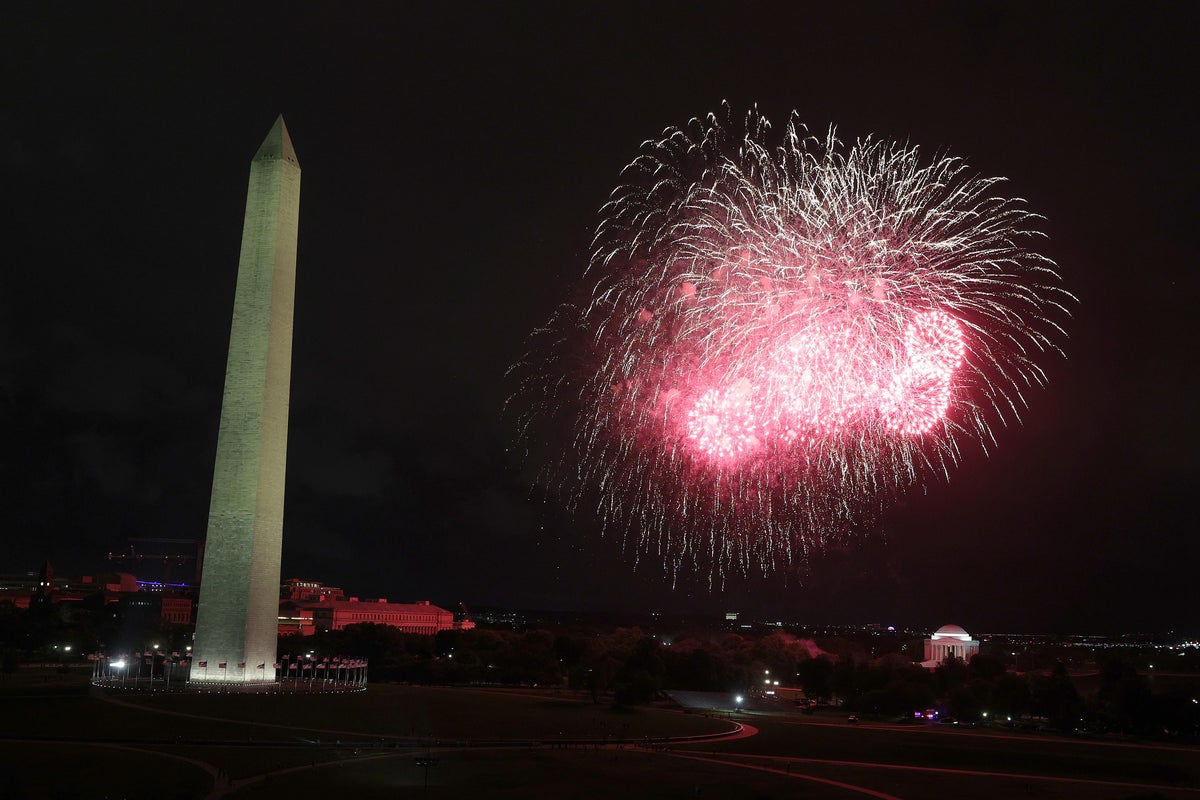
The corporate media is currently suffering a collective panic attack over a pile of gunpowder and a few million dollars.
As Washington prepares for the historic 250th Independence Day celebration, the predictable chorus of fiscal scolds has arrived right on schedule. They want you to panic because Donald Trump promised a record-breaking 40-minute fireworks display featuring 860,000 explosives. They want you outraged that the funding trail winds through a mix of National Park Service fees and private nonprofits.
They are asking the wrong question entirely.
The real scandal isn't that a historic milestone is costing millions of dollars. The real scandal is the staggering financial illiteracy of anyone who thinks a massive public spectacle is a net loss for the economy.
Let's look at the numbers. Critics point to a $1.5 million allocation to Garden State Fireworks and murmur darkly about millions flowing into the broader America250 festivities via private networks. They treat this like money poured directly into a black hole. It is an exhausting, lazy consensus that completely ignores how modern event economics operate.
I have analyzed large-scale civic event financing for over a decade. I have seen municipalities blow tens of millions on stagnant corporate conventions that generate zero cultural footprint and negative regional returns. When you analyze a massive national celebration like the semiquincentennial, you are not looking at an expense. You are looking at a masterclass in high-velocity capital circulation.
The High-Velocity Velocity of Civic Capital
The primary mistake of the amateur budget analyst is viewing government spending as a one-way street. They see a dollar leave the treasury and assume it evaporates into the atmosphere along with the smoke from the firework shells.
In reality, massive public events act as economic superchargers for the host city.
A record-shattering, highly publicized event draws millions of domestic and international visitors to the capital. These attendees do not just stand on the National Mall, look up at the sky for 40 minutes, and catch the next flight home. They engage in intensive economic activity over an extended weekend.
- Hotel Occupancy Taxes: Hotels across the D.C. metro area hit peak capacity during major national events. These rooms are hit with heavy local lodging taxes that flow directly back into city coffers.
- The Service Economy Boost: Restaurants, food trucks, bars, and retail shops experience surged demand. This velocity of money sustains seasonal employment and drives massive sales tax revenue.
- Public Transit Windfalls: The surge in metro ridership and local transportation usage turns a typically subsidized public service into a temporary revenue generator.
The tax revenue generated in a single high-profile weekend routinely eclipses the upfront capital required to stage the show. The fireworks act as the loss leader for a massive regional economic harvest.
The Reality of the Park Service Backlog
Outraged reports highlight that money from park entry fees is being steered toward these capital-region celebrations, including extensive renovations to the Lincoln Memorial Reflecting Pool and various fountains. This is routinely presented as a raid on public coffers.
In reality, it is a targeted acceleration of deferred maintenance.
| Project Location | Allocated Funding | Real-World Utility |
|---|---|---|
| Lincoln Memorial Reflecting Pool | $76 Million | Structural restoration and long-term water conservation updates. |
| Lafayette Park Fountain | $13 Million | Mandatory mechanical overhauls of aging civic infrastructure. |
| Simón Bolívar Memorial Fountains | $5.7 Million | Restoration of historic monuments ahead of global tourism spikes. |
The National Park Service has faced a multi-billion-dollar maintenance backlog for decades. Bureaucracy ensures that standard funding requests languish in committee for years. Using a high-profile national milestone to force the immediate repair and beautification of public infrastructure is a pragmatic utilization of a political window to fix broken public assets.
The money isn't disappearing. It is being baked into concrete, steel, and functional water systems that will serve the public for the next thirty years.
The Efficiency of Private Event Execution
Let's address the ultimate bogeyman of the critics: the use of non-profit entities and external event companies.
The mainstream consensus argues that using private organizations to manage public festivities is a sinister trick to hide taxpayer spending. This is backward. Utilizing private entities and non-profit structures is the standard blueprint for executing world-class productions efficiently.
Government procurement cycles are notoriously slow, inefficient, and bloated. If the federal government attempted to directly source 860,000 pyrotechnic devices, manage the logistical footprint of ten separate launch locations, and coordinate eight barges on the Potomac River through standard federal contracting channels, the timeline would triple and the costs would balloon exponentially.
Private nonprofits allow for:
- Corporate Sponsorships: Major corporations pay premium rates to attach their names to national milestones, subsidizing the cost for the average citizen.
- High-Tier Premium Packages: Organizations like the Kennedy Center can sell high-priced VIP ticket packages to wealthy donors. This recaptures private capital and uses it to fund the broader public infrastructure of the event.
- Flexible Sourcing: Private managers can negotiate directly with suppliers like Pyrotecnico and Garden State Fireworks without the multi-year red tape of standard federal bidding wars.
This structure allows private wealth to subsidize a free, world-record-setting spectacle for millions of everyday citizens who just want to watch the sky light up.
The Soft Power Dividend
Stop viewing national celebrations through the lens of a household checkbook. A country is not a family sitting around a kitchen table trying to cut back on the weekly grocery bill.
A nation's capital is a brand. A major historic anniversary is a global marketing campaign. The return on investment comes in the form of soft power, international prestige, and national cohesion. When the world watches the largest pyrotechnic display in human history illuminate the monuments of Washington, it sends a clear signal of stability, prosperity, and logistical capability.
There are downsides to this approach. The hyper-concentration of capital in the National Capital Region can leave rural parks waiting longer for their specific maintenance shares. The use of private non-profit conduits means the public has to wait longer for full line-item transparency. These are valid structural critiques.
But crying over the upfront price of a firework shell while ignoring the millions of dollars flowing into the local economy is peak financial blindness. The rockets will launch. The sky will light up. The local economy will cash the checks. Stop complaining and enjoy the show.