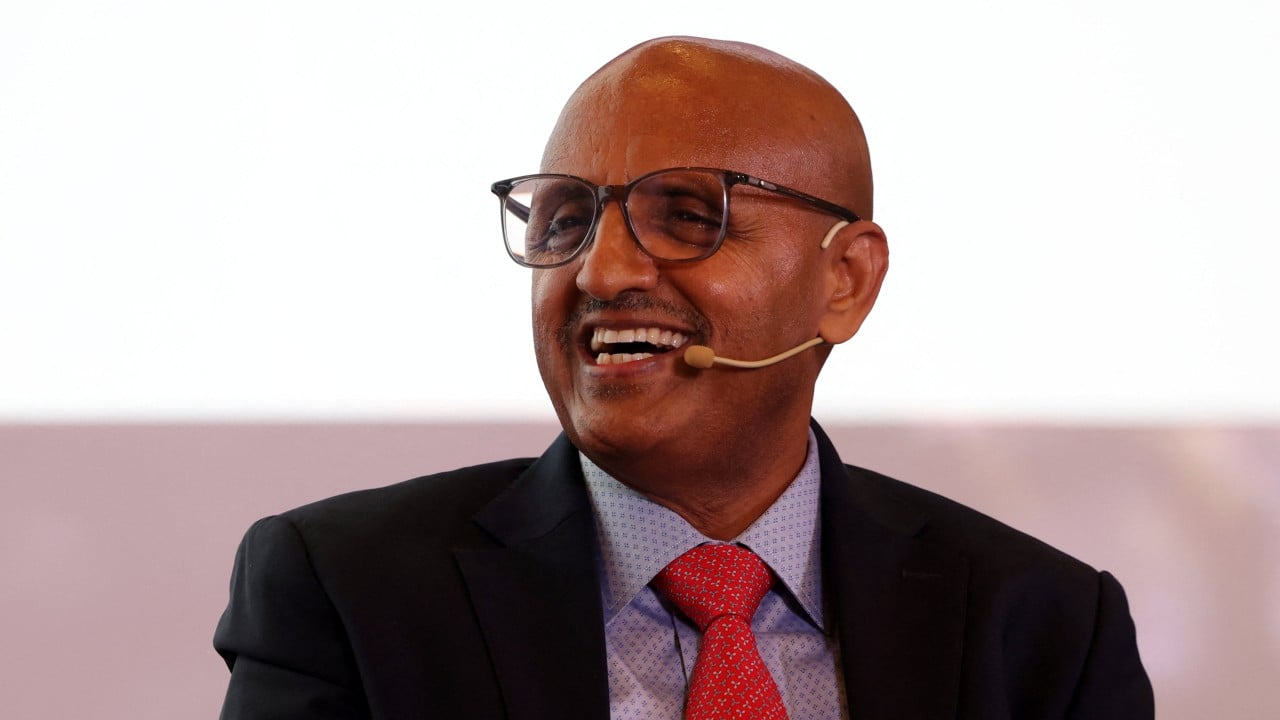
Aviation commentators love a tidy hero narrative. Hire a proven turnaround executive, drop them into a bloated legacy carrier, and watch the magic happen. When news broke that former Ethiopian Airlines Group CEO Tewolde GebreMariam was stepping into a top leadership role at Air India, the business press immediately dusted off the same lazy script: Can he replicate his African miracle in Mumbai?
That is the wrong question entirely.
Comparing Ethiopian Airlines to Air India is like comparing a precision-engineered Swiss watch to a sprawling, chaotic metropolis. Both keep time, sure, but the underlying mechanics, political pressures, and structural realities have almost nothing in common. If you measure Air India’s upcoming transformation against the Ethiopian Airlines playbook, you are setting yourself up to misread the next decade of global aviation.
The Myth of the Copy-Paste Turnaround
I have spent twenty years watching airline boards blow hundreds of millions of dollars chasing executive silver bullets. They hire a rockstar CEO from a disciplined hub-and-spoke carrier, drop them into a completely different regulatory and cultural ecosystem, and act shocked when the stock price doesn't double in eighteen months.
The industry consensus right now treats Tewolde GebreMariam as a plug-and-play savior. During his decade at the helm of Ethiopian Airlines, he turned a regional player into Africa’s undisputed aviation powerhouse, outmaneuvering European giants and Gulf super-connectors alike. Under his Vision 2025 strategy, Ethiopian tripled its fleet, quadrupled its passenger numbers, and remained profitable even when COVID-19 grounded the rest of the planet.
Those numbers are real. His operational brilliance is undeniable.
What the commentators conveniently ignore is that Ethiopian Airlines succeeded because of a specific set of structural advantages that simply do not exist in India.
The Bole Monopoly vs. The Indian Bloodbath
In Addis Ababa, Ethiopian Airlines operated as the undisputed national champion with virtually zero domestic competition. Bole International Airport wasn't just a hub; it was a fortress. The Ethiopian government protected its flag carrier’s turf, aligned national infrastructure policy with the airline’s expansion, and let management operate with remarkably little political meddling compared to other state-owned enterprises.
Now look at India.
Air India does not own a fortress. It is fighting a brutal, multi-front war in the most price-sensitive, hyper-competitive aviation market on Earth. Domestically, it is staring down IndiGo—a low-cost juggernaut with over 60 percent market share, a massive Airbus orderbook, and unit costs so low they make Western airline executives weep.
Internationally, Air India isn't building a connecting hub in a vacuum like Addis Ababa. It is bleeding premium long-haul traffic to Emirates, Qatar Airways, and Singapore Airlines, all of which have spent thirty years turning Dubai, Doha, and Changi into friction-free transit machines for Indian flyers.
Tewolde didn't have to fight an IndiGo in Ethiopia. He didn't have to deal with slot constraints at congested, privately operated airports in Delhi and Mumbai where ground handling and air traffic control bottlenecks routinely wreck on-time performance.
Why the "Ethiopian Model" Breaks in Mumbai
To understand why Air India cannot simply copy Ethiopian's homework, you have to look at the core unit economics of global aviation. Every network carrier lives and dies by two metrics: CASK (Cost per Available Seat Kilometer) and RASK (Revenue per Available Seat Kilometer).
Ethiopian Airlines mastered a very specific formula: keep CASK low through tight vertical integration—building its own MRO (Maintenance, Repair, and Overhaul) facilities, aviation academy, and catering arms—while capturing high-yield connecting traffic across underserved African routes where competitors refused to fly.
Air India’s problem is the exact inverse.
1. The Legacy Bloat and Tata’s Cultural Collision
When the Tata Group reclaimed Air India from the Indian government in 2022, they didn't just buy airplanes; they inherited decades of bureaucratic scar tissue. Merging four distinct airline cultures—Air India, Air India Express, Vistara, and AIX Connect—into a single cohesive entity is an organizational nightmare that makes fleet expansion look like child's play.
You cannot apply Addis Ababa’s top-down, disciplined state-backed execution to a newly privatized Indian conglomerate trying to harmonize union contracts, seniority lists, and wildly different service standards. In Ethiopia, Tewolde built a culture from a single, unified foundation. At Air India, leadership is trying to rewire a Boeing 777 mid-flight while passengers are complaining about broken seatbacks.
2. Geography Is Destiny
Look at a globe. Addis Ababa sits at a natural geographic crossroads connecting Africa, the Middle East, Europe, and Asia. Ethiopian Airlines leveraged sixth-freedom traffic—flying passengers from, say, Lagos to Beijing via Addis Ababa—because there were very few direct alternatives.
India’s geography works differently. While Delhi and Mumbai are theoretically well-positioned to serve as East-West transit hubs, the Indian regulatory environment and bilateral air service agreements have historically stifled hub-building. Worse, the Gulf carriers already own the sixth-freedom market out of India. Getting a business-class passenger in Bengaluru to fly Air India to London via Delhi, rather than taking Emirates via Dubai or British Airways nonstop, requires a product consistency Air India simply hasn't achieved yet.
3. The Aircraft Supply Chain Chokepoint
Ethiopian Airlines grew during an era when Boeing and Airbus actually delivered planes on time. Air India placed a historic 470-aircraft order (later expanded) right into the teeth of the worst aerospace supply chain crisis in modern history.
Pratt & Whitney engine issues, Boeing quality control freezes, and seat-certification delays mean Air India’s fleet renewal is moving at a crawl. You cannot execute a rapid hub-and-spoke expansion when half your widebody fleet is flying around with tired, decade-old interiors while your new jets sit unpainted in Toulouse and Everett.
Answering the Questions Nobody Wants to Ask
When investors and aviation analysts search for answers about Air India’s leadership shakeups, they usually fall into predictable traps. Let’s dismantle the most common misconceptions straight away.
Will Air India become profitable within the next two years?
No. Anyone telling you otherwise is selling you PR. The capital expenditure required to retrofit legacy widebodies, integrate Vistara’s operations, absorb losses from grounded aircraft, and fight a domestic fare war against IndiGo guarantees red ink in the near term. True profitability for a turnaround of this scale takes five to seven years of uninterrupted execution, assuming oil prices and currency exchange rates don't implode.
Can Air India beat Emirates and Qatar Airways on long-haul routes?
Not on transit traffic, and it shouldn't try. Air India’s real weapon isn't stealing Dubai's connecting passengers; it is point-to-point nonstop dominance. Indian diaspora and corporate travelers hate connecting in the Gulf if they can fly nonstop from Delhi, Mumbai, or Bengaluru to New York, San Francisco, London, and Frankfurt. Air India doesn't need to out-luxury Emirates; it just needs to offer a clean, reliable, nonstop seat that arrives on time.
Is hiring an outsider CEO the right move for an Indian carrier?
It is a double-edged sword. Outsiders bring operational rigor and break up entrenched internal fiefdoms. However, Indian aviation is uniquely governed by complex political relationships, bureaucratic friction with the DGCA (Directorate General of Civil Aviation), and hyper-local consumer expectations. An executive who doesn't understand how to navigate Delhi’s corridors of power will get eaten alive, regardless of how many awards they won in Africa.
The Actual Playbook Air India Needs to Run
If Air India wants to win, it needs to burn the Ethiopian Airlines playbook and write a distinctly Indian one. That requires ruthless prioritization over grandiose global ambitions.
First, stop obsessing over global hub status and fix the core product. Right now, Air India’s biggest liability isn't its route map; it is brand trust. When a passenger books a business-class ticket and gets swapped onto an un-refurbished aircraft with a broken screen and duct-taped armrests, no amount of marketing fixes that churn. Leadership must treat cabin reliability and basic customer service—refunds, baggage handling, proactive communication during delays—as existential emergencies.
Second, weaponize the domestic-to-international feed without trying to out-IndiGo IndiGo. Air India cannot beat IndiGo on domestic cost structure. Trying to match IndiGo’s rock-bottom fares on trunk routes like Delhi-Mumbai is financial suicide. Instead, Air India must use its domestic network purely as a high-yield feeder system for its lucrative long-haul international flights, pricing domestic legs aggressively only when bundled with a transcontinental ticket.
Third, build an indigenous MRO and training ecosystem, fast. This is the one page Air India should actually steal from Tewolde GebreMariam. Sending aircraft overseas for heavy maintenance bleeds foreign currency and extends downtime. Tata has the capital and industrial footprint to build world-class MRO facilities inside India. Do it now, or stay permanently dependent on third-party bottlenecks.
The Risk of the Contrarian Bet
There is a massive downside to this focused, unglamorous approach: it requires immense patience from stakeholders who want instant validation.
Focusing on operational basics, slowing down route announcements to wait for refurbished planes, and conceding domestic market share to IndiGo looks like retreat to casual observers. The financial press will call it stagnation. Competitors will mock the slow pace. If the Tata Group loses its nerve and demands flashy international expansion before the underlying operational plumbing is fixed, Air India will simply repeat the mistakes of Jet Airways and Kingfisher—scaling up broken unit economics until the cash runs out.
Tewolde GebreMariam is an extraordinary airline executive. Bringing his operational discipline into Air India’s boardroom is a smart move.
Just stop pretending he is going to turn Mumbai into Addis Ababa. Air India doesn't need an African miracle; it needs to survive an Indian street fight.