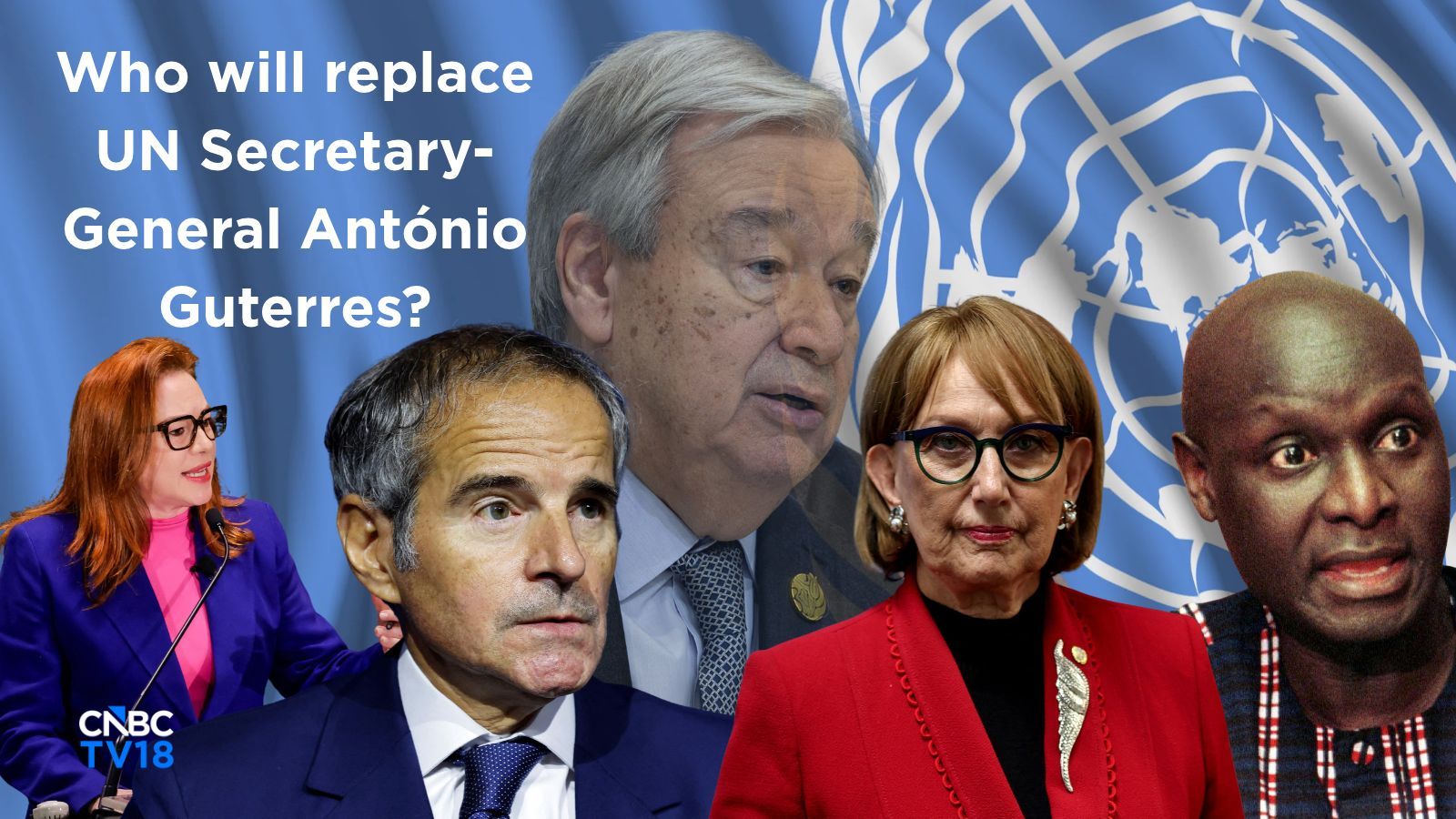
Every four-to-five years, the foreign policy press puts out the exact same horse-race listicle. Eight names. Eight glossy resumes. Eight polite summaries of who champions sustainable development, who speaks four languages, and whose regional turn it supposedly is to sit on the 38th floor of Turtle Bay.
It is complete theater.
Right now, with António Guterres set to vacate his office on December 31, 2026, commentators are breathlessly handicapping the eight remaining contenders: Rebeca Grynspan, Rafael Grossi, Carolyn Rodrigues Birkett, Lana Zaki Nusseibeh, Feridun Hadi Sinirlioğlu, María Fernanda Espinosa, Ivonne A-Baki, and Olara Otunnu. They treat the selection of the next United Nations Secretary-General like a high-stakes job interview where the best resume wins.
They are asking the wrong question entirely. The question is not who among these eight will lead the world out of its current geopolitical tailspin. The question is why anyone still pretends the Permanent Five members of the Security Council—the United States, Russia, China, France, and the United Kingdom—are looking for a leader at all.
They aren't. They are looking for a shock absorber. And after nine deadlocked straw polls, the machinery of that selection process is breaking down in public.
The Meritocracy Myth in Turtle Bay
If you read standard coverage of this race, you will hear endlessly about the post-2016 transparency reforms. Candidates submit vision statements. They sit through public interactive dialogues with the 193 member states and civil society groups. On paper, it looks like a modern, open selection process.
In practice, I have watched diplomats spend millions in state lobbying budgets chasing General Assembly applause, only to watch their candidacies die silently behind closed doors in a secret Security Council straw poll.
Look at the actual numbers from the Council's secret ballots. Rebeca Grynspan, the Costa Rican economist and UNCTAD chief, has consistently led the pack in "encourage" votes—hitting 11 and 12 affirmative nods in recent rounds. Under any normal voting system, she would be measuring the curtains. Instead, she is stuck in purgatory because she faces persistent "discourage" votes from veto-wielding permanent members.
Rafael Grossi, head of the International Atomic Energy Agency, carries the exact same fatal flaw. He gets eight or nine "encourage" votes, yet runs straight into a wall of P5 opposition—widely understood in diplomatic corridors to include Moscow. Meanwhile, late entrants like the UAE's Lana Nusseibeh and Turkey's Feridun Sinirlioğlu jumped into the fray in October 2026 not because they had broad grassroots support across the General Assembly, but because the frontrunners were bleeding out from P5 vetoes.
A formal recommendation requires at least nine votes in the 15-member Security Council and zero vetoes from the P5. That single rule turns the entire public candidate list into an optical illusion. The General Assembly does not pick the Secretary-General; it rubber-stamps whoever survives a five-way geopolitical hostage negotiation.
Why "Regional Rotation" and Gender Parity Are Distractions
The second piece of lazy consensus dominating the coverage is that 2026 belongs to a woman from Latin America and the Caribbean.
Let's examine the mechanics of that assumption. Yes, the UN has never had a female Secretary-General in over eight decades. Yes, informal regional rotation points toward Latin America. Five of the eight candidates in the race are women, and half the field hails from Latin America or the Caribbean.
Watch how fast those norms evaporate when great powers feel cornered.
- The Latin American deadlock: Michelle Bachelet, a two-time Chilean president and former UN High Commissioner for Human Rights, entered the race with massive name recognition. She withdrew after the third straw poll when she received just a single "encourage" vote. María Fernanda Espinosa and Ivonne A-Baki—both seasoned Ecuadorian diplomats—have been languishing with one to three "encourage" votes and overwhelming disapproval. Even U.S. Ambassador Mike Waltz publicly suggested after the November 20 ballot that low-polling candidates should step aside.
- The late-stage pivot: When Latin American frontrunners hit P5 roadblocks, member states immediately looked outside the region. Turkey nominated Sinirlioğlu (Western European and Others Group) and the UAE nominated Nusseibeh (Asia-Pacific Group) precisely because regional rotation is an unwritten gentleman's agreement—and there are no gentlemen left in the Security Council.
Treating regional rotation or gender representation as predictive metrics is a rookie mistake. Those factors only operate as tie-breakers after Washington, Beijing, and Moscow decide which candidate will cause them the least amount of trouble.
What the P5 Actually Wants (And Why Good Candidates Lose)
To understand why strong leaders fail in this system, you have to understand the job description written into Article 97 of the UN Charter. The Secretary-General is the "chief administrative officer" of the organization.
As Richard Gowan of the International Crisis Group has pointed out, the role is simultaneously powerless and influential—dependent entirely on the willingness of member states to buy into the officeholder's agenda. Ian Martin, a former UN special representative who chairs the United Nations Association board, argues that the deadlock in the Security Council makes an independent, proactive Secretary-General even more critical.
That is the idealistic view. Here is the cold reality of how P5 capitals actually evaluate candidates:
- Independence is a liability. If a candidate shows signs of using the UN bully pulpit to embarrass a permanent member over Ukraine, Gaza, Sudan, or trade wars, they get quietly murdered in the straw polls. Look at the backlash against Lana Nusseibeh from British lawmakers over UN expert findings regarding the UAE and Sudan, or the friction surrounding Grynspan's climate and development agenda with shifting administration priorities in Washington.
- Specialization creates enemies. Rafael Grossi knows nuclear non-proliferation cold. He has walked into active war zones around Zaporizhzhia and negotiated directly with Tehran. Normally, crisis management is a selling point. In a P5 veto system, running the IAEA means you have already made hard calls that angered at least one superpower.
- The "Least Objectionable" Winner. Historically, the system does not select the boldest visionary. It selects the lowest common denominator—the diplomat who offended the fewest intelligence agencies over a thirty-year career.
I will admit the flaw in my own cynicism: occasionally, a Secretary-General slips through the vetting process and surprises the powers that picked them. Dag Hammarskjöld did it in the 1950s, turning an administrative post into an active diplomatic force before his death. Kofi Annan found ways to push humanitarian intervention despite deep resistance. Betting on that happening in 2026, however, is betting against the structural incentives of every major power on the board.
The Unprecedented Crisis Nobody Is Pricing In
While pundits debate the policy platforms of eight candidates, they are ignoring the ticking clock on December 31, 2026.
With barely a month left in António Guterres's second term, nine rounds of straw polls have failed to produce a consensus. Even high-level summitry—including talks between the leaders of the U.S., China, and Russia in Shenzhen—failed to immediately unlock a joint candidate on the Council floor.
The UN Charter contains zero provisions for a leadership vacancy. No Secretary-General has ever left office without a designated successor ready to take the oath on January 1.
If the deadlock holds past New Year's Eve, the organization faces an institutional black hole. Watchdog coalitions like 1 for 8 Billion have already mapped out the messy fallback scenarios: the General Assembly trying to force an interim extension of Guterres's term, or naming an acting administrative caretaker. Both options invite legal challenges and paralyze decision-making at the exact moment the UN is drowning in a liquidity crisis caused by unpaid member dues and collapsing foreign aid budgets.
How to Actually Read the UN Succession Race
If you want to know who will actually take the oath of office in January 2027—or whether a dark-horse compromise candidate will parachute into the race at the eleventh hour—stop reading candidate bios. Track the leverage points instead:
- Ignore the "Encourage" tally; watch the P5 "Discourage" column. In the straw polls, permanent members vote on colored ballots. A candidate with 11 green lights and two red lights from P5 members is dead in the water. A candidate with nine green lights and five yellow "no opinion" abstentions from the P5 is viable.
- Watch for the emergency compromise drop-in. When frontrunners mutually annihilate each other by November, regional groups scramble to draft a low-profile technocrat who wasn't even on the summer debate stage. The list of eight you are reading today may not even contain the eventual winner.
- Follow the budget, not the speeches. The next Secretary-General is inheriting an organization in severe financial distress. Whoever wins will not spend 2027 launching grand global initiatives; they will spend it begging Washington, Brussels, and Beijing to pay their arrears so the lights stay on in Geneva and New York.
Stop grading the eight candidates on their vision statements. Grade them on their ability to survive a dark room with five veto-wielding superpowers who barely speak to each other—because until those five powers blink, the 38th floor stays empty.