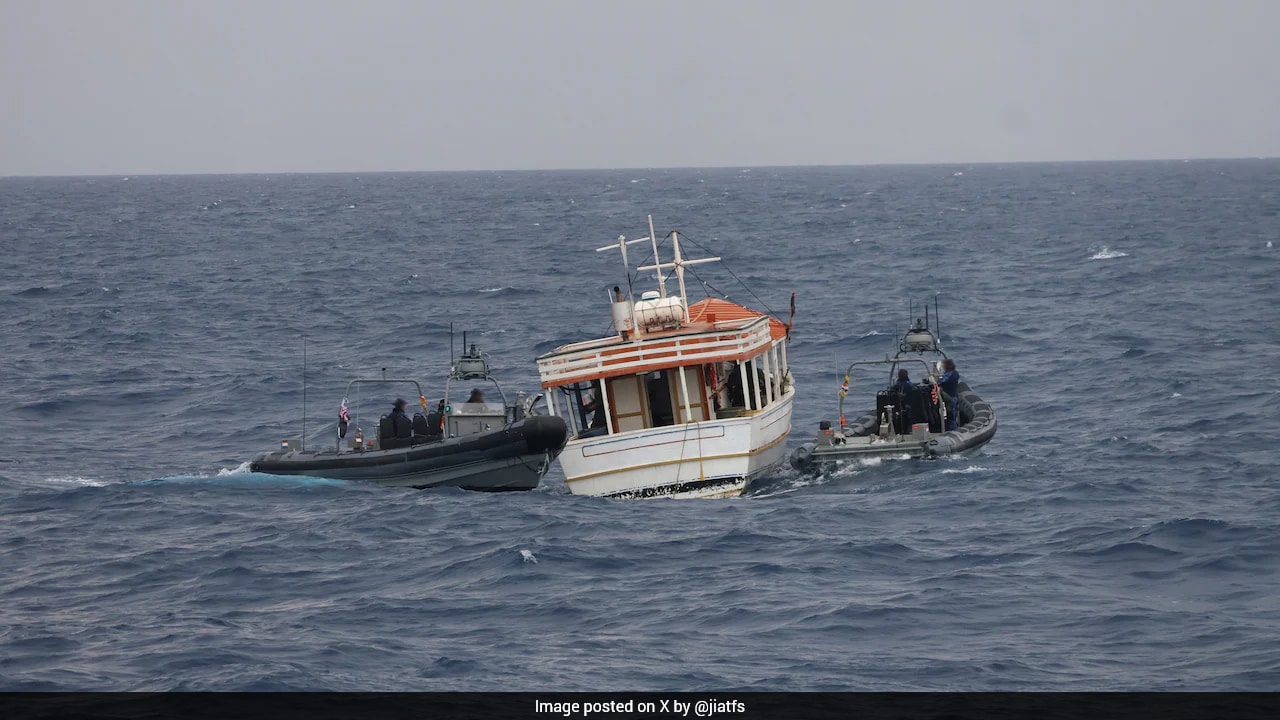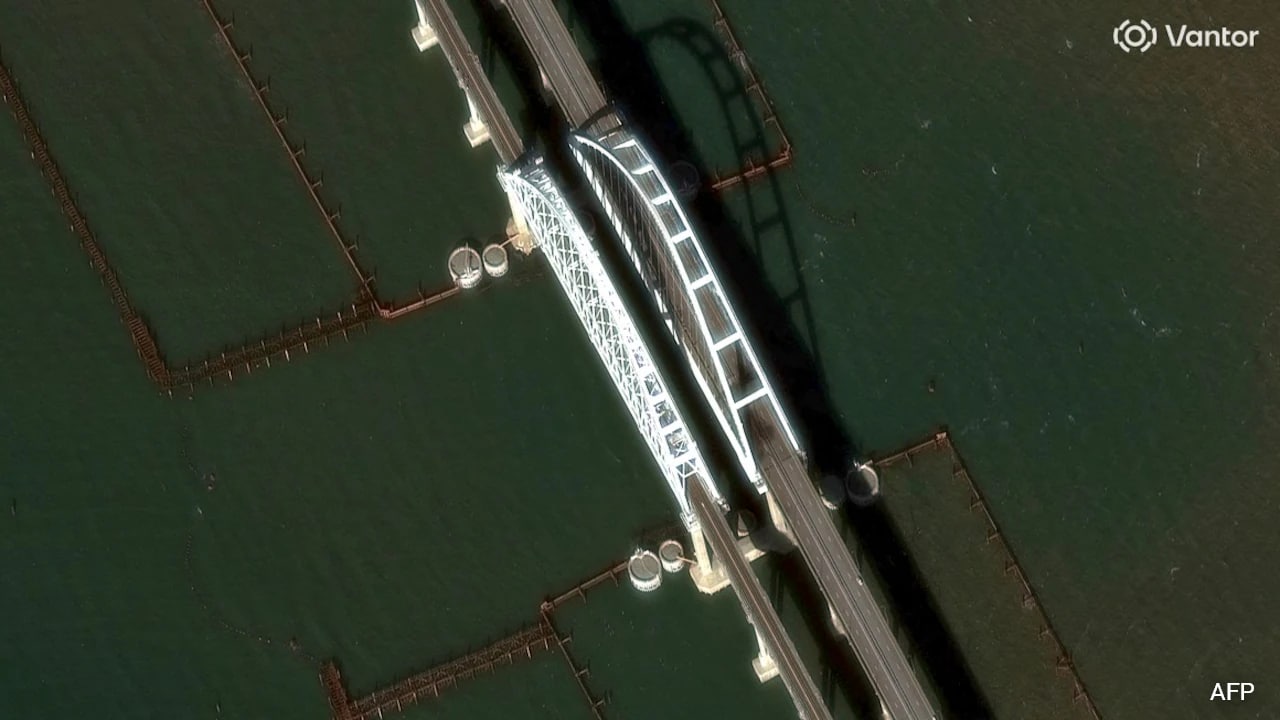
Every time a drone boat slams into a concrete piling in the Kerch Strait, cable news panels light up like a Christmas tree. Talking heads pull up maps of Crimea, draw dramatic red arrows across the water, and declare the beginning of the end for Moscow's southern front.
They are fighting the last war. Worse, they are reading an outdated map.
The lazy consensus in defense journalism treats the Crimean Bridge—the 12-mile road and rail link connecting mainland Russia to the occupied peninsula—as the single point of failure for the entire Russian military apparatus in southern Ukraine. If the bridge drops, the theory goes, Crimea starves, the front collapses, and Kyiv wins.
That was true in 2022. It is a dangerous fairy tale today.
While Western analysts spent the last three years refreshing satellite imagery of bridge spans and counting air defense barges, the Russian Ministry of Defense quietly rendered the Kerch Bridge militarily redundant. Meanwhile, Ukrainian planners—far smarter than the pundits cheering them on—pivoted to a completely different target set. If you are still measuring Ukrainian success by whether the Kerch Bridge falls into the Black Sea, you are missing the actual war.
The Myth of the Chokepoint
To understand why the media obsession with the Kerch Bridge is flawed, look at basic civil engineering and military logistics.
When Russia opened the rail section of the bridge in December 2019, it became the primary artery for heavy armor, artillery shells, and fuel moving into Crimea and onward to Kherson and Zaporizhzhia. In October 2022, when a truck bomb tore down two road spans and ignited a fuel train, the panic in Moscow was real. In July 2023, when Ukrainian Sea Baby surface drones crippled the roadway again, supply lines snarled.
Military planners hate single points of failure. I have watched defense logistics teams burn through billions of dollars trying to build redundancy into supply chains because an army with one road is an army waiting to die. Moscow learned that lesson the hard way after the 2022 strike.
They did not sit around waiting for Kyiv to finish the job.
Instead, Russia built a bypass. Over an 18-month period, Russian engineering battalions and state contractors laid a brand-new, heavy-duty railway line running directly along the northern coast of the Sea of Azov. It connects Rostov-on-Don to Mariupol, Berdyansk, and Melitopol, tying directly into the existing rail network leading into northern Crimea via Chongar and Armyansk.
Why Steel Beats Concrete Every Time
Here is the brutal engineering reality that armchair generals ignore: bridges are hard to fix; rail beds are effortless.
When a Storm Shadow missile or a naval drone damages a bridge pier, specialized heavy-lift cranes, marine engineers, and custom-fabricated steel spans are required. Repairs take months.
When a missile hits a flatland railway running across the Azov steppe, a Russian railway brigade rolls in with gravel, wooden ties, and steel rails. They clear the crater, tamp the ballast, weld the track, and have heavy freight trains rolling again in 24 to 48 hours.
By the time the Azov coastal railway went fully operational, the Kerch Bridge had already been downgraded from a vital military lifeline to a civilian vanity project and a secondary backup route. Moscow stopped sending high-value ammunition trains across the Kerch Strait long before the latest wave of strikes. Fuel tankers and armored columns moved overland through occupied Donetsk and Zaporizhzhia, sheltered under a dense umbrella of electronic warfare and short-range air defense systems.
Why Kyiv Still Strikes the Bridge
If the bridge is no longer the primary military artery, why does Ukraine still expend scarce long-range missiles and sophisticated unmanned surface vessels hitting it?
Because warfare is not just accounting. It is psychology, resource allocation, and asymmetric economics.
Every time Kyiv launches an attack on the Kerch Strait, they are not trying to starve a tank brigade in Zaporizhzhia. They are forcing Moscow to make terrible financial and military trades.
- The Air Defense Tax: Vladimir Putin staked his personal legacy on that bridge. He drove a Kamaz truck across it on opening day. Because the bridge is a political symbol of Russian imperial reach, the Kremlin cannot afford to let it fall. Consequently, Moscow has parked some of its most expensive, irreplaceable S-400 and S-500 air defense batteries around the Kerch Strait. Every S-400 launcher guarding concrete in Crimea is a launcher not protecting an oil refinery in Tatarstan, an airfield in Kursk, or frontline troops in Donbas.
- The Logistics Drag: Even if the bridge only carries civilian traffic and light military support, closing it forces every tourist, civilian contractor, and truckload of basic consumer goods onto the Azov land bridge. That creates massive traffic jams on the M-14 highway, clogging the exact roads the Russian military uses to move troops laterally across the southern front.
- The Radar Trap: Protecting a 12-mile bridge over open water requires constant maritime patrols, sunken barges, boom defenses, and airborne radar coverage. Ukraine uses strikes on the bridge to force Russian air defense radars to light up—exposing their positions so anti-radiation missiles or follow-on drone swarms can destroy them.
Dismantling the "People Also Ask" Fallacies
When people search for news on Kerch Bridge strikes, they usually ask three predictable questions. Every single one is built on a flawed premise.
"Will destroying the Kerch Bridge trap Russian troops in Crimea?"
No. This is 1944 thinking applied to 2026 geography. During World War II, cutting the Perekop Isthmus trapped Axis forces in Crimea because they had no overland exit and the Soviet Navy controlled the sea. Today, Russia controls the entire northern coastline of the Sea of Azov. Even if the Kerch Bridge vanished tomorrow morning, Russian forces in Crimea have multiple highways, a brand-new railway, and dozens of secondary dirt tracks connecting them to mainland Russia. Furthermore, Russia maintains a fleet of large Ropucha-class landing ships and civilian ferries capable of moving heavy equipment across the strait if necessary—though Ukrainian naval drones have made ferry crossings a high-stakes gamble.
"Why hasn't Ukraine just blown it up completely?"
Because concrete is absurdly hard to kill. People watch Hollywood movies and think a single missile vaporizes a bridge. In reality, modern reinforced concrete piers are designed to withstand massive vertical loads, maritime collisions, and seismic shifts. To permanently drop a bridge span, you cannot just poke a hole in the road deck—that gets patched with asphalt in a week. You have to shatter the load-bearing pier cap or sever the underwater pilings. Doing that requires massive warheads (like the German Taurus cruise missile, which Berlin repeatedly withheld) hitting the exact same square meter multiple times in sequence. Ukraine has had to improvise with drone boats packed with nearly a ton of explosives, which attack at the waterline—the hardest part of a bridge structure to penetrate.
"Does the bridge still matter to the war effort?"
Yes, just not in the way you think. Its value is political and economic, not strictly tactical. Crimea is the crown jewel of Putin's domestic propaganda. Watching it burn or seeing its physical link to Russia severed humiliates the Kremlin in front of its own population. In an autocracy where power depends on the projection of invincibility, humiliation is a strategic weapon.
What Actually Chokes Crimea
If dropping the Kerch Bridge won't win the war in the south, what will? Look at what Ukraine's Defense Intelligence (HUR) and Security Service (SBU) have actually been hitting while everyone else was staring at the strait.
To isolate Crimea today, you have to run a multi-node interdiction campaign. You do not cut one big artery; you sever fifty smaller veins simultaneously.
1. The Rail Bridges of the Isthmus
Instead of obsessing over the 12-mile span in the east, look north to Chongar and Henichesk. These narrow bottlenecks connect the Crimean peninsula to the mainland. They are much closer to Ukrainian lines, well within range of Storm Shadow, SCALP, and ATACMS missiles, and carry the freight coming off the new Azov railway. Hitting these bridges forces Russian logistics officers to unload trains onto trucks, drive them across temporary pontoon bridges, and reload them onto trains on the other side. That breaks the rhythm of mechanized warfare.
2. The Fuel Depots and Substations
Tanks do not run on patriotism. They run on diesel. Crimea has virtually no indigenous oil refining capacity. Every drop of fuel has to be imported and stored in massive tank farms at Feodosia, Sevastopol, and Dzhankoi. By systematically burning these depots to the ground with long-range drones, Ukraine removes Russia's ability to store fuel forward. It forces Moscow to run "just-in-time" fuel convoys directly from Russia to the front—convoys that are easily spotted by Western reconnaissance satellites and killed by HIMARS.
3. The Air Defense Network
Before you can choke a peninsula, you have to blind it. Ukraine has spent the last two years conducting a methodical, ruthless campaign against Russian radar stations and S-400 batteries across Crimea. Every time a radar dome on Mount Ai-Petri explodes, a blind spot opens up. That blind spot allows the next wave of drones to fly deeper, hit harder, and strike targets Russia thought were untouchable.
The Downside of the Contrarian View
Let's be intellectually honest. Dismissing the Kerch Bridge entirely carries its own blind spots.
While the Azov railway handles heavy military freight, it runs dangerously close to the active front lines in Zaporizhzhia. In several sectors, that rail line is less than 50 miles from Ukrainian artillery and reconnaissance drones. If Ukraine ever manages to mount a major offensive push toward Melitopol or Tokmak, the Azov railway will be the very first thing severed.
In that scenario—and only in that scenario—the Kerch Bridge instantly reverts to being the single most critical piece of infrastructure in the theater. If the land bridge is cut by ground troops, a damaged or destroyed Kerch Bridge turns Crimea from an unsinkable aircraft carrier into a massive prisoner-of-war camp for hundreds of thousands of Russian soldiers and civilians.
Ukraine knows this. That is why they keep chipping away at the bridge's structural integrity now, softening the target so that if the ground lines ever shift, the final blow is easy to deliver.
How to Read the Next Strike
Stop treating war like a Hollywood blockbuster where one dramatic explosion rolls the end credits. Modern industrial warfare is a math problem, a logistics grind, and a battle of attrition.
The next time your phone buzzes with a breaking news alert about explosions at the Kerch Bridge, ignore the breathless commentary about Crimea being "cut off." Look at the details that actually matter:
- Check the target: Did they hit the road deck (annoying for civilians) or the rail line (bad for heavy equipment)?
- Check the secondary explosions: Did they hit a fuel train, or did they take out an air defense battery guarding the approaches?
- Look 150 miles northwest: Watch what happens in Dzhankoi, Feodosia, or along the Azov coast 48 hours later. Usually, a strike on the Kerch Bridge is just the loud distraction designed to pull Russian radars and interceptors east while the real punch lands somewhere else entirely.
The Kerch Bridge is a monument to imperial hubris, and watching it burn makes for great television. Just don't mistake the fireworks for the war.