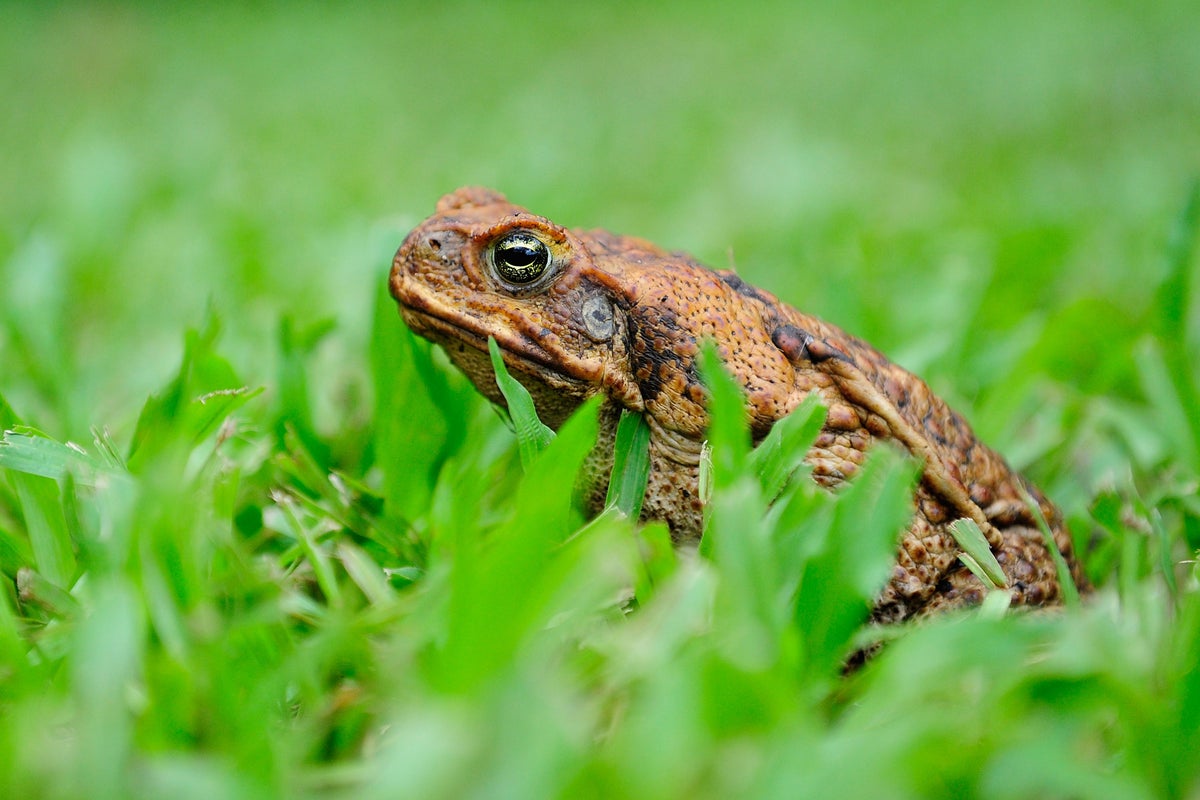
Local news outlets love the annual rainy season script. The sky darkens across the American Southeast, the humidity spikes, and right on cue, the media rolls out the exact same terrifying headline: Invasive toxic toads are coming to murder your dog. This lazy annual hysteria treats the cane toad (Rhinella marina) like a venomous assassin actively hunting down domestic pets. It triggers a predictable cycle of neighbor-against-neighbor yard-poisoning campaigns, frantic calls to wildlife control, and pet owners standing in their yards at 2:00 AM with flashlights and golf clubs.
The reality? The standard narrative about cane toads is completely broken. The hysteria creates an atmosphere of panic that leads to the exact behaviors that put pets in emergency rooms. Toads do not hunt dogs. Dogs hunt toads. More importantly, the panic-induced first aid guidelines peddled by amateur internet blogs often cause more fatalities than the toxin itself.
If you want to protect your animal this rainy season, you need to abandon the sensationalized media script and look at the actual mechanics of amphibian toxicity, canine behavior, and emergency intervention.
The Fatal Flaw in the Garden Hose Rescue Method
Open any local news article warning about the Bufo toad threat, and you will find the exact same piece of advice: If your dog bites a toad, flush its mouth out with a garden hose for ten minutes.
This advice is dangerously wrong.
I have spent years consulting with veterinary emergency technicians who dread rainy season, not because of the toads, but because of what frantic owners do with hoses. When a dog bites a cane toad, the parotoid glands on the toad's shoulders compress, secreting a thick, milky cardiotonic steroid solution containing bufotoxins. This toxin adheres instantly to the mucous membranes of the dog’s mouth.
Shoving a running hose into the mouth of a panicked, hyper-salivating, or actively seizing dog does not magically wash the toxin away safely. Instead, it blasts the toxin, along with gallons of water, straight down the animal's trachea and into its lungs.
The primary cause of immediate death or severe secondary complications in many suspected toad poisonings is not cardiac arrest from the bufotoxin. It is aspiration pneumonia caused by well-meaning owners drowning their pets in the backyard.
How to Actually Neutralize the Toxin
If your dog mouths a cane toad, step away from the hose. Your goal is mechanical removal through friction, not high-pressure flooding.
- Grab a dry or slightly damp microfiber towel or washcloth.
- Physically wipe the gums, tongue, upper palate, and inside of the cheeks. 3. Rinse the cloth out in a bucket of water—never directly in the dog's mouth—and wipe again.
- Repeat this process for several minutes until the slimy, foamy residue is completely gone.
By using a wiping motion directed outward from the front of the mouth, you remove the sticky chemical compounds without forcing fluid into the respiratory tract. If the dog is already showing neurological signs like tremors or rigid limbs, throwing water into their mouth is a virtual death sentence via asphyxiation.
The Great Backyard Euthanasia Myth
The secondary reaction to the annual toad panic is the immediate, aggressive execution of every amphibian that enters a suburban property. The Florida Fish and Wildlife Conservation Commission (FWC) and various state entities encourage residents to humanely euthanize cane toads on private property. The standard recommendation is applying lidocaine matrix or benzocaine ointment, refrigerating the toad to knock it out, and then freezing it.
While ecologically sound on paper for controlling an invasive species, property-by-property eradication is a statistical illusion that keeps pet owners trapped in a false sense of security.
The Math of Open Ecosystems
Cane toads are astonishingly prolific. A single adult female can lay up to 35,000 eggs twice a year. They utilize neighborhood retention ponds, golf course water hazards, drainage ditches, and flooded swales as massive, interconnected breeding networks.
Imagine a scenario where you spend your Friday night hunting down and freezing five large cane toads in your backyard. You wake up Saturday morning believing your yard is now a safe zone for your golden retriever.
You are completely wrong. You have simply created a temporary vacuum.
Amphibians are highly mobile opportunistic scavengers. The moment night falls, new adult toads from the storm drain three houses down will migrate straight into the territory you just cleared. Believing that your yard is "toad-free" because you killed a few individuals makes you lower your guard. That decreased vigilance is exactly when an encounter occurs.
+-------------------------------------------------------------+
|               THE INEFFECTIVE ISOLATION CYCLE               |
+-------------------------------------------------------------+
|  [ Your Yard: Cleaned ] <--- (Migrates at Night) <---       |
|                                                      |      |
|  [ Neighbor A: Unkempt ] ---> [ Retention Pond:  ] --+      |
|                               [ 35k Eggs/Batch   ]          |
+-------------------------------------------------------------+
True mitigation requires community-wide environmental modifications rather than intermittent backyard executions. If your neighborhood features open water hazards and poorly managed drainage, individual slaughter does nothing to move the needle on pet safety.
Stop Blaming the Amphibians for Canine Instincts
The media frames the cane toad as a malicious invader terrorizing local communities. This narrative completely ignores the biological reality: the toad is a slow-moving, defenseless lump of protein attempting to hide under your air conditioning compressor. It does not possess teeth, claws, or an aggressive temperament. It cannot spray poison across a room, nor does it jump at animals to attack them.
The problem is entirely on the other end of the leash.
Domesticated dogs, particularly terriers, hounds, and sporting breeds, possess high prey drives coupled with a lack of evolutionary familiarity with South American toxic fauna. A native southern toad (Anaxyrus terrestris) will hop away quickly or secrete a mild, foul-tasting substance that causes minor drooling. Dogs learn that messing with native toads is annoying but ultimately harmless.
When that same dog encounters a sluggish, massive cane toad, it applies the exact same behavioral script. It bites down hard. The cane toad's defensive mechanism is entirely passive; the compression of the bite is what forces the toxin out of the glands.
Fixing the Broken Variable
You cannot train an invasive amphibian population to stop existing. You can, however, train your dog.
Pet owners routinely spend thousands of dollars on automated yard gates, expensive lighting, and pest control sprays that do absolutely nothing to repel amphibians. Yet, they neglect basic behavioral modification.
- De-sensitization training: Utilize realistic rubber toad models scented with amphibian musk to train a rock-solid, non-negotiable "Leave It" command.
- Environmental conditioning: Train your dog to understand that the backyard at night is a structured environment, not a free-roaming hunting ground.
- Visual monitoring: If you live in an endemic zone, nighttime elimination rounds must be done on a short, non-retractable leash with a high-intensity tactical flashlight illuminating the path ahead of the dog's nose.
If your dog is allowed to sprint into dark, overgrown landscaping bushes unsupervised at 11:00 PM during a tropical depression, you are actively facilitating a toxic crisis. The responsibility rests entirely on management, not on eradication.
Dismantling the Universal Poison Panic
Another major failure of the standard media warning is the inability to accurately differentiate between native wildlife and invasive threats. This lack of precision leads to the widespread slaughter of harmless native species that actually keep local ecosystems functional.
| Amphibian Species | Physical Markers | Toxic Risk Profile | Ecological Status |
|---|---|---|---|
| Cane Toad (Rhinella marina) | Size larger than 4 inches, flat shield-like head, massive triangular parotoid glands extending down the back. | High. Can cause seizures, arrhythmias, and cardiac arrest in minutes. | Invasive. |
| Southern Toad (Anaxyrus terrestris) | Size under 3.5 inches, prominent cranial crests (raised knobs between the eyes). | Low. Causes mild oral irritation and foaming; non-lethal. | Native. Protected. |
| Oak Toad (Anaxyrus quercicus) | Tiny (under 1.5 inches), light stripe down the center of the back. | Negligible. Completely harmless to domestic pets. | Native. Protected. |
When frightened homeowners kill every brown, bumpy creature that hops across their driveway, they destroy the native predators that compete with cane toad ducklings and beetles for resources. By wiping out native southern toads, you actively open up ecological niches, allowing the invasive cane toad populations to expand even faster.
Real Mitigation Over Theater
If you want to stop worrying about the rainy season, quit buying into the sensationalized news broadcasts and fix your physical environment. Cane toads do not possess specialized climbing or digging equipment. They are heavy, clumsy, and predictable.
Stop leaving pet food bowls outside; cane toads are opportunistic omnivores that will happily sit in a dog bowl eating kibble and contaminating the water supply with skin secretions.
Clear away the low-hanging structural debris. If your home has ornamental wrap-around bushes where the branches touch the soil, you have built a five-star luxury resort for invasive amphibians. Trim the undersides of your shrubs so there is a clear six-inch clearance between the ground and the lowest leaves. Eliminate standing water, repair dripping outdoor spigots, and switch your exterior security lights to motion sensors. Constant nighttime lighting attracts clouds of insects, creating a literal buffet line that coaxes every cane toad in a half-mile radius straight to your back porch.
The annual toxic toad panic is a symptom of a broader societal trend: choosing reactive, aggressive hysterics over proactive, calculated environmental management. Your dog does not need you to wage an ideological war against the local wildlife. Your dog needs you to put down the garden hose, pick up a towel, turn off the porch lights, and hold the leash.