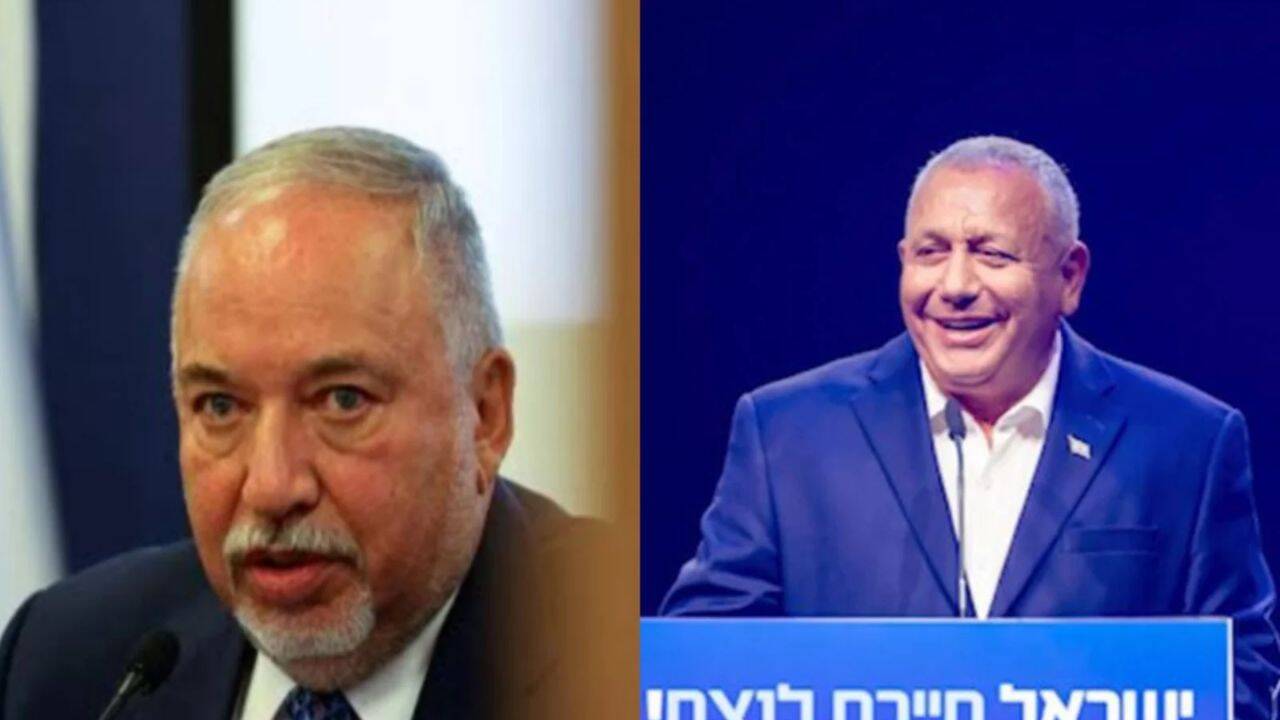
Every political pundit in Jerusalem is currently hyperventilating over the exact same headline. The President taps Gadi Eisenkot to form a government, and before the ink on the mandate is even dry, friction erupts with Avigdor Lieberman. The mainstream press wants you to believe the coalition is dead on arrival. They are wrong. Completely, fundamentally wrong.
The lazy consensus in Israeli political journalism treats every public disagreement during coalition negotiations as a fatal structural crack. It is a Pavlovian response trained by five consecutive election cycles between 2019 and 2022. Reporters see a stern press release from Yisrael Beiteinu or a cold shoulder from the former IDF Chief of Staff, and they immediately start drafting obituaries for the government before it is even sworn in.
Here is the reality they refuse to see. A bloodless, smiling, friction-free negotiation between Eisenkot and Lieberman would be the actual death sentence for this administration. The public spat is not a bug in the system. It is the exact mechanism required to keep a broad, ideologically incoherent bloc from imploding six months down the road.
The Myth of the Harmonious Coalition
To understand why the media is misreading this, you have to look at how Israeli coalition mathematics actually function under the Basic Law The Government. Once the President hands a mandate to a Knesset member, the clock starts ticking—28 days, with a possible 14-day extension. During this window, political commentators obsess over "unity" and "chemistry."
I have watched political strategists burn millions of shekels on focus groups trying to manufacture the illusion of harmony between rival party leaders. They stage awkward photo-ops over coffee. They draft vague, meaningless joint statements about "putting the country first." And every single time, that artificial harmony shatters the moment the first real budget vote or security crisis hits the cabinet table.
Why? Because suppressing ideological friction during the formation phase simply defers the explosion to a time when the government is actually trying to govern.
Think back to the 2021 "Change Government" led by Naftali Bennett and Yair Lapid. The media praised the miraculous kumbaya spirit of its formation. Right-wing hawks, center-left liberals, and an Arab Islamist party all smiled for the cameras. Yet, because they papered over their core disagreements to get past the swearing-in ceremony, the coalition had zero shock absorbers. When minor ideological tremors hit over West Bank regulations a year later, the entire structure collapsed.
Eisenkot and Lieberman are doing the exact opposite. They are bleeding the pressure out of the pipes right now, in full view of the public, while the leverage is still on the table.
Decoding the Eisenkot-Lieberman Friction
Let us strip away the dramatic television chyrons and look at what is actually happening between these two men. This is not a personal vendetta. It is a classic collision of two distinct political operating systems.
- Gadi Eisenkot operates on institutional consensus and strategic patience. As the 21st Chief of General Staff of the IDF, his entire worldview is built on methodical planning, broad legitimacy, and avoiding unnecessary tactical fires. He views the prime minister's chair as a stabilizing anchor.
- Avigdor Lieberman operates on transactional leverage and ideological clarity. Having served as Defense Minister, Finance Minister, and Foreign Minister, Lieberman knows that in Israeli politics, you only get what you extract before the coalition agreements are signed. Once the government is sworn in, a smaller party's leverage evaporates overnight.
When Lieberman pushes back against Eisenkot’s initial framework, he is not trying to sink the ship. He is establishing his price tag for his base. Lieberman’s voters—largely secular, right-leaning, and fiercely focused on economic and civil reforms—did not elect him to be a silent passenger on a centrist train. If Lieberman rolls over and accepts Eisenkot’s terms without a fight, he ceases to exist politically.
Conversely, if Eisenkot immediately caves to every demand from Yisrael Beiteinu, he alienates the moderate and center-left factions he needs to reach the magic number of 61 seats in the 120-member Knesset.
The rift is a choreographed necessity. Both men need to prove to their respective constituencies that they fought tooth and nail before compromising.
The Questions Voters Are Getting Wrong
If you look at what people are searching for right now, the public is being fed the wrong anxieties. Let us dismantle the three most common misconceptions driving the current panic.
Will Lieberman refuse to sit in an Eisenkot-led government?
No. Look at the alternative. If Lieberman torpedoes Eisenkot’s mandate, the mandate either passes to a rival bloc that Lieberman has spent years trying to unseat, or the country plunges straight back into another grueling election cycle. Neither scenario increases Lieberman’s power. In politics, you follow the incentives, not the rhetoric. Lieberman wants the Finance Ministry or the Defense Ministry. He cannot get either from the opposition benches.
Does this rift prove Eisenkot lacks the political ruthlessness to be Prime Minister?
This is the most absurd take circulating in Tel Aviv coffee shops. Critics love to paint former generals as naive amateurs who get eaten alive by career politicians. They cite historical cautionary tales while ignoring the fact that Eisenkot survived decades at the absolute apex of Israel’s defense establishment—an arena far more cutthroat than the Knesset cafeteria. By refusing to immediately fold to Lieberman’s opening demands, Eisenkot is demonstrating the exact discipline required to hold a fragile coalition together. A weak leader gives away the store on day one to buy quiet headlines. A strong leader endures bad press in week one to secure a functional government for year two.
Is the coalition dead if they do not sign an agreement within the first two weeks?
In Israeli coalition building, nothing happens until the final 48 hours of the mandate. Everything before that is theater. The leaked memos, the angry interviews on the evening news, the "sources close to the negotiations" claiming talks have hit a dead end—all of it is standard bargaining tactic. Judging a coalition negotiation in its first week is like judging a marathon at the first water station.
The Structural Reality of the 61-Seat Trap
To truly grasp the stakes here, you have to understand the brutal math of the Knesset. Any coalition assembled by Eisenkot is going to be a razor-thin ideological patchwork. It will likely require balancing secular nationalists like Lieberman with center-left pragmatists, and potentially relying on the external support or abstention of non-aligned factions.
Imagine a scenario where Eisenkot successfully muzzles Lieberman today. The press applauds. The coalition agreements are signed in record time. The government is sworn in with 62 seats.
Now, fast-forward four months. The government has to pass a state budget. Suddenly, Lieberman demands sweeping cuts to ultra-Orthodox stipends and a radical overhaul of public transportation on Shabbat. Because these issues were never fought out and codified into rigid, legally binding coalition guidelines during the formation phase, the government enters an existential crisis. Lieberman threatens to vote against the budget, which automatically dissolves the Knesset under Israeli law.
That is the trap of premature peace.
By having this brutal, public confrontation right now, Eisenkot and Lieberman are forced to write ironclad, hyper-specific clauses into the coalition guidelines. They have to define the exact parameters of conscription laws, judicial appointments, security operations, and budget allocations before anyone takes an oath of office. It is ugly. It is slow. It makes for terrible television. And it is the only way to build a firewall against future blackmail.
What Actually Matters in the Negotiations
Stop watching the press conferences. Stop reading the Twitter threads from party spokespeople. If you want to know whether Eisenkot is actually succeeding or failing, ignore the noise and track three concrete indicators over the next twenty days.
- The Allocation of the Finance Committee: Forget the shiny ministerial titles for a moment. Whoever controls the Knesset Finance Committee controls the actual flow of money in Israel. If Lieberman secures the Finance Ministry and his party gets the chairmanship of the Finance Committee, he holds a loaded weapon over the entire coalition. If Eisenkot splits those two power centers between different parties, he has successfully neutralized Lieberman's ability to hold the budget hostage.
- The Veto Mechanism in the Coalition Guidelines: Watch closely for how the final agreement handles disagreements in the Security Cabinet. Lieberman will demand formal veto power over major diplomatic or military shifts. Eisenkot, drawing on his experience as Chief of Staff, knows that a prime minister cannot govern with handcuffed hands during a crisis. How they word this specific clause will tell you who won the negotiation.
- The Timing of the Smaller Factions: Eisenkot should not sign a deal with Lieberman first. In classic coalition strategy, you lock in the smaller, cheaper parties first to build momentum and create a sense of inevitability. If Eisenkot signs agreements with the moderate factions before returning to Lieberman, the psychological pressure shifts entirely onto Yisrael Beiteinu. Nobody wants to be the lone party blamed for dragging the public back to the ballot box.
The Downside of the High-Friction Strategy
Let us be completely honest about the risk here. Playing hardball with a seasoned operator like Lieberman carries a very real danger of miscalculation.
When you let ideological battles play out in public, you harden the positions of both sides. Every time Lieberman goes on television and draws a red line, it becomes harder for him to back down without looking weak to his voters. Every time Eisenkot’s camp leaks that they will not be extorted, they box themselves in.
There is a fine line between productive tension and an irreversible ego collision. Israeli political history is littered with coalitions that failed to materialize simply because two leaders painted themselves into corners they could not exit without losing face. Furthermore, prolonged public infighting erodes public trust before the government even begins its work, handing free ammunition to the opposition to paint the incoming administration as chaotic and illegitimate.
Eisenkot is walking a tightrope without a net. He has to push Lieberman hard enough to establish dominance, yet leave him a golden bridge to retreat across so Lieberman can claim victory to his base.
Stop Consuming Political Theater
The media ecosystem thrives on daily drama. A headline screaming about "rifts" and "collapsing talks" generates clicks, outrage, and panel discussions. A headline explaining that two veteran political actors are engaged in a predictable, necessary calibration of executive power does not.
Do not fall for the panic. The friction between Gadi Eisenkot and Avigdor Lieberman is not evidence that the government is falling apart. It is evidence that both men are taking the mechanics of power seriously enough to fight over the rules before the game begins.
If they were smiling and agreeing on everything today, you should be terrified. Because they are fighting now, this coalition might actually survive.