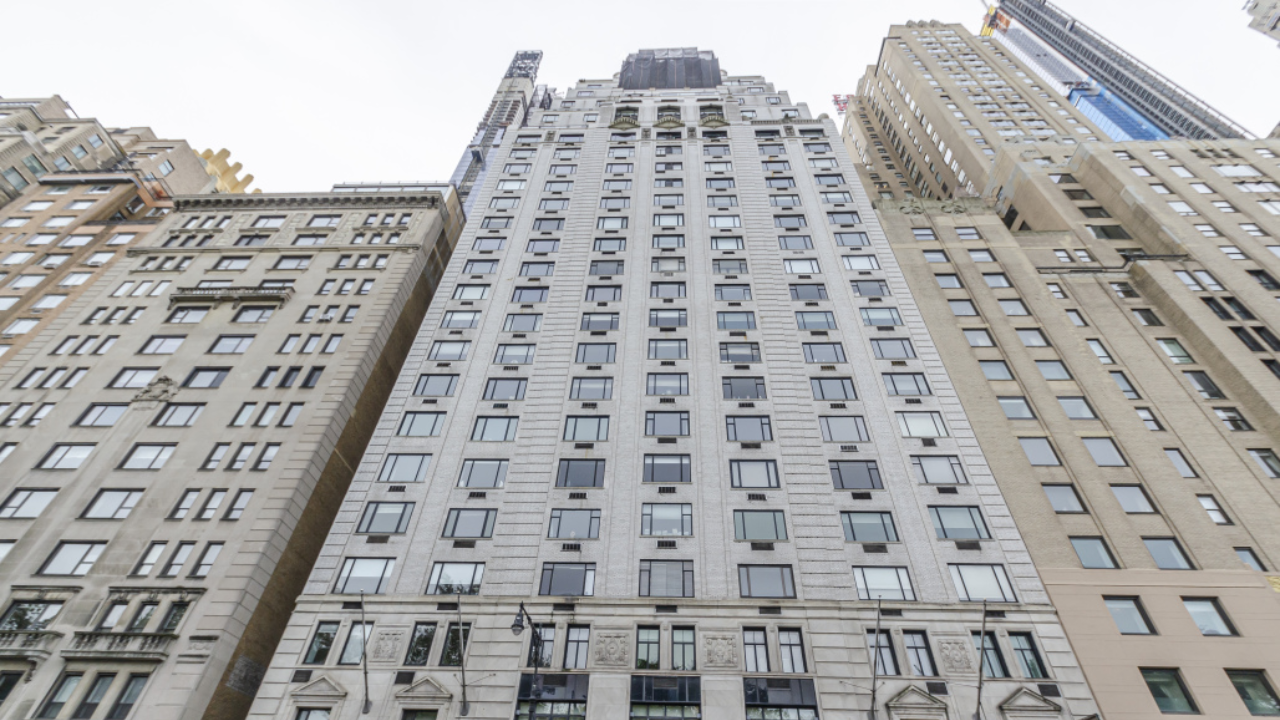
Every time a real estate brochure slaps the phrase "blank canvas" over a cavernous, concrete-floored concrete box perched a thousand feet in the air, a developer gets away with grand larceny.
Take the infamous 2018 marketing campaign for the unbuilt penthouse shell tucked under the roof of the Hampshire House at 150 Central Park South. Listed at a staggering $40 million, the industry media swooned. They framed it as a rare collector's item, an empty vault where some billionaire titan could project their wildest architectural fantasies against panoramic views of Central Park. Read more on a similar subject: this related article.
It was pure fiction.
That penthouse shell was not a visionary playground. It was a structural dumping ground. It was a developer's way of cashing out at the top of the market while transferring millions of dollars in construction risk, landmark bureaucracy, and logistical nightmare directly onto the buyer. Further analysis by Financial Times delves into related views on the subject.
For decades, the luxury real estate commentariat has swallowed this narrative whole. They tell you that buying raw space is the ultimate flex. They claim it gives you total control, pure customization, and bespoke luxury.
They are lying to you. Or worse, they are profoundly ignorant of how heavy construction actually works in a historic high-rise.
Buying an unfinished penthouse shell in a landmarked cooperative building for tens of millions of dollars is not a flex. It is a masterclass in financial self-harm. Let us tear down the lazy consensus surrounding raw luxury shells and look at the brutal economic and engineering realities nobody dares to print.
The Myth of Absolute Customization
The core pitch of the raw shell is simple: Build your dream home from scratch. It sounds liberating. You dictate the slab-to-slab heights, the marble grain, the hidden lighting channels, the smart-home nervous system.
Here is what the glossy brochures leave out. Total customization does not exist when you operate inside someone else's concrete cage.
When you buy a shell like the Hampshire House penthouse, you are not starting with a blank slate. You are starting with a frozen set of immutable constraints established by mid-century engineering and modern municipal code. You are locked into existing structural columns that you cannot move an inch without triggering a building-wide collapse. You are tethered to rigid riser locations for plumbing, electrical stacks, and HVAC feeds that were engineered during the Roosevelt administration.
If your "dream layout" requires moving a main drain stack six feet to the left, you are immediately entering a war zone. You will spend six months and a small fortune paying structural engineers to prove to the city Department of Buildings that core-drilling a post-tensioned slab will not drop your primary bathroom into the dining room of the billionaire living below you.
Customization in a shell is not creative freedom. It is a grueling exercise in compromise disguised as luxury. You pay top-dollar retail prices for raw concrete, and then you pay millions more just to figure out how to work around the structural choke points the developer left behind because they ran out of capital or courage.
The Cooperative Board Nightmare
Let us talk about the governing body of 150 Central Park South. Hampshire House is a cooperative, not a condominium. If you do not understand the difference, you have no business writing checks with multiple zeros.
In a condominium, you own your unit fee-simple. In a co-op, you own shares in a corporation that owns the building, accompanied by a proprietary lease. This distinction is the difference between renting an apartment and joining a monastic order with a veto stamp.
Cooperative boards in iconic New York landmark buildings are not passive property owners. They are medieval fortress wardens. When you buy a finished apartment, the board reviews your financials and lets you move in. When you buy an unbuilt shell, you present the board with a blank checkbook and an army of contractors who want to tear open the roof, hoist massive steel beams up the side of Central Park South, and vibrate the masonry for eighteen straight months.
Imagine sitting before a board of retired financiers and old-money estate holders, explaining that your custom HVAC acoustic dampening plan will keep the compressor noise out of the penthouse directly below. Imagine watching them reject your architect’s submittals four times because the staging schedule interferes with the lobby flower rotations.
Co-op boards hate construction. They despise the liability of water damage, facade breaches, and contractor disputes. When a developer sells an unbuilt shell, they wash their hands of this political bloodbath. They take their profits, exit stage left, and leave the buyer to battle a hostile board for control of the physical asset. That $40 million price tag is merely the entry fee to a five-year litigation and architectural hazing ritual.
The Developer Exit Strategy
Why do developers sell shells in the first place?
The answer is brutally simple: Cowardice and margin protection.
Developing a ultra-luxury penthouse in a historic property is a high-beta gamble. Finishing an apartment requires making hard design choices about finishes, layouts, and amenities that might alienate a segment of the buyer pool. Worse, finishing the space requires the developer to absorb construction inflation, supply chain bottlenecks, labor strikes, and unexpected asbestos abatement.
By stopping work at the drywall-and-bare-studs stage, the developer performs a brilliant financial judo move. They capture the highest possible valuation for the view and the square footage while offloading the entire execution phase onto a buyer who lacks negotiating leverage with local trade unions.
Construction costs in major global hubs are volatile and notoriously unpredictable. When you buy a finished unit, the developer takes the hit if steel prices spike or copper tubing triples. When you buy a shell, every single cost overrun, delay, and engineering SNAFU belongs to you. The developer gets all the upside of the peak market cycle with none of the operational execution risk.
It is the equivalent of buying a Ferrari chassis with no engine, no interior, and no transmission, paying full price, and being told by the salesman that you are lucky because you get to choose the color of the steering wheel.
The Carrying Cost Bleed
Real estate amateurs look at purchase price. Professionals look at the cost of capital and holding friction.
An unbuilt shell generates zero yield. It produces no rental income. It cannot be leveraged cleanly because traditional lenders hate financing raw, uninhabitable spaces. Meanwhile, the maintenance fees on a multi-thousand-square-foot penthouse at Hampshire House are astronomical. You are paying tens of thousands of dollars every single month in monthly maintenance, real estate taxes, and building assessments just for the privilege of staring at bare concrete blocks and exposed electrical conduit.
While you spend three years fighting with the city, wrangling artisanal stone fabricators from Italy, and rewriting your interior designer's CAD drawings, your carrying costs are quietly devouring millions of dollars. By the time the first custom chandelier is hung, your effective cost per square foot has blown past any rational valuation model. You have not made an investment; you have built an expensive monument to sunk cost fallacy.
What You Should Actually Do Instead
If you possess the capital to play in the ultra-luxury tier, stop falling for the romance of the blank page. The romantic notion of crafting a home from nothing is a marketing illusion designed to separate ambitious buyers from their liquidity.
If you want a trophy property on Central Park South or Fifth Avenue, buy a finished, beautifully executed residence designed by a master architect who already absorbed the pain of construction. Let someone else deal with the Department of Buildings violations, the structural engineering surprises, and the co-op board hearings.
If you must buy raw space, demand a massive structural and financial discount that accounts for the reality of urban construction risk. Never pay retail prices for wholesale liability. Subtract the estimated cost of gut-to-finish construction—multiplied by two for safety—plus three years of holding costs and board friction, and slash that number from the asking price before you even pick up a pen.
The penthouse shell is not a blank canvas. It is an unfinished trap.
Stop buying the promise. Buy the finished product, or do not play the game at all.