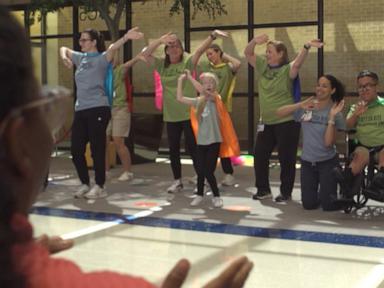
The feel-good media engine loves a therapeutic dance camp for children with mobility differences. The playbook never changes. Slow-motion footage of a child in a walker moving to a pop song. A tearful parent talking about "inclusion." A smiling physical therapist insisting that movement is medicine. The segment ends, the viewer feels a fleeting warmth, and absolutely nothing changes for the disabled community.
These viral spectacles are not therapeutic breakthrough events. They are emotional validation loops designed for able-bodied consumers.
When we reduce physical rehabilitation to a seasonal dance camp, we substitute genuine, long-term physiological progress for short-term aesthetic joy. Movement is indeed medicine, but the dosage, precision, and delivery mechanism matter. A week of rhythmic sway does not replace the grueling, repetitive, and often unglamorous reality of targeted neuromuscular re-education. Worse, it creates a dangerous illusion: that joy is a substitute for clinical outcomes.
The Illusion of Rhythmic Rehabilitation
The core argument for therapeutic dance is that music lowers the cognitive barrier to movement. Proponents claim that the rhythm bypasses damaged neurological pathways, allowing children with cerebral palsy, spina bifida, or muscular dystrophy to achieve motor milestones under the guise of play.
This is a profound misunderstanding of neuroplasticity.
Neuroplasticity requires high-repetition, task-specific, and progressively overloaded interventions. To change the cortical mapping of a paretic limb, a child needs thousands of precise, targeted repetitions. They do not need to wave their arms to a track by Taylor Swift. Dance, by its very nature, is variable, unpredictable, and diffuse. It prioritizes the artistic whole over the mechanical part.
When a pediatric physical therapist integrates dance, they often compromise the integrity of the biomechanical intervention to maintain the engagement of the child. If a child with spina bifida is poorly aligned while trying to perform a dance routine, the compensatory movements they employ do more harm than good. They reinforce pathological movement patterns, tighten hypertonic muscle groups, and place undue stress on joints already suffering from structural instability.
Imagine a scenario where a stroke patient is told to abandon their targeted occupational therapy grid and instead just paint a canvas because "art is healing." We would call it malpractice. Yet, when it comes to disabled children, the bar drops from clinical efficacy to emotional satisfaction.
The Commodification of Inspiration
We must address the systemic exploitation inherent in the "therapeutic camp" economy. These initiatives are rarely funded by sustainable healthcare infrastructure. Instead, they rely on corporate sponsorships, philanthropy, and media coverage.
To secure that funding, they must produce inspiration.
The children become actors in a performance of triumph. The metrics of success shift from objective clinical measurements—like goniometric range of motion, the Gross Motor Function Measure (GMFM), or gait velocity—to subjective emotional markers. Did the child smile? Did the parent cry? Did the video get a million views on social media?
If you talk to pediatric orthopedists who treat these children long after the camp buses leave, the reality is bleak. The contractures are still there. The muscle weakness remains unchanged. The structural subluxation of the hip progresses entirely unaffected by the weekend's choreography.
I have spent over a decade analyzing clinical rehabilitation programs, and the most devastating pattern I see is the post-camp crash. A child is placed in an environment where enthusiasm is treated as capability. They return to their daily lives only to realize that their real-world environment remains completely inaccessible. The stairs at school are still too high. The sidewalks are still cracked. The dance camp provided an escape, not an evolution.
Dismantling the Feel-Good Premise
Let us dissect the common justifications used by the operators of these camps and the journalists who profile them.
"Dance improves socialization and self-esteem."
Socialization is a human right, not a therapeutic intervention. If the primary benefit of a medical program is that children get to hang out with other children, you do not have a therapy clinic; you have a playground. We must stop medicalizing social interaction to justify poorly designed physical programs. If a child needs peer connection, build accessible community spaces. Do not mask it as physical therapy to secure insurance reimbursement or corporate grants.
"It provides joy that traditional therapy cannot."
Traditional physical therapy can be tedious, painful, and frustrating. That is because changing a human body is hard work. The expectation that medical intervention must always be entertaining is a modern luxury that compromises outcomes. Professional athletes do not expect their strength and conditioning sessions to feel like a party. Children with severe mobility deficits deserve the same respect and rigor as elite athletes. Their training should be engaging, yes, but prioritizing joy over mechanics is a disservice to their long-term autonomy.
"Any movement is better than no movement."
This is the laziest consensus in modern wellness culture. Incorrect movement is actively harmful. A child with hypertonic diplegic cerebral palsy who spends hours performing uncontrolled, spastic movements under the banner of dance is actively reinforcing the spasticity. They are strengthening the wrong muscle groups, worsening their tip-toe gait, and accelerating the need for invasive orthopedic surgeries down the line.
The Hard Data on Efficacy
Let us look at what actually works when dealing with significant pediatric mobility impairments.
| Intervention Type | Neurological Mechanism | Long-Term Efficacy | Scalability |
|---|---|---|---|
| Constraint-Induced Movement Therapy (CIMT) | Forces cortical reorganization via intensive use of the affected limb. | Exceptionally high; measurable changes in brain matter. | Low; requires intense clinical oversight. |
| Locomotor Training (Body-Weight Supported Treadmill) | Stimulates spinal cord central pattern generators through repetitive gait. | High; directly translates to independent walking velocity. | Medium; requires specialized equipment. |
| Therapeutic Dance Camps | Relies on generalized emotional engagement and variable movement. | Low; negligible long-term changes in objective motor scales. | High; easy to market and fund. |
The data is clear. The interventions that yield permanent, life-altering independence are intensive, specific, and demanding. They do not translate well to short-form video segments because they involve a child repeating the exact same ankle dorsiflexion movement five hundred times in a drab clinical room. But that drab room is where freedom is won.
Stop Fixing the Child, Fix the Environment
The hidden danger of the therapeutic dance narrative is that it places the burden of adaptation entirely on the disabled child. The subtext is clear: if the child works hard enough, dances beautifully enough, and stays positive enough, they can transcend their disability.
This is a lie.
A child with an L1 level spina bifida lesion will never dance away their paralysis. No amount of rhythm will regenerate damaged spinal nerves. By focusing our societal attention and resources on these localized, high-emotion interventions, we ignore the structural barriers that actually limit their lives.
If we took the millions of dollars poured into specialized, exclusive therapeutic camps and redirected them toward universal design, the impact would be revolutionary. We do not need more disabled children learning to adapt to an able-bodied world through performance. We need an environment that does not require them to perform just to navigate it.
Stop buying into the media-friendly spectacle of the dancing disabled child. Demand rigorous, evidence-based, intensive clinical therapies that prioritize measurable physical autonomy over emotional optics. Demand accessible infrastructure. Demand reality, not inspiration porn.
The child does not need to learn how to dance to your tune. You need to build a world where they can move to their own.