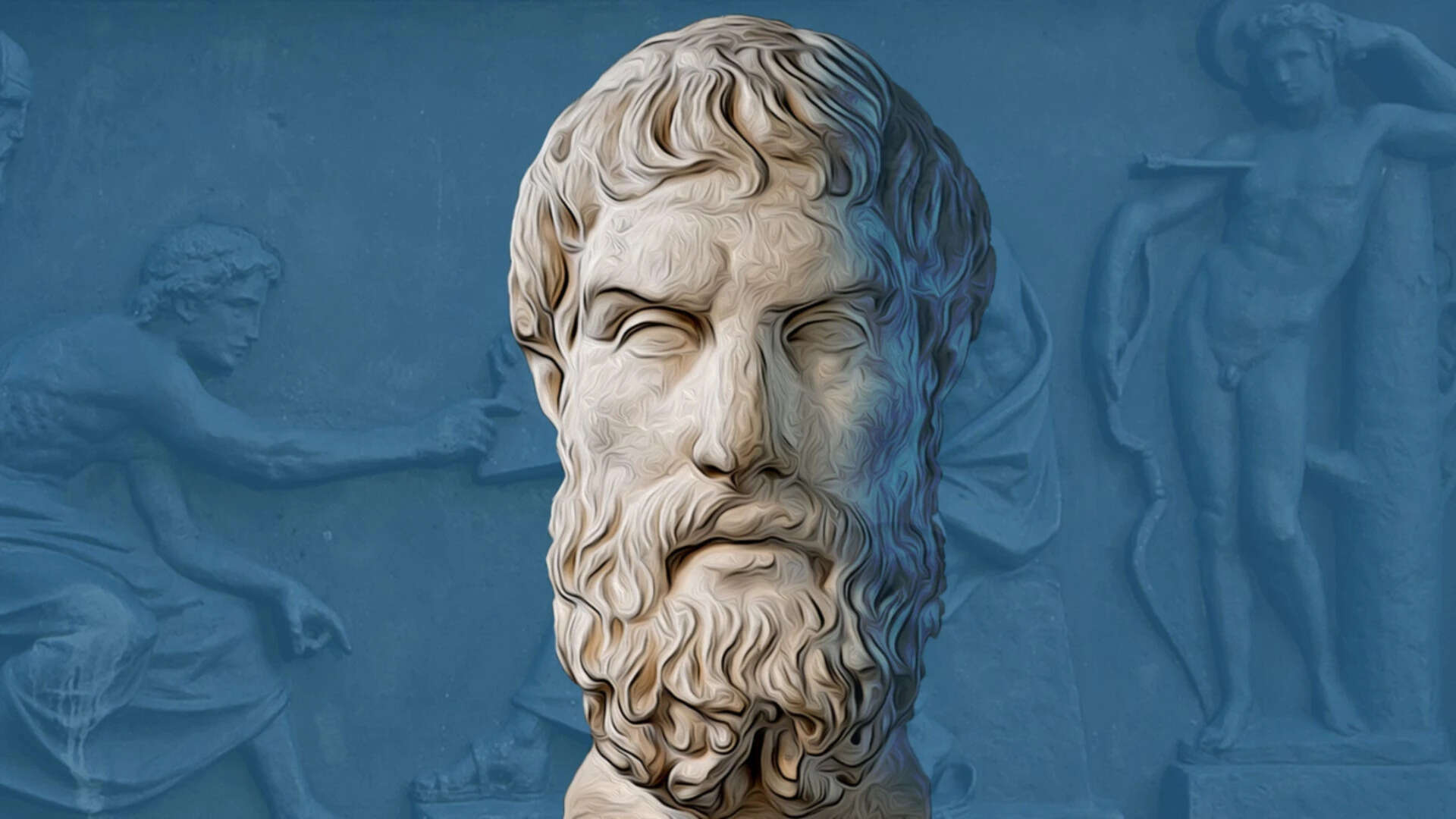
Epicurus was wrong, and the modern internet’s obsession with his most famous quote is nothing more than intellectual copium.
Every single day, self-proclaimed stoics and pop-philosophers post the same cozy line: "Death does not concern us, because as long as we exist, death is not here. And when it does come, we no longer exist." It sounds neat. It fits nicely on a ceramic mug or an Instagram graphic. It promises a painless way to dodge the single greatest existential crisis hardwired into human psychology.
It is also fundamentally flawed logic that completely misses how human beings experience value, time, and loss.
If you are using Hellenistic philosophy to numb yourself to the reality of non-existence, you aren't being rational. You are hiding behind a parlor trick.
The Symmetry Argument Is a Psychological Lie
Epicurus and his later Roman popularizer, Lucretius, relied heavily on what philosophers call the Symmetry Argument. The logic goes like this: You do not feel horror or regret about the billions of years that passed before you were born. Therefore, it is irrational to feel horror or regret about the billions of years that will pass after you die. Pre-natal non-existence equals post-mortem non-existence.
It sounds airtight until you apply basic human cognitive mechanics.
We are forward-looking creatures. Our brains are prediction engines built specifically to care about future states, not past ones. I have spent years analyzing how people handle high-stakes risk and existential anxiety, and I can tell you that zero people are comforted by pre-natal symmetry when facing a terminal diagnosis or the loss of a parent.
Why? Because back then, you had nothing to lose. You had no memories, no attachments, no unfinished projects, and no loved ones relying on you.
The time after your death is asymmetrical precisely because you did exist in the middle. The void after a life lived is defined by deprivation; the void before it was defined by neutrality. Pretending those two states of non-existence carry the same emotional weight is lazy logic.
Why Death Actually Harms You (Even If You Can't Feel It)
The core error in the Epicurean view is the assumption that something can only harm you if you are consciously present to experience the pain. Epicurus defined harm strictly through sensory experience: no sensation, no suffering, no harm.
This is a narrow, outdated view of human well-being.
Philosopher Thomas Nagel dismantled this decades ago with a simple proposition: harm is not just about bad sensations; it is about deprivation. Death deprives you of all the good things you would have experienced had you continued living.
Imagine a brilliant scientist on the cusp of curing a rare disease. A falling brick kills her instantly and painlessly in her sleep. Does death harm her?
- The Epicurean answer: No. She feels no pain, has no awareness, and no longer exists to suffer.
- The real answer: Absolutely. It robbed her of twenty more years of discovery, love, joy, and achievement.
The harm of death lies entirely in what it steals from your potential trajectory. When you die early, you are deprived of the future goods of life. You don't need to be consciously floating around in a dark room feeling sad about it for that deprivation to be a tragedy.
The Cost of Pseudo-Stoic Detachment
I have watched people use this superficial Epicurean mindset to justify absolute passivity.
If death truly does not concern us, then neither does the future. If non-existence is a neutral zero, then the termination of your projects, relationships, and legacy carries no real weight. Why bother building anything that outlasts you? Why care about the state of the planet fifty years after you are buried?
When you train yourself to believe that your eventual absolute erasure is "nothing to worry about," you run the risk of blunting your edge in the present.
Anxiety around mortality is not a bug in the human operating system; it is a feature. It is the raw driver behind human ambition, art, science, and deep connection. The panic you feel when contemplating your own finite timeline is the exact voltage required to shock you out of complacency.
When you sanitize death with neat little ancient quotes, you unplug the clock. You dilute the urgency.
How to Actually Live With the Void
Stop trying to logic your way out of feeling terrified of non-existence. The fear is rational. The dread is earned. The deprivation is real.
Instead of hiding behind a two-thousand-year-old coping mechanism, adopt a framework that accounts for real human psychology:
- Acknowledge the deprivation: Accept that dying sucks because life is inherently good. Frame your fear not as a weakness, but as a direct metric of how much you value being here.
- Leverage the panic: Use the uncomfortable reality of your impending non-existence as a strict filter for your time. If a project or relationship wouldn't matter to you on your deathbed, cut it today.
- Build beyond your consciousness: Accept that while you won't experience the world after you're gone, the world will still exist. Shift your focus from personal survival to leaving behind work, systems, and relationships that survive without your sensory input.
Death is a absolute thief. It robs you of every future experience you could have had. Acknowledge the theft, hate the thief, and burn every second you have left making sure there was plenty worth stealing in the first place.