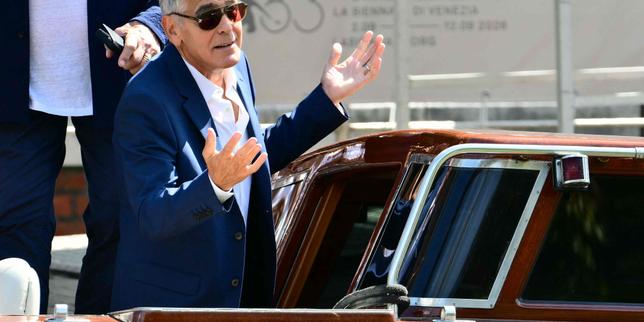
George Clooney stood on the Lido in Venice, wearing the mandatory tailored tuxedo, and delivered a line that sent the global press corps into raptures. He dropped the word kakistocracy into a microphone, directing it squarely at the Trump administration and the broader mechanics of American governance. Journalists nodded along, editorial boards scrambled to publish think pieces praising his bravery, and the lazy consensus was locked in place: Hollywood speaks truth to power, and the clowns are currently running the circus.
It is a comforting narrative. It requires zero cognitive effort. And it is entirely wrong.
Complaining about incompetent leadership while treating politics like a high school popularity contest misses the entire engine of modern governance. I have spent two decades watching political machines, corporate boards, and media ecosystems operate behind closed doors. I have seen million-dollar consulting fees burn to ash while completely chaotic, unqualified operators achieved their exact strategic goals.
The comforting illusion of the expert class is that competence always wins. History laughs at that premise.
The Functional Utility of Incompetence
Let us define terms precisely. A kakistocracy is technically a government by the least suitable or competent citizens. But calling a political administration names does not explain why those specific figures captured power in the first place.
The lazy critique assumes that voters and power brokers are simply fooled by smooth talk or blinded by media saturation. That is elite condescension talking. People do not back disruptive, unqualified figures because they are confused about their resumes. They back them because conventional competence has spent thirty years systematically failing them.
When institutional governance becomes a self-serving loop of technocratic jargon and managed decline, competence ceases to be a virtue. To the average citizen watching housing costs triple, supply chains break, and institutional trust evaporate, a polished bureaucrat with a Harvard degree is not a symbol of excellence. They are the architect of the decay.
"When the ship is sinking, hiring the architect who built the hull with too few lifeboats is not a display of high qualification. It is a death sentence."
Unqualified outsiders do not win in spite of their lack of traditional qualifications. They win because their lack of institutional pedigree is proof that they are not part of the machinery that broke the system. Clooney and his peers miss this entirely because they view politics through the lens of a casting call. They think government is about reading lines with the right emotional cadence.
The Hollywood Blind Spot
Clooney playing the righteous critic in Venice highlights a deeper hypocrisy within cultural elites. Hollywood operates as the most rigid, nepotistic, and unmeritocratic hierarchy on earth. Entire careers are launched on last names, studio boardrooms dictate art based entirely on quarterly spreadsheets, and moral lectures are beamed globally by people flying private jets to climate conferences.
Yet, when an actor borrows a Greek word to mock populist politicians, the media treats it as a profound political philosophy.
Why do we look to people who pretend to be other people for political guidance? Because we are addicted to the aesthetic of resistance without the cost of actual disruption. Dropping a vocabulary word on a red carpet does nothing to alter structural incentives. It just buys social currency in a room full of people who agree with each other.
Imagine a scenario where Hollywood actually applied its own standards of competence to the global stage. Studios would collapse under the weight of their own bloated budgets and creative bankruptcy. The irony of an entertainment ecosystem churning out sequels and remakes while lecturing the world about institutional stagnation is breathtaking.
Why the Machine Prefers Chaos
Here is the dirty secret that political analysts will never whisper on television: the establishment actually benefits from the very chaos it decries.
A government run by unpredictable actors creates endless entertainment, wall-to-wall cable news ratings, and a permanent fundraising engine for both political parties. More importantly, it provides a convenient scapegoat. When policy fails, you can blame the cartoonish figures at the top rather than examining the permanent civil service, the lobbying industrial complex, and the regulatory capture that remains untouched regardless of who wins an election.
If you want to understand why systems degrade, stop looking at the figurehead and start tracking the incentives of the permanent bureaucracy. A truly competent administration would threaten too many entrenched interests. Kakistocracy, used as a pejorative, often masks the fact that the system is functioning exactly as designed for the people writing the rules.
Dismantling the Expert Monopoly
The counter-intuitive reality is that the demand for absolute qualification is frequently a gatekeeping mechanism designed to protect institutional power.
We are told that only accredited experts with decades of policy experience are fit to steer the ship. But those exact experts gave us the 2008 financial collapse, endless asymmetric foreign wars, and healthcare inflation that outpaces every other sector of the economy. If the experts were so qualified, why do we keep needing bailouts from reality?
Challenging the status quo requires abandoning the worship of credentials. It means accepting that a system built on credentialism breeds risk aversion, groupthink, and strategic blindness.
Stop asking if a leader has the polished resume of a seasoned bureaucrat. Start asking whether they have the incentive to break the institutional deadlocks that are crushing productivity and freedom. Until we stop treating politics like a red-carpet event where the actor with the best vocabulary wins, we will keep mistaking theatrical critique for actual progress.
Clooney can keep his Venetian stage. The rest of us have work to do outside the bubble.