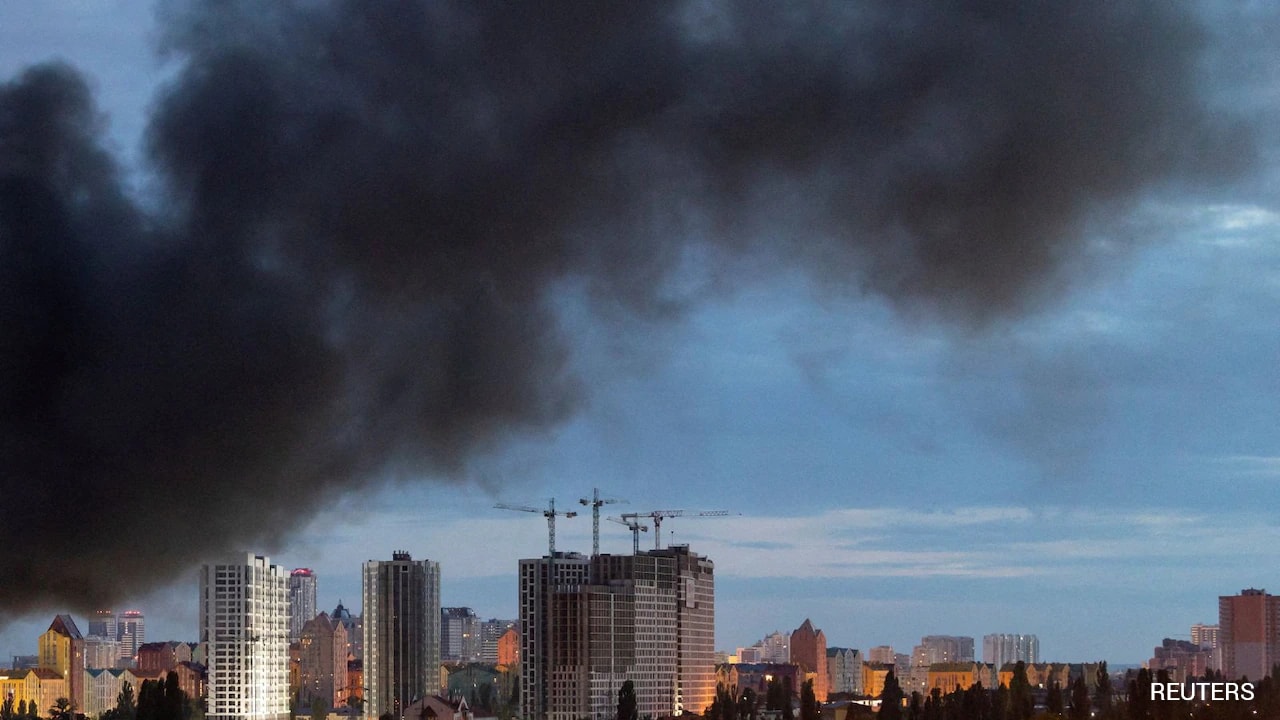
The intensification of Russian kinetic strikes against Ukrainian urban and industrial centers represents a calculated pivot from purely territorial acquisition to systemic infrastructure degradation and resource exhaustion. While standard news reporting quantifies these events solely through the immediate lens of casualties—such as the specific targeting cycle resulting in 6 fatalities and 20 injuries—a structural analysis reveals a deeper dual-track operational logic. Moscow is exploiting defensive saturation thresholds while simultaneously testing the resilience of Ukraine’s localized civil defense infrastructure.
To understand the strategic utility of these strikes, analysts must move past the emotional weight of civilian harm and dissect the operational calculus driving the bombardment. The air campaign functions as an optimization problem balancing depletion rates of Western-supplied air defense interceptors against the socio-economic endurance of Ukrainian municipal centers.
The Tri-Layered Strike Geometry
The efficacy of recent strikes relies on a heterogeneous mix of delivery systems deployed in specific sequences to overwhelm localized defense networks. This methodology can be broken down into three distinct operational layers, each serving a specific tactical function.
Layer One: The Consumption Vector
The initial wave consistently utilizes low-cost, slow-moving loitering munitions, predominantly Shahed-class one-way attack drones. The primary objective of this layer is not necessarily structural destruction, but radar illumination and interceptor consumption. By forcing Ukrainian forces to engage low-value targets with high-value surface-to-air missiles, the strike architecture creates an unfavorable economic asymmetry for the defender.
Layer Two: The Suppression Vector
Simultaneously or immediately following the drone wave, air-launched cruise missiles (such as Kh-101 or Kalibr variants) are introduced. These assets utilize complex flight paths, low-altitude terrain masking, and waypoint alterations to exploit gaps in radar coverage caused by the focus on the initial consumption vector. Their targets are typically fixed infrastructure nodes, including electrical substations and transport hubs.
Layer Three: The Penetration Vector
The final, high-consequence element involves ballistic or hypersonic systems, such as Iskander-M or Kinzhal missiles. Deployed when the localized air defense grid is fully saturated or reloading, these weapons target high-value command nodes, dense urban centers, or critical repair facilities. The high terminal velocity and steep angle of approach of these systems make interception highly improbable once the defense grid's capacity limits are breached.
The Mechanics of Urban Vulnerability
The casualty figures from recent strikes highlight a critical vulnerability in urban civil defense architectures: the delta between early warning times and structural penetration speeds. When hypersonic or ballistic assets are integrated into the strike mix, the warning window shrinks from hours to single-digit minutes.
This compression of time creates a predictable cascading failure mode within municipal defense systems:
- Detection Lag: Remote launches are detected immediately by space-based infrared sensors, but the precise trajectory calculation requires terrestrial radar acquisition, cutting usable reaction time.
- Public Notification Bottlenecks: The delay between military identification and civilian alert dissemination often consumes a significant percentage of the remaining flight time.
- Transit Deficits: In densely populated sectors, the physical time required for civilian populations to migrate from multi-story residential or commercial structures to hardened subterranean shelters exceeds the terminal flight phase of the missile.
Consequently, casualties correlate directly with the percentage of ballistic or hypersonic assets utilized in the strike mix, rather than the total volume of munitions fired.
Economic and Material Asymmetry Functions
The long-term viability of Ukraine's defense depends on altering the cost-exchange ratio of the air war. Currently, the kinetic equation heavily favors the attacker. A standardized quantification of this asymmetry reveals the structural strain placed on defending forces.
$$\text{Cost Exchange Ratio} = \frac{\sum (\text{Unit Cost of Interceptors Fired} \times \text{Quantity})}{\sum (\text{Unit Cost of Attack Munitions} \times \text{Quantity})}$$
When a $20,000 loitering munition successfully draws a $1,000,000+ Patriot or NASAMS interceptor, the strategic objective of the strike is achieved regardless of whether the drone hits its nominal target. This creates a finite structural limit for the defense, dictated entirely by Western supply chain capacities and industrial manufacturing throughput.
Furthermore, the secondary economic damage—measured in lost industrial productivity, grid instability, and the diversion of state resources toward emergency response and reconstruction—compounds the primary material losses. The destruction of physical capital within urban environments forces Ukraine to allocate scarce financial resources away from frontline military modernization toward basic civic survival.
Operational Limitations of Kinetic Dominance
Despite the tactical successes demonstrated by intensified strike rates, the Russian air campaign faces definitive structural constraints that prevent it from achieving absolute strategic paralysis:
- Sanctions Leakage Dependency: The production of advanced cruise and ballistic missiles relies on the illicit acquisition of Western-manufactured dual-use microelectronics. While smuggling networks remain functional, they introduce friction, variability, and higher unit costs into the Russian manufacturing supply chain.
- Launcher Availability: The bottleneck for sustained bombardment is often not munition inventory, but the wear-and-tear and maintenance cycles of launch platforms, specifically Tu-95MS strategic bombers and ground-based Iskander TEL (Transporter-Erector-Launcher) vehicles.
- Intelligence Decay: Fixed infrastructure targets can be mapped well in advance, but striking high-value mobile targets or active military concentrations requires real-time target acquisition. The lag between satellite reconnaissance and kinetic execution often results in striking empty structures or decoy positions.
The Strategic Path Forward for Target Resilience
To counter this calculated campaign of attrition, defensive strategies must shift from passive interception to a dynamic model of resilience and counter-battery degradation. Relying solely on the acquisition of additional surface-to-air missile batteries is a mathematically insolvent long-term strategy given current global production constraints.
First, decentralized air defense networks must be expanded. The deployment of mobile, visually guided anti-aircraft teams equipped with heavy machine guns and short-range MANPADS mitigates the consumption vector. By handling low-tier drone threats without expending radar-guided interceptors, these teams preserve high-end systems for ballistic threats.
Second, infrastructure hardening must transition from superficial shielding to systemic redundancy. Critical electrical and communication nodes must be subterranean or housed within reinforced concrete blast sanctuaries capable of withstanding near-miss overpressures.
Ultimately, the neutralization of this strike methodology requires Western cross-border authorization for kinetic interdiction. The most resource-efficient method to stop a complex missile strike is the destruction of the delivery platform—either the bomber on the tarmac or the TEL vehicle in its staging area—prior to launch. Denying the adversary sanctuary within their own borders shifts the operational risk back to the attacker, disrupting the logistical rhythm necessary to sustain high-intensity bombardment.