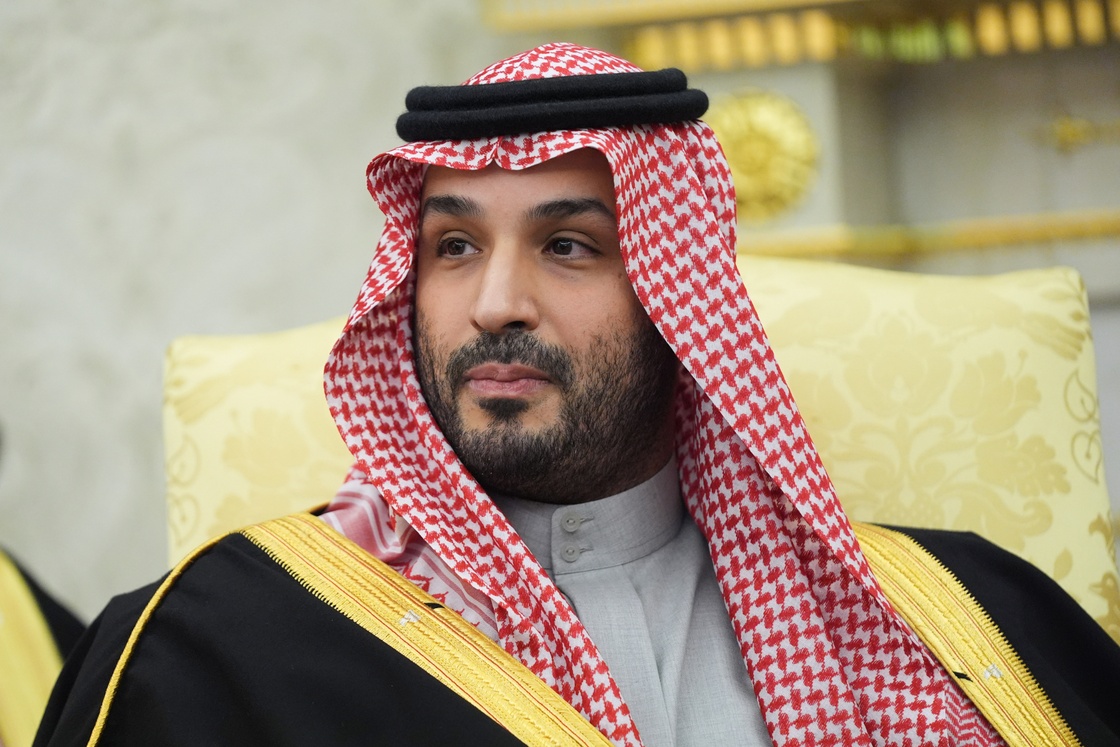
The intersection of Western transition finance, represented by Brookfield Asset Management Chair Mark Carney, and Saudi Arabia’s sovereign modernization strategy under Crown Prince Mohammed bin Salman, exposes a structural realignment in global capital deployment. This engagement moves past the rhetorical commitments of multilateral climate summits. Instead, it establishes a pragmatic framework where large-scale infrastructure platforms directly interface with concentrated sovereign wealth. The meeting between Carney and the Crown Prince is not a diplomatic formality; it is a transactional convergence between the world's largest pools of transition capital and the single most capitalized economic transformation project globally.
To analyze this interaction effectively, the relationship must be broken down into its core economic vectors: infrastructure asset monetization, the industrialization of the green transition, and the shifting geography of global liquidity.
The Bifurcated Capital Inflow Framework
The engagement operates through two distinct, parallel tracks that govern how international asset managers and the Saudi Public Investment Fund (PIF) interact.
[Western Asset Managers (Brookfield)] <---> [Direct Co-Investment Platforms] <---> [Saudi Public Investment Fund (PIF)]
                                                     |
                                                     v
                                         [Vision 2030 Infrastructure]
Track One: Asset Monetization and Inward Foreign Direct Investment
Saudi Arabia requires substantial international co-investment to execute its $1 trillion Vision 2030 pipeline without completely draining its domestic reserves or over-allocating sovereign wealth to illiquid domestic infrastructure. For an entity like Brookfield, this provides an entry point to acquire yielding infrastructure assets under long-term concession agreements. The mechanics involve:
- Regulated Asset Base Models: Establishing predictable tariff structures in utilities, district cooling, and logistics networks that match the long-term liability profiles of global pension funds.
- Capital Recycling: The PIF divests partial stakes in mature brownfield assets to international consortiums led by firms like Brookfield, immediately freeing up sovereign capital to fund high-risk greenfield developments such as NEOM or the Red Sea Project.
Track Two: Outward Capital Allocation and Transition Funds
Conversely, Saudi Arabia acts as a critical limited partner (LP) for Western private equity vehicles. Brookfield’s Global Transition Fund (BGTF), which targets industrial decarbonization and clean energy generation, requires massive capital commitments to scale its operations globally. The strategic rationale for the PIF committing capital to these vehicles relies on specific strategic payoffs:
- Technology Transfer: By investing in global transition funds, Saudi Arabia gains visibility into emerging decarbonization technologies, carbon capture utilization systems, and hydrogen logistics.
- Geographical Diversification: The PIF balances its domestic concentration risk by deploying capital into North American and European renewable energy infrastructure via third-party managers.
The Decarbonization Paradox and Hydrocarbon Hegemony
A core point of tension that standard analysis overlooks is the structural paradox inherent in this partnership. Mark Carney represents the institutional vanguard of global net-zero commitments, having served as the UN Special Envoy on Climate Action and Finance and co-chair of the Glasgow Financial Alliance for Net Zero (GFANZ). Saudi Arabia, via Saudi Aramco, remains the world’s lowest-cost producer of hydrocarbons, with an explicit strategy to expand maximum sustainable capacity to 12 million barrels per day.
This relationship is reconciled not through ideological alignment, but through a shared commitment to capital efficiency and transition pragmatism. The structural logic dictated by this paradox can be broken down into three operational realities.
The Cost of Abatement Curve
Global capital allocators recognize that the marginal cost of carbon abatement varies drastically by geography. Saudi Arabia possesses some of the highest solar irradiance profiles globally, alongside vast tracts of non-arable land. This physical reality drives the levelized cost of electricity (LCOE) for utility-scale solar down to sub-$0.02 per kilowatt-hour. For an infrastructure manager, deploying capital into Saudi solar generation yields a higher carbon abatement per dollar invested than building equivalent capacity in cloudy, high-land-cost jurisdictions like Northern Europe.
The Hydrocarbon Decarbonization Interface
Instead of treating oil and gas as assets destined for rapid stranded-asset status, the framework focuses on decarbonizing the extraction and processing phases. This involves electrifying upstream operations using the aforementioned low-cost solar energy and investing in utility-scale carbon capture and storage (CCS) at the source of industrial emissions in Jubail and Yanbu. Western asset managers provide the project finance expertise required to ring-fence these CCS initiatives as bankable, standalone infrastructure assets.
The Hydrogen Export Vector
The long-term economic sustainability of the Saudi energy model depends on transforming its current hydrocarbon export infrastructure into a clean energy export engine. The flagship multi-billion-dollar green hydrogen project at NEOM, managed by Air Products, ACWA Power, and the PIF, serves as the primary template. International asset managers enter this equation during the midstream and downstream phases, funding the global shipping fleets, ammonia conversion terminals, and distribution infrastructure required to deliver this hydrogen to European and Asian industrial hubs.
Risk Architecture in Sovereign Infrastructure Financing
Executing large-scale capital deployments within emerging sovereign frameworks introduces systemic risks that institutional asset managers must structurally mitigate. The meeting between senior leadership serves as the primary mechanism to negotiate these risk allocation frameworks before capital commitments are finalized.
Regulatory and Concession Risk
Infrastructure investments are inherently bound to the domestic regulatory environment of the host nation over twenty to thirty-year horizons. The primary risk is regulatory expropriation or unilateral contract renegotiation if macro-economic conditions shift. To hedge this risk, international managers require:
- Offshore Arbitration Jurisdictions: Contracts are explicitly structured under English law, with dispute resolution mechanisms routed through international hubs like the London Court of International Arbitration (LCIA) or the Dubai International Financial Centre (DIFC) courts.
- Sovereign Guarantees: When contracting with state-backed off-takers (such as the Saudi Power Procurement Company), international consortia demand explicit guarantees from the Ministry of Finance to backstop payment defaults.
Currency Peg Volatility
The Saudi Riyal is structurally pegged to the US Dollar ($1 = SAR 3.75$). This peg eliminates immediate currency transaction risk for US-dollar-denominated private equity funds. However, it binds Saudi monetary policy directly to the Federal Reserve. A prolonged period of high US interest rates forces the Saudi Central Bank (SAMA) to maintain elevated domestic rates, compressing asset valuations and increasing the cost of domestic leverage for infrastructure projects. Western managers must model their capital structures under the assumption that the peg holds, while pricing in the liquidity constraints that occur when oil prices drop below the fiscal break-even point of the kingdom.
The table below outlines the structural risk allocation matrix typically negotiated in these public-private sovereign frameworks:
| Risk Category | Primary Exposure | Mitigation Mechanism | Risk Bearer |
|---|---|---|---|
| Construction and Greenfield Execution | Supply chain bottlenecks, labor scarcity in remote sites (e.g., NEOM) | Fixed-price engineering, procurement, and construction (EPC) contracts with international consortia | Project Developers / EPC Contractors |
| Off-take and Demand | Fluctuating industrial demand for power, water, or logistics infrastructure | Long-term take-or-pay agreements backed by sovereign guarantees | State-Owned Off-taker / Ministry of Finance |
| Macroeconomic Inflation | Escalating material costs (steel, turbines, solar modules) | Indexation of tariffs to domestic or international consumer price indices (CPI) | End-Consumer / State Off-taker |
| Geopolitical and Security | Regional instability affecting critical maritime or energy corridors | Political risk insurance (MIGA, private markets) and physical asset security diversification | International Asset Manager / Insurers |
Strategic Mandates for Institutional Allocators
For institutional investors observing the movements of tier-one capital managers like Brookfield, the engagement provides a definitive blueprint for capital allocation in the current macroeconomic epoch. The strategy cannot rely on traditional public equity allocations or domestic infrastructure markets that suffer from regulatory inertia and low growth.
Target Co-Investment Carve-Outs
Institutional allocators should actively seek co-investment rights alongside major asset managers who maintain direct channels to sovereign wealth funds. This allows smaller institutional funds to bypass traditional fee structures while gaining access to massive, sovereign-backed infrastructure projects that would otherwise be inaccessible due to minimum ticket-size constraints.
Focus on Hard-to-Abate Industrial Segments
The primary alpha-generating opportunity in transition finance lies not in adding more wind or solar capacity to saturated Western grids, but in funding the capital expenditure required to transition heavy industry. The framework demonstrated by the Carney-MBS engagement highlights that the real value lies at the intersection of heavy industry (green steel, aluminum, chemicals) and ultra-low-cost clean energy inputs. Investors must look for platforms that integrate generation assets directly with industrial off-takers.
Build Sovereign Liquidity Bridges
Asset managers must recognize that the flow of global capital is no longer unidirectional from the West to emerging markets. Capital allocation strategies must be designed to serve as a two-way bridge. Managers who offer sovereign wealth funds both domestic co-investment pipelines and global asset management capabilities will consistently out-compete pure-play regional firms. The ability to absorb sovereign capital into global funds while simultaneously deploying expertise into domestic development initiatives is the defining operational capability of modern mega-fund managers.
The trajectory of global finance is being redrawn by these highly targeted, state-private alliances. As Western public markets face increased regulatory scrutiny and fragmentation, the concentration of capital within massive private infrastructure platforms and sovereign wealth vehicles will remain the dominant mechanism for funding global economic restructuring. The deployment of this capital will favor jurisdictions that can offer absolute scale, regulatory certainty, and structural cost advantages, irrespective of legacy geopolitical alignments.