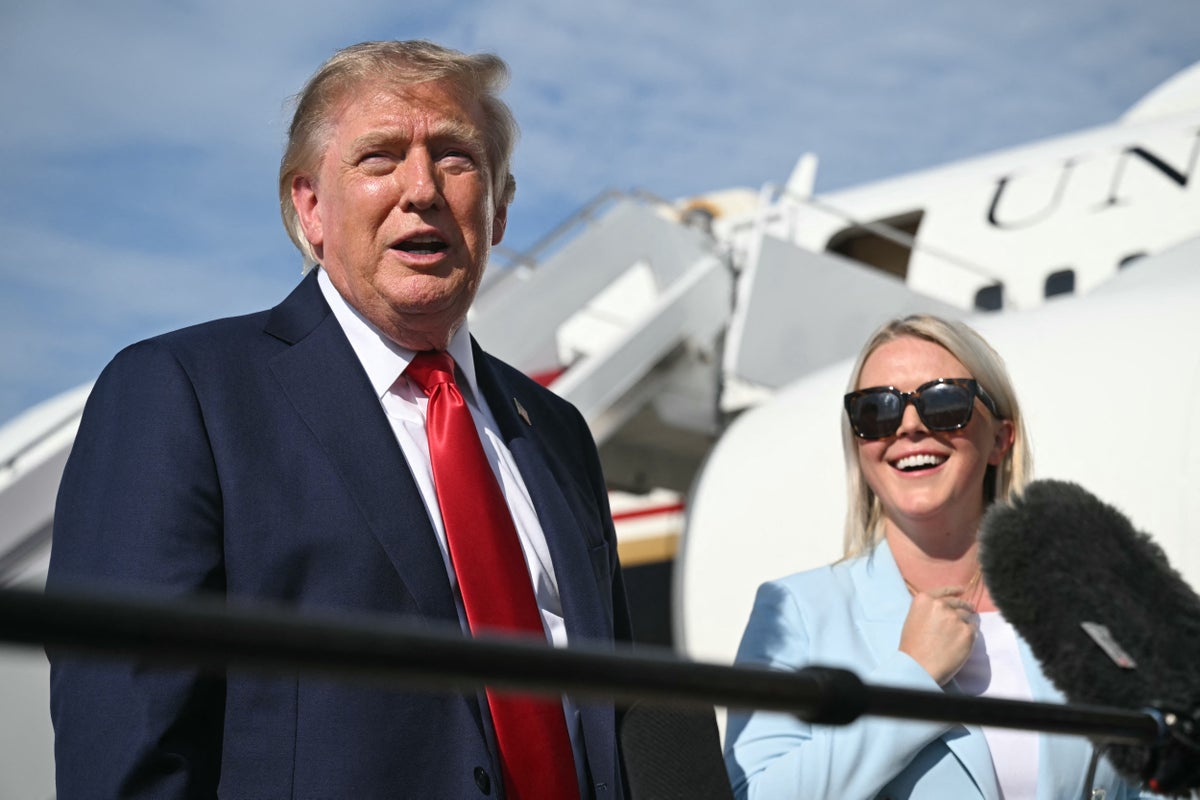
Executive communications infrastructure depends entirely on continuous information flow between the briefing room and the Oval Office. When White House Press Secretary Karoline Leavitt announced her departure, the transition triggered an immediate operational bottleneck. Managing the daily executive narrative requires a specific functional skillset that marries real-time crisis response with disciplined message alignment. Leaving this post vacant days before a scheduled exit creates administrative friction that reverberates across political operations, legislative strategy, and media relations.
The Functional Requirements of the Podium
The White House Press Secretary operates as the primary conduit between executive policy and public perception. Replacing this role involves evaluating candidates against three rigid operational criteria: ideological fidelity, media combat readiness, and high-frequency cognitive endurance.
Ideological fidelity ensures that the individual defending executive actions does not introduce ambiguity into official policy positions. Media combat readiness measures a candidate's capacity to absorb adversarial questioning from the briefing room press corps without conceding framing control. High-frequency endurance accounts for the physical and psychological toll of a sixteen-hour workday characterized by constant public scrutiny.
When a vacancy occurs without an immediate successor named, executive communications default to an interim triage state. Deputy press secretaries absorb the daily briefing duties, but lack the positional authority to negotiate permanent shifts in messaging strategy. This creates a vacuum where proactive agenda-setting is abandoned in favor of reactive damage control.
The Midterm Compression Window
Timing compounds the operational risk of the current West Wing transition. The departure coincides with the final stretch before the midterm congressional elections, a period defined by compressed timelines and heightened electoral stakes.
During an election cycle, the press office functions as an electoral messaging engine. Every briefing serves as an opportunity to reinforce party achievements, neutralize legislative opposition, and frame macroeconomic conditions. An interim or newly appointed press secretary stepping into the role with zero runway faces a steep learning curve. The cost of this onboarding lag is measured in missed media cycles and defensive positioning on critical policy debates.
The structural demands of the position leave little room for operational error. A replacement must execute media strategy from day one, translating complex legislative fights—such as ongoing budget negotiations and infrastructure battles—into digestible public narratives. Without an established principal at the podium, the administration risks losing narrative dominance during the most critical phase of the political calendar.
Strategic Selection Variables
Evaluating potential successors requires a clear understanding of the trade-offs inherent in political appointments. Insiders from the campaign apparatus offer deep alignment with principal thinking and established trust within the inner circle. However, these candidates frequently lack experience navigating the granular, bureaucratic mechanics of the permanent federal press office.
Conversely, career communications professionals possessing deep institutional knowledge of the executive branch may struggle to adopt the aggressive, non-traditional communication style favored by the current administration. Bridging this gap requires identifying a candidate who possesses both technical proficiency in institutional media management and unyielding loyalty to the executive agenda.
The prolonged search underscores the scarcity of talent possessing this precise combination of attributes. Until a successor is formally integrated into the daily workflow, the executive branch will continue to absorb the opportunity costs of an unstaffed primary podium.
Strategic Action: Implement an immediate dual-track interim protocol where campaign surrogates handle external political messaging while senior career deputies manage routine administrative press operations, isolating the executive branch from narrative drift until a permanent principal is confirmed.
Karoline Leavitt's shock exit triggers race for Trump's next Press Secretary
This video provides context on the sudden vacancy left by Karoline Leavitt's departure and the subsequent race to find a replacement.
http://googleusercontent.com/youtube_content/1


