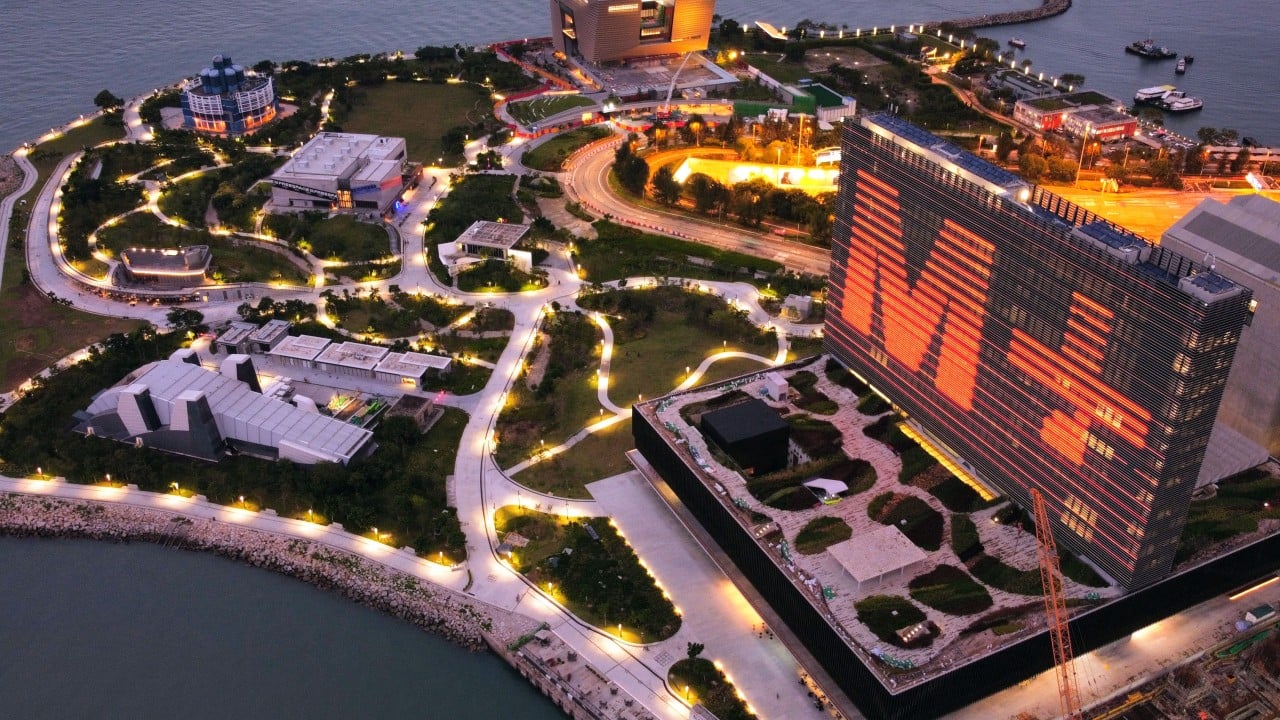
Five years after opening its doors in the West Kowloon Cultural District in November 2021, Hong Kong’s M+ museum faces a classic institutional inflection point where early-stage capital subsidies collide with long-term operational realities. Celebratory coverage of the museum's fifth anniversary typically frames its trajectory around attendance milestones, blockbuster exhibitions, and soft-power prestige. Those surface metrics obscure the core strategic challenge confronting the institution: transitioning from a state-backed cultural infrastructure project into a financially resilient, globally competitive museum operating within tightening fiscal and geopolitical constraints. To evaluate what comes next for M+, analysts must strip away promotional narratives and examine the underlying mechanics of its revenue architecture, curatorial positioning, and governance boundaries.
The Structural Economics of Mega-Museums
Large-scale contemporary art museums operate under an inverted cost structure. Unlike commercial enterprises where marginal costs scale predictably with output, a flagship museum absorbs massive fixed overhead—climate control, conservation laboratories, specialized security, insurance, and archival storage—before a single ticket is sold. M+ occupies 65,000 square meters of gross floor area, including 17,000 square meters of exhibition space across 33 galleries. Maintaining museum-grade environmental controls in Hong Kong’s subtropical climate imposes a permanent, non-negotiable energy and maintenance floor on the institution's annual operating budget. Read more on a related topic: this related article.
This fixed-cost reality exposes M+ to Baumol’s cost disease, an economic phenomenon where wages and operational expenses in labor-intensive cultural sectors rise over time without corresponding increases in labor productivity. Curating an exhibition, conserving a fragile multimedia installation, or managing international loan logistics requires roughly the same number of specialized human hours today as it did three decades ago. Yet the museum must compete for specialized talent in a high-cost global market while funding rising baseline expenses.
During its first five years, M+ mitigated these structural pressures through two temporary advantages: novelty-driven attendance surges following the end of pandemic border restrictions, and financial backstops provided by the West Kowloon Cultural District Authority (WKCDA). Both buffers are finite. The WKCDA has publicly documented severe cash-flow deficits, driven by delays in commercial real estate developments intended to cross-subsidize the cultural district's arts venues. Because the district's original self-financing model relied on land-premium revenues and commercial leasing that stalled amid property market downturns, M+ cannot assume indefinite operational bailouts from its parent authority. More analysis by The Motley Fool delves into comparable perspectives on the subject.
To achieve operational sustainability beyond year five, M+ must optimize three distinct revenue levers:
- Earned Admission and Ticketing Yield: General admission fees for permanent galleries capture baseline volume, while tiered pricing for special exhibitions—such as retrospectives of major Asian or international artists—drives margin. However, ticketing revenue faces an inelastic ceiling dictated by gallery capacity and local price sensitivity. Raising ticket prices too aggressively suppresses repeat local visitation, transforming the museum from a civic institution into a one-time tourist attraction.
- Intellectual Property and Touring Exhibitions: Developing original, scholarship-backed exhibitions requires heavy upfront curatorial investment. M+ can amortize these sunk costs by packaging its exhibitions for international tours, charging partner institutions participation fees while projecting Hong Kong's cultural brand abroad. The limitation is logistical: complex installations and sensitive works incur prohibitive crating, transit, and insurance costs that erode net licensing margins.
- Philanthropy, Corporate Sponsorship, and Endowment Growth: In mature museum ecosystems like New York or London, private endowments cover 30 to 50 percent of annual operating expenses. Hong Kong’s philanthropic culture has historically favored capital donations—funding buildings or naming galleries—over unrestricted endowment contributions. Converting corporate sponsors and high-net-worth collectors into recurring operational donors requires demonstrating long-term institutional stability and international prestige.
The Curatorial Positioning Matrix
At its inception, M+ defined itself as Asia’s first global museum of contemporary visual culture, spanning visual art, design and architecture, and moving image from the twentieth and twenty-first centuries. At the five-year mark, this broad mandate creates a strategic tension between two competing curatorial imperatives: global canon-building and regional market alignment.
A museum's collection is its primary balance-sheet asset, even though accounting standards generally prevent institutions from monetizing art holdings directly. The foundational core of M+ is the Uli Sigg Collection of Chinese contemporary art, comprising over 1,500 works acquired through a combination of donation and purchase in 2012. This collection gives M+ an unmatched historical anchor in post-1970s Chinese avant-garde art. However, relying too heavily on a single historical body of work risks turning the museum into a static monument to a specific era rather than an active generator of contemporary discourse.
To maintain curatorial relevance, M+ must continuously allocate acquisition budgets and gallery space across three competing axes:
- Hyper-Local Validation: Documenting Hong Kong’s own visual, architectural, and cinematic history—from neon sign craftsmanship to independent filmmaking—secures civic legitimacy. Local audiences demand to see their specific urban experience reflected in the galleries. If M+ neglects this axis, it risks alienation from the taxpaying public that funded its construction.
- Pan-Asian Synthesis: Positioning Hong Kong as the central node connecting East, Southeast, and South Asian visual culture differentiates M+ from rival institutions in Tokyo, Seoul, and Singapore. Executing this requires deep curatorial networks across diverse linguistic and political jurisdictions, alongside aggressive acquisitions of non-Chinese Asian artists to prevent the collection from appearing overly Sinocentric.
- Western Blockbuster Importation: Hosting major exhibitions of established Western figures—such as Yayoi Kusama, Picasso, or Zaha Hadid—reliably drives ticket sales, corporate sponsorships, and international media coverage. The trade-off is opportunity cost: gallery square footage dedicated to imported Western retrospectives is space denied to experimental Asian practitioners whose work lacks immediate box-office draw.
The operational risk for M+ in its second half-decade is curatorial drift toward safe, commercially predictable programming. When financial deficits tighten, museum boards instinctively favor proven crowd-pleasers over risky, scholarly, or emerging-artist exhibitions. If M+ over-indexes on imported blockbusters to plug budget gaps, it forfeits its unique value proposition and becomes an interchangeable stop on the global touring circuit rather than a primary site of art-historical production.
Governance, Self-Censorship, and Institutional Trust
No analysis of M+’s trajectory is complete without accounting for the regulatory and political environment established in Hong Kong following the implementation of the National Security Law in 2020 and the Safeguarding National Security Ordinance in 2024. For a contemporary art museum, political boundaries are not merely external constraints; they directly affect core operational inputs, specifically international lending, curatorial recruitment, and scholarly credibility.
Contemporary art frequently interrogates state power, historical memory, and social dissent. Prior to its 2021 opening, M+ faced intense scrutiny from pro-Beijing lawmakers and media outlets over specific works in the Sigg Collection, notably pieces by Ai Weiwei that critiqued Chinese state authority. The museum’s management responded by removing certain sensitive works from public display and establishing stricter internal vetting protocols to ensure compliance with local laws.
This operational adjustment establishes a clear cause-and-effect chain that governs M+’s international standing:
- The Compliance Buffer: Museum leadership must filter programming through a risk-assessment framework that prioritizes legal compliance and political stability. This protects the institution from regulatory intervention and preserves access to public funding and mainland Chinese cultural exchanges.
- The Credibility Discount: International curators, artists, and partner museums apply an implicit credibility discount when evaluating institutions operating under explicit speech constraints. Western museums lending high-value works require ironclad guarantees against seizure, censorship, or sudden exhibition cancellations. Conversely, some international artists may decline invitations to exhibit if they perceive their work will be contextualized to fit state narratives or subjected to opaque vetting.
- The Talent Bottleneck: Recruiting top-tier international curatorial talent becomes significantly harder when candidates perceive ambiguity around academic and artistic freedom. Turnover at senior leadership levels forces the museum to rely more heavily on internal promotions or regional hires, which can narrow institutional perspectives over time.
Navigating this environment requires precise operational calibration. M+ cannot openly defy the legal framework of its jurisdiction, nor can it afford to be dismissed by the global art world as a state propaganda outlet. Its survival as a respected institution depends on its ability to carve out rigorous scholarly zones within design, architecture, moving image, and non-confrontational visual art where intellectual depth remains uncompromised.
Competitive Dynamics in the East Asian Museum Ecosystem
When M+ was conceived in the mid-2000s, Hong Kong faced minimal regional competition in the contemporary museum space. By 2026, the regional landscape has consolidated into an intense, multi-hub rivalry for cultural capital, art market share, and high-spending cultural tourists. M+ no longer operates in a vacuum; it competes directly against three distinct regional models.
In Singapore, the National Gallery Singapore and the Singapore Art Museum operate within a stable, predictable regulatory environment backed by sustained state investment. Singapore has aggressively positioned itself as Southeast Asia’s premier wealth-management and art-market hub, attracting private foundations, family offices, and international galleries seeking a neutral base. While Singapore lacks Hong Kong’s historical depth in the Chinese contemporary art market, its institutional stability appeals to conservative international lenders and corporate sponsors.
In Seoul, a dense ecosystem of private corporate museums—such as the Leeum Museum of Art backed by the Samsung Foundation—operates alongside state institutions like the National Museum of Modern and Contemporary Art (MMCA). Seoul leverages the global cultural momentum of South Korean music, film, and design to draw international curators and collectors. The synergy between commercial entertainment exports and visual arts gives Seoul an organic audience-generation engine that Hong Kong must work harder to replicate.
In Shanghai and the Greater Bay Area, state-backed and private museums—including the Power Station of Art, West Bund Museum, and Shenzhen’s Sea World Culture and Arts Center—compete directly for mainland Chinese audiences and international partnerships. Notably, the West Bund Museum’s long-term partnership with the Centre Pompidou demonstrates that mainland institutions can secure prestigious Western collaborations directly, bypassing Hong Kong’s traditional role as the sole cultural gateway between China and the West.
M+’s primary competitive advantage across this region remains its physical scale, its foundational collection, and Hong Kong’s status as a free port with zero import or export tariffs on artworks. While mainland Chinese museums face complex customs procedures and value-added taxes when importing international art, M+ can move works across borders with minimal friction. Furthermore, Hong Kong’s concentration of international auction houses—Sotheby’s, Christie’s, and Phillips all maintain major Asia headquarters in the city—creates an embedded ecosystem of collectors, conservators, and art financiers that feeds M+’s visitor and donor base.
Audience Segmentation and the Visitor Conversion Funnel
Sustaining annual attendance numbers after the initial five-year honeymoon period requires shifting from broad awareness campaigns to disciplined audience segmentation. Museum attendance is not a monolithic metric; different visitor cohorts generate vastly different economic and strategic returns.
M+’s visitor base divides into four operational segments:
- Mainland Chinese Cultural Tourists: Driven by proximity via the High-Speed Rail link directly into West Kowloon, this cohort represents the largest volume growth opportunity. These visitors often treat M+ as a lifestyle and architectural destination, driving high foot traffic and retail sales in the museum shop. Converting them from passive sightseers into engaged museum-goers requires bilingual digital interpretation tools and programming that bridges mainland visual culture with global contexts.
- International Art-World Professionals and Collectors: Timed around major commercial events like Art Basel Hong Kong, this small cohort exerts outsized influence on M+’s global reputation. Their presence validates the museum’s curatorial rigor and unlocks international loan agreements and private donations. Retaining their engagement demands academically serious, boundary-pushing exhibitions during peak art-market weeks.
- Local Hong Kong Residents and Families: Repeat local visitors form the civic backbone of the museum. Because local residents have already seen the flagship opening installations, driving repeat visitation requires dynamic rotation of the permanent collection galleries, accessible public programs, and membership tiers that offer genuine utility rather than mere discounts.
- Educational Institutions and Youth: School groups and university researchers represent long-term audience development rather than immediate revenue. Integrating M+’s digital archives and conservation facilities into regional academic curricula embeds the institution into the intellectual infrastructure of the city.
The critical failure mode in museum audience strategy is optimizing exclusively for the first segment at the expense of the second and third. If M+ designs its exhibitions primarily as Instagram-friendly backdrops to maximize tourist volume, it erodes the scholarly credibility required to attract international collectors and alienates local residents seeking substantive cultural engagement.
Strategic Imperatives for the Next Five Years
To transition from a capital-intensive startup phase into an enduring global institution, M+ leadership must execute three structural adjustments over its second five-year cycle.
First, decouple curatorial ambition from gallery square footage through modular programming. Rather than mounting perpetually massive, resource-draining retrospectives across its largest spaces, M+ should institute a disciplined portfolio approach: pair one high-margin, commercially viable blockbuster exhibition per year with smaller, agile, research-driven installations in its Focus and Sigg galleries. This protects curatorial credibility while stabilizing ticketing cash flows.
Second, monetize institutional expertise through B2B cultural consulting and conservation services. M+ possesses one of the most advanced conservation laboratories and archival infrastructures in Asia. By offering fee-for-service conservation, collection management, and technical training to emerging private museums, corporate collections, and regional institutions across Southeast Asia and the Greater Bay Area, M+ can generate high-margin, non-ticketing revenue that utilizes existing fixed assets.
Third, restructure the WKCDA financial relationship around a dedicated matching-endowment mechanism. Rather than relying on annual ad-hoc deficit grants from the West Kowloon Cultural District Authority, M+ should negotiate a multi-year matching fund where public or authority capital matches private philanthropic endowment pledges dollar-for-dollar. This aligns incentives for the museum’s board, shifts donor psychology from capital naming rights to permanent operational support, and insulates the museum’s core curatorial budget from short-term real estate market fluctuations.