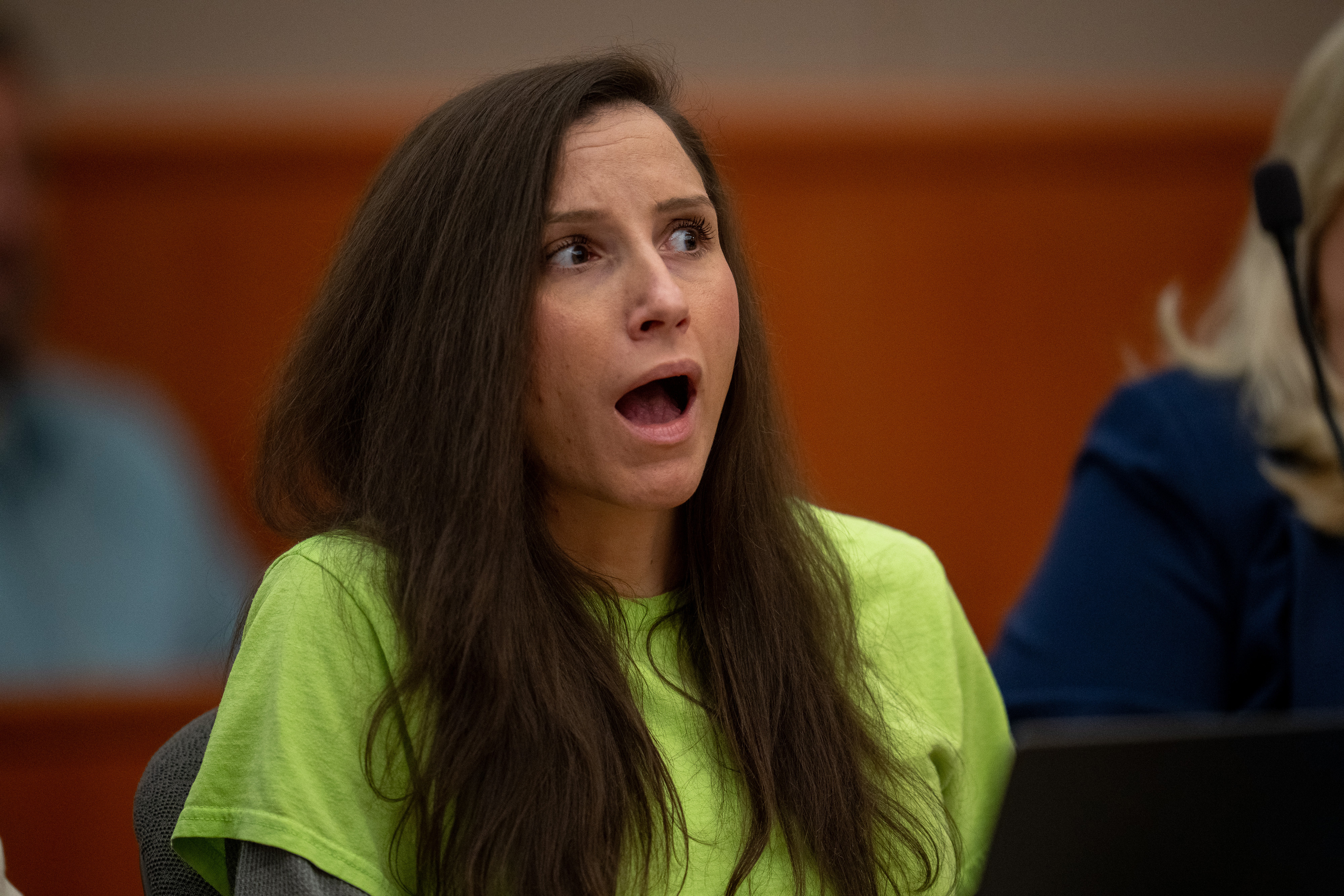
The conviction of a primary caregiver for a violent felony—specifically murder—triggers a total systemic collapse within the domestic unit, necessitating a transition from a kinship model to a risk-mitigation framework. When sons express fear of a mother following her life sentence, they are not merely reporting an emotional state; they are identifying a failure in the protective barrier typically provided by the parental figure. This inversion of the caregiver-protector role forces the surviving family members to navigate a complex matrix of psychological safety, legal protections, and the long-term management of inherited trauma.
The Tripartite Breakdown of Parental Authority
The transition from "mother" to "convicted offender" occurs across three distinct functional layers. Each layer represents a specific failure that contributes to the fear reported by the descendants.
- The Biological-Relational Breach: The fundamental biological expectation of nurturing is replaced by the reality of lethal aggression. This creates a cognitive dissonance where the brain must reconcile the source of life with the source of death.
- The Legal-Institutional Displacement: Once a life sentence is handed down, the state replaces the parent as the ultimate authority. The children become wards of the state or dependents of an alternative kinship network, fundamentally altering their power dynamic with the incarcerated parent.
- The Psychological Threat Projection: Fear in this context is often prospective. Even from behind bars, a parent may exert "proximal influence" through correspondence, third-party contacts, or the eventual possibility of parole, regardless of how statistically unlikely that outcome may be.
Quantifying the Mechanism of Fear in Incarcerated Parent-Child Relationships
The fear expressed by the sons is rarely a reaction to a single event, but rather the culmination of a "Threat Accumulation Cycle." To understand why children remain fearful after the threat has been physically removed via incarceration, one must analyze the mechanisms of psychological persistence.
The Persistence of Proximity
Incarceration does not equate to disappearance. The legal system provides avenues for communication (mail, phone calls, visitation) that allow an offender to maintain a psychological presence in the lives of their victims or family members. For sons who have witnessed or been impacted by their mother's violence, every communication serves as a "micro-trigger," reinforcing the original trauma. The fear is not necessarily of physical harm within the current moment, but of the emotional and psychological manipulation that persists across prison walls.
The Shadow of Parole and Early Release
A "life sentence" is rarely a fixed mathematical certainty in the minds of the survivors unless it is specifically designated as "without the possibility of parole." The technicality of sentencing creates a "Volatility Gap." The sons must live with the perpetual possibility of a future encounter. This creates a state of hyper-vigilance—a biological tax on the nervous system—that prevents the transition from "victim" to "survivor."
The Economic and Social Cost of Domestic Murder
Beyond the immediate psychological impact, the conviction of a mother for murder imposes a massive "Externalized Cost" on the surviving children. This can be categorized into three specific deficits:
- Social Capital Depletion: The children inherit the stigma of the crime. In many jurisdictions, the "sins of the mother" result in social isolation, making it difficult for the sons to build the communal support networks necessary for recovery.
- Economic Opportunity Loss: The sudden removal of a parent—even a violent one—often leads to a collapse in household stability. The transition to foster care or extended family networks frequently involves a move to lower-income areas, poorer educational outcomes, and a reduction in long-term earning potential.
- The Genetic-Behavioral Anxiety: There is a specific, often unvoiced fear regarding "hereditary violence." Sons of violent parents frequently struggle with the fear of their own potential for aggression, leading to a self-imposed restriction on emotional expression and interpersonal intimacy.
Navigating the Legal Shield: Restraining Orders and No-Contact Mandates
The primary tool for managing the fear described by the sons is the implementation of a permanent "No-Contact Order." However, the effectiveness of these orders is often compromised by the institutional bureaucracy of the penal system.
The first bottleneck occurs at the point of communication monitoring. While prisons track outgoing mail and calls, the sheer volume of data often leads to "Monitoring Fatigue." A mother determined to reach her sons can often do so through "proxy communication"—using other inmates or outside acquaintances to relay messages. This bypasses the legal shield and maintains the cycle of fear.
The second bottleneck is the "Reunification Bias" inherent in some social service frameworks. Certain psychological models prioritize the "sanctity of the family bond," sometimes encouraging or pressuring children to maintain contact with incarcerated parents for the sake of "closure." For sons of a murderer, this bias is not only counterproductive but dangerous. It ignores the reality that for some families, the only path to safety is total disconnection.
Cognitive Reframing as a Survival Strategy
To move past the state of fear, the survivors must undergo a process of "Functional Decoupling." This involves separating the biological identity of the mother from the criminal identity of the offender.
This is not a simple emotional task; it is a rigorous cognitive exercise. It requires the sons to treat the mother as a "defunct entity"—someone who exists in the past tense, while the person in the prison cell is a new, unrelated threat profile. This decoupling allows the sons to process their grief for the mother they thought they had while simultaneously maintaining the defensive posture required to protect themselves from the offender she became.
The Long-Term Trajectory of the Post-Conviction Household
The stability of the sons' future depends on the "Duration of Displacement." The longer they remain in a state of flux—uncertain of their safety or their future contact with the mother—the higher the probability of developing Complex Post-Traumatic Stress Disorder (C-PTSD).
The resolution of this fear requires a definitive "Closure Event." This is rarely the sentencing itself. Instead, it is often a secondary legal action, such as the termination of parental rights or the finalization of a permanent protective order that survives the duration of the sentence. Without these definitive legal boundaries, the sons are trapped in a "liminal state" of fear, waiting for a threat that is theoretically contained but psychologically omnipresent.
The strategic priority for social services and legal advocates must be the creation of a "Total Exclusion Zone" around the survivors. This involves not just physical distance, but the aggressive policing of all digital and analog communication channels. The sons’ fear is a rational response to a system that often prioritizes the rights of the incarcerated to "family life" over the rights of the victims to "psychological peace."
The final move in this strategy is the shift from defense to autonomy. The sons must be provided with the resources to build an identity entirely independent of the crime. This requires long-term investment in specialized trauma therapy that focuses on "De-identification"—stripping the mother's crime of its power to define the sons' future. Only by achieving total structural and psychological independence can the cycle of fear be broken. The state must treat the sons not as collateral damage, but as the primary stakeholders in the post-conviction landscape.