Geopolitical realignments rarely occur in a vacuum; they follow precise systemic shocks that force state actors to recalculate their diplomatic utility functions. The official restoration of consular ties between Israel and Venezuela after a seventeen-year freeze exemplifies this dynamic. When Hugo Chavez severed formal diplomatic channels in January 2009 during the Gaza conflict, the decision reflected an ideological alignment prioritizing anti-imperialist solidarity over bilateral utility. The recent reversal under acting President Delcy Rodriguez is not merely a diplomatic whim, but the rational outcome of structural changes in Venezuela's governance, external security dependencies, and domestic crisis management imperatives following the removal of Nicolas Maduro in January.
Deconstructing this diplomatic thaw requires analyzing the three primary vectors driving the normalization process: structural regime realignment, the operational fallout of humanitarian crisis response, and the strategic protection of minority populations.
The Structural Regime Shift and Constraint Relaxation
Foreign policy transformations are bounded by domestic political survival constraints. Under the prior administration, Venezuela operated within a heavily constrained ideological matrix that treated relations with Israel as a zero-sum cost with zero domestic electoral or economic return. The abrupt transition in national leadership in January fundamentally altered the cost-benefit calculus of foreign engagement.
With an interim administration under Delcy Rodriguez pivoting toward immediate stabilization, the utility function shifted from ideological purity to international reintegration. Foreign policy decisions no longer require adherence to the rigid anti-Zionist rhetoric characteristic of the twentieth-century Bolivarian model. Instead, the current administrative apparatus faces severe economic and administrative friction, making the normalization of technical and consular channels a low-cost, high-yield mechanism to signal institutional compliance with Western-aligned norms.
The mechanism works through administrative signaling. By authorizing Foreign Minister Felix Plasencia to engage directly with Israeli counterpart Gideon Saar, Caracas lowered the barrier to entry for limited bureaucratic cooperation without immediately committing to full ambassadorial-level recognition. This preserves diplomatic maneuverability while achieving the immediate objective of opening formal communication channels with Western-adjacent states.
Humanitarian Intervention as a Diplomatic Catalyst
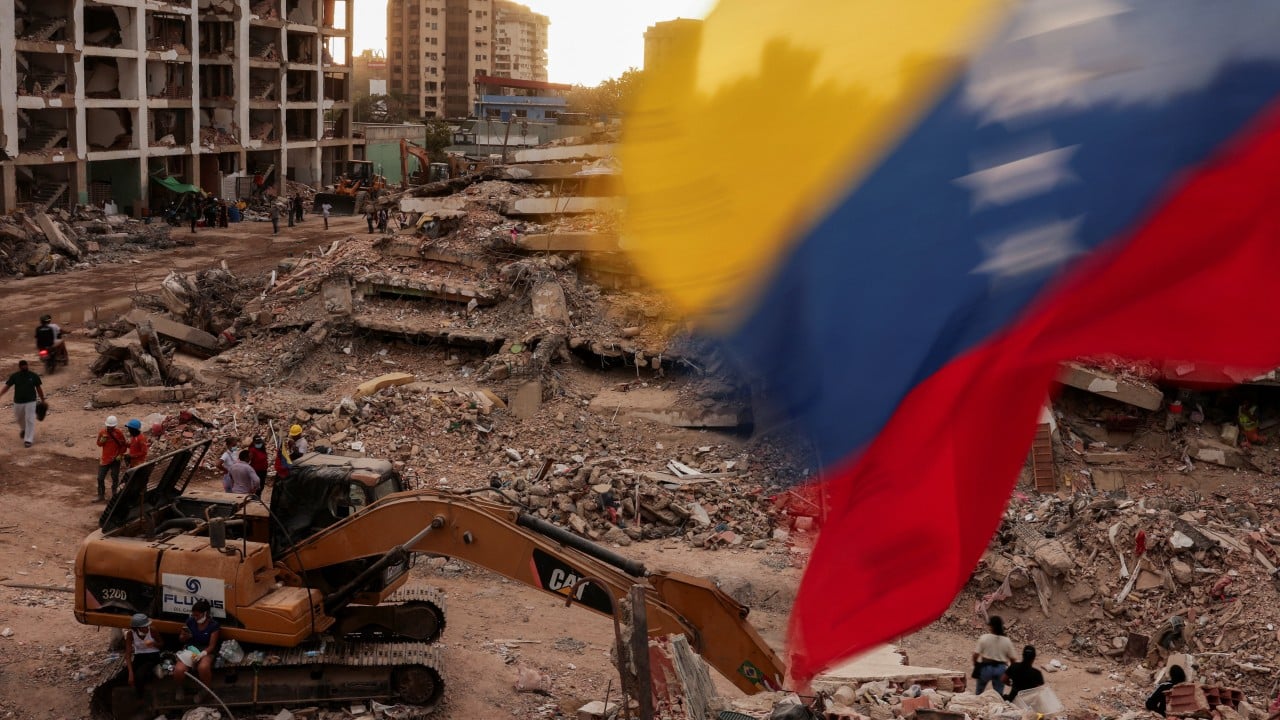
Diplomatic inertia is notoriously difficult to break through political dialogue alone; it typically requires an exogenous shock. In late June, a devastating double earthquake struck Venezuela, resulting in over 6,000 fatalities and widespread structural destruction. The domestic civil infrastructure proved incapable of managing the acute rescue and reconstruction demands without external technical intervention.
Israel deployed an emergency aid and disaster response delegation, spearheaded by Home Front Command specialists, to execute search, rescue, and triage operations. This intervention bypassed traditional diplomatic channels through the mechanism of operational necessity. State capacity failures created an operational vacuum that foreign technical assistance filled.
[Exogenous Shock: June Earthquakes]
       │
       ▼
[State Capacity Failure & Mass Casualties]
       │
       ▼
[Deployment of Israeli Technical/Rescue Delegation]
       │
       ▼
[Bilateral Trust Formation via Operational Efficacy]
       │
       ▼
[Institutionalization into Consular Coordination Channels]
This sequence illustrates a classic operational spillover effect. Humanitarian assistance creates localized zones of cooperation that insulate participating states from broader ideological disputes. Prime Minister Benjamin Netanyahu explicitly framed the mission as both a humanitarian act and an institutional bridge, noting that the deployment was actively rebuilding bilateral relations alongside physical infrastructure. The formalization of a consular coordination mechanism on Tuesday is the bureaucratic crystallization of this field-level cooperation.
The Strategic Calculus of Minority Populations
State actors operating under acute internal pressure frequently utilize minority communities as diplomatic proxies or bridge-building mechanisms. The Jewish community in Venezuela, historically significant yet numerically diminished following years of economic migration and state-sponsored hostility, served as an institutional catalyst for the current agreement.
Chief Rabbi Isaac Cohen of the Israelite Association of Venezuela met with executive leadership in Caracas to deliver a direct appeal for consular normalization. The security and administrative welfare of diaspora communities often function as litmus tests for a state's international legitimacy. By addressing the institutional needs of the local Jewish population, the Venezuelan state achieves two primary objectives:
- It signals to international observers a verifiable departure from the systemic state-sanctioned hostility of the past.
- It provides a low-risk testing ground for bilateral administration before attempting broader economic or security integration.
Both governments explicitly cited the historic ties between the State of Israel and the Venezuelan Jewish community as a foundational pillar in their joint announcement. This framing allows both administrations to present the normalization not as an ideological surrender, but as a preservation of historical continuity and humanitarian obligation.
Operational Limitations and Structural Boundaries
Despite the resumption of consular services, expectations of a rapid progression to comprehensive diplomatic or strategic partnership must be bounded by clear structural realities. Consular normalization is an administrative tool designed to solve specific friction points—such as document authentication, citizen welfare, and technical coordination—rather than a commitment to mutual security alignment.
Venezuela remains mired in profound economic volatility and domestic political ambiguity. The current interim government operates under intense external observation and economic constraint. Conversely, Israel's foreign policy priorities in the Western Hemisphere remain secondary to its immediate security architecture in the Middle East.
The coordination mechanism established by Saar and Plasencia represents the upper limit of bilateral cooperation in the near term. Without a complete transformation of Venezuela's underlying economic framework and long-term political stability, relations will remain functional rather than strategic.
Monitor the operational throughput of the newly established coordination mechanism, specifically tracking visa processing volumes and bilateral technical agreements regarding infrastructure rehabilitation, to measure whether this limited consular thaw evolves into permanent diplomatic architecture.