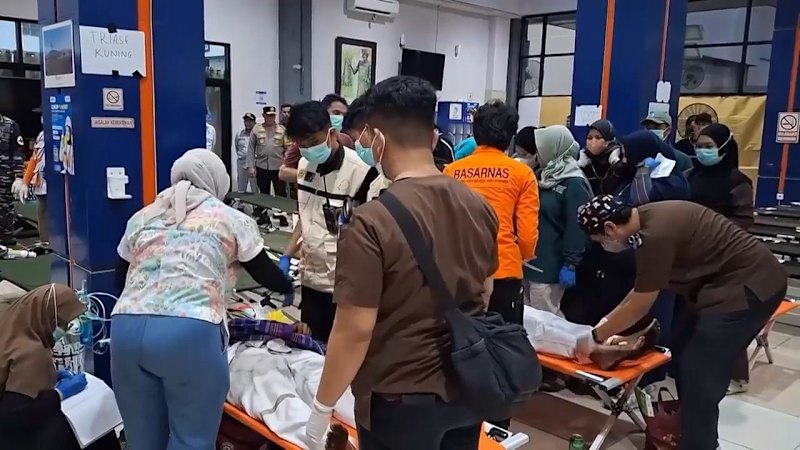
Maritime transport safety within archipelagic systems relies on a predictable equation: the intersection of weather predictability, structural vessel integrity, and regulatory enforcement. When a ferry capsizes in the Java Sea, as occurred during the disaster involving vessels such as the Virgo Transport 8, the event is rarely a simple anomaly. It is the result of systemic vulnerabilities embedded in high-frequency, low-margin coastal transit networks. Deconstructing the mechanics of such maritime incidents requires examining three core failure points: hydrodynamic stability limits under extreme meteorological stress, passenger evacuation bottlenecks, and regulatory oversight deficits.
The Hydrodynamic Failure Curve
Maritime disasters in archipelagic routes typically begin long before a vessel takes on water; they initiate at the design and loading thresholds. Inter-island ferries operating in regions like Indonesia manage high-volume passenger and cargo loads across routes that demand rapid turnaround times. When severe weather systems introduce sudden high-amplitude wave action—often exceeding 2 to 2.5 meters—vessels face destabilizing lateral forces. Also making headlines in this space: What the Tragic Death of a San Francisco Teen Reveals About the Next Wave of Synthetic Drugs.
The physical mechanism of capsizing in high-sided vessels involves a rapid shift in the center of gravity. Unlike bulk carriers or specialized container ships, passenger-cargo hybrids feature high upper decks and large unobstructed internal spaces. When water accumulates on deck or cargo shifts due to inadequate lashing, the transverse metacentric height decreases. Once the angle of heel surpasses the threshold of positive stability, the righting moment drops to zero, and the vessel undergoes a rapid inversion. Survivors of the Java Sea incident noted that the ship went down in under five minutes, leaving no window for structured evacuation or engine shutdown.
The Evacuation Bottleneck and Human Factor
The speed of modern maritime inversions exposes severe limitations in emergency egress systems. Standard safety protocols assume a controlled abandonment phase spanning 15 to 30 minutes. In rapid-capsizing events, that temporal buffer evaporates. Further insights regarding the matter are covered by The Washington Post.
The human factor in these crises operates under extreme information asymmetry. Crew members often lack automated, instantaneous internal communication arrays, relying instead on verbal alarms shouted across compartments. This introduces a critical delay in passenger response time. Furthermore, passenger manifests in many regional transit hubs suffer from systemic data discrepancies. Without real-time electronic ticketing tied to biometric or mandatory ID verification at the gangway, post-incident search and rescue operations (SAR) are forced to operate with high uncertainty regarding the exact headcount, complicating resource allocation during the golden hours of recovery.
The Regulatory and Economic Cost Function
The persistence of maritime accidents in developing archipelagic economies highlights an economic trade-off between operational cost efficiency and safety investment. Ferries provide the primary economic lifeline for populations spread across thousands of islands, where air travel remains cost-prohibitive. To maintain accessible pricing, operators often maximize passenger capacity and minimize dwell times at port, which can compromise pre-departure safety checks, including hull integrity audits and cargo weight verification.
Enforcement agencies face severe geographical constraints. Monitoring maritime compliance across vast maritime zones requires dense radar coverage, patrol vessels, and rigorous port-state inspections. When inspection regimes are under-resourced, operators retain de facto discretion over adherence to weather-advisory sailing bans.
Strategic Remediation Framework
To alter the safety trajectory of high-density archipelagic ferry networks, intervention must shift from reactive search-and-rescue optimization to preventative structural controls.
- Mandatory Electronic Manifest Integration: Replace manual ticketing with mandatory digital boarding gates that link passenger identity directly to port authority databases, ensuring absolute accountability during emergency response phases.
- Dynamic Weather-Threshold Restrictions: Implement automated, legally binding port departures tied to real-time meteorological sensor feeds rather than generalized daily forecasts, eliminating human discretion under commercial pressure.
- Subdivision and Ballast Regulation: Enforce strict standards for internal watertight compartment subdivision to prevent catastrophic progressive flooding and sudden loss of positive stability following hull breaches or wave impacts.


