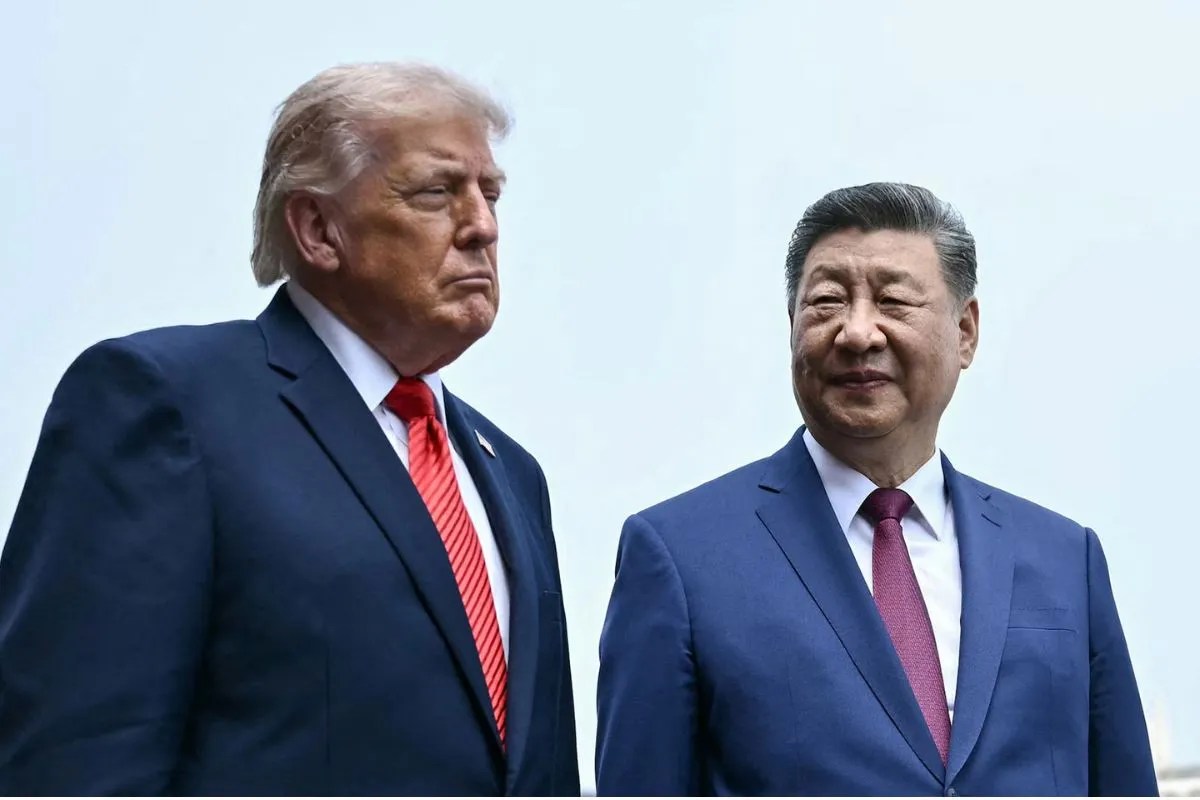
Economic statecraft operates on leverage asymmetries. When tariff regimes shift, targeted actors do not merely absorb cost increases; they calculate the marginal utility of counter-measures across distinct economic vectors. The recent deployment of Chinese trade restrictions targeting United States defense contractors and unmanned aerial vehicle components illustrates a calculated shift from defensive trade protection to targeted supply chain denial.
Understanding this dynamic requires moving past surface-level headline tracking. Trade retaliation is governed by structural bottlenecks, institutional dependencies, and second-order feedback loops. By deconstructing the mechanisms behind export controls, corporate blacklisting, and dual-use component restrictions, we expose the underlying calculus that dictates modern geopolitical trade conflict.
The Tripartite Taxonomy of Economic Retaliation
State-level economic warfare relies on three distinct operational channels. Each channel targets a different vulnerability profile within an opposing economy.
Direct Corporate Blacklisting
Placing commercial entities on restrictive trade registries alters the transaction costs of doing business. For defense contractors and high-technology firms, blacklisting restricts access to specific inputs, invalidates existing supply agreements, and forces costly corporate restructuring. The efficacy of this tool depends entirely on the target's reliance on the issuing state's market or supplier base. When firms possess negligible domestic exposure within the retaliating state, direct blacklisting functions primarily as a signaling mechanism rather than a commercial strangulation tool.
Dual-Use Export Restrictions
Unmanned aerial systems and advanced manufacturing hardware occupy a gray zone between commercial utility and military application. Restricting the export of these components targets the specialized industrial base rather than general consumer goods. The restriction of critical minerals, rare earth processing technologies, and specialized manufacturing inputs exploits concentrated supply chains where alternative sourcing requires multi-year capital expenditure and regulatory approval cycles.
Financial and Operational Disruption
Beyond physical goods, trade retaliation targets corporate asset ownership, operational licenses, and market access permissions. Freezing local assets or restricting asset repatriation creates liquidity pressures for multinational corporations, forcing risk management teams to re-evaluate their exposure in volatile jurisdictions.
The Mechanics of Supply Chain Interdependence
Modern global manufacturing is characterized by hyper-specialization. No single national economy controls an entirely autarkic vertical stack for advanced technologies. This interdependence generates structural vulnerabilities that both Washington and Beijing exploit.
[Raw Mineral Extraction] ---> [Refining & Processing] ---> [Component Fabrication] ---> [System Integration]
         ^                                                                                    |
         |____________________________ Feedback Loop / Retaliation ___________________________|
When trade barriers rise, the friction within this pipeline increases exponentially. The primary bottleneck in unmanned aerial vehicle manufacturing is not the assembly of airframes or the writing of flight control software, but the availability of specific high-purity materials, specialized magnets, and micro-actuators.
The Cost Function of Substitution
When a supply restriction is enforced, the affected corporation faces a steep cost function to re-engineer its supply chain. This process involves three distinct cost variables:
- Discovery Costs: Identifying alternative suppliers capable of meeting military-grade specifications without infringing upon existing intellectual property rights.
- Validation Costs: Subjecting new components to rigorous testing, environmental stress analysis, and compliance certification. For aerospace and defense applications, this validation phase routinely spans twelve to thirty-six months.
- Integration Costs: Redesigning sub-assemblies to accommodate physical or operational variations in replacement parts.
The friction generated by these costs explains why regulatory actions trigger immediate market adjustments. The financial penalty is not simply the loss of a single sales channel, but the multi-million-dollar capital outlay required to rebuild a fragmented vendor network.
The Asymmetry of Strategic Minerals and Critical Inputs
The underlying leverage in current trade friction stems from upstream material dominance. While Western nations maintain advantages in downstream intellectual property, software architecture, and financial market infrastructure, processing nodes for essential technological inputs remain heavily consolidated.
Unmanned systems depend on rare earth elements for propulsion motors, advanced sensors, and guidance systems. Controlling the refining capacity for these materials grants a state the ability to throttle production downstream without formally halting finished goods exports. This creates a regulatory arbitrage opportunity. By restricting the components and materials rather than the final product, the regulatory state shifts the compliance burden onto the importing nation's industrial base.
Strategic Implications for Defense Procurement
Defense procurement strategies assume a degree of supply chain stability that modern trade fragmentation invalidates. When critical inputs are subject to sudden regulatory prohibitions, military acquisition programs face severe schedule slippage.
To mitigate these risks, procurement agencies are forced to adopt dual-sourcing mandates and stockpile critical inventories. However, stockpiling is capital-inefficient and provides only a temporary buffer against prolonged trade disputes. The structural reality remains: until domestic refining and component manufacturing capacities scale to match global demand, external supply shocks will continue to dictate operational readiness.
Tactical Execution for Risk Mitigation
Navigating an environment of escalating trade barriers requires a systematic pivot from reactive compliance to proactive portfolio resilience. Organizations operating in cross-border technology sectors must implement a rigorous operational framework to insulate themselves from regulatory volatility.
- Map Tier Three and Tier Four Suppliers: Most supply chain disruptions originate deep within the sub-tier vendor network where visibility is lowest. Complete structural transparency down to raw material inputs is mandatory.
- Establish Jurisdictional Firewalls: Isolate research, development, and manufacturing assets to ensure that a regulatory action in one operating theater does not paralyze operations globally.
- Accelerate Substitution R&D: Maintain active secondary suppliers for all critical path components, even if those secondary sources currently operate at a higher unit cost. Treat the cost differential as an insurance premium against total supply chain lockout.
- Monitor Regulatory Trajectories: Track industrial policy announcements, export control updates, and trade tribunal rulings as leading indicators of future friction points rather than lagging administrative updates.
The divergence of global supply chains is a permanent structural shift. Organizations that treat trade retaliation as a temporary political anomaly will continue to absorb unsustainable operational shocks. Long-term survivability in high-technology markets depends on treating regulatory friction as a predictable, quantifiable variable in enterprise risk management.