Geopolitical survival for peripheral states caught between competing hegemonic centers is governed by structural asymmetry rather than diplomatic intent. When a regional war widens between the United States and Iran, Baghdad becomes the primary shock absorber for pressures it cannot control and dependencies it cannot sever. The structural fragility of Iraq stems from a fundamental divergence in how external powers embed themselves within domestic institutions. While Washington exerts transactional leverage through financial dominance and military presence, Tehran maintains structural penetration through deeply embedded political networks, religious infrastructure, and non-state armed actors. This dual-tracking architecture turns Iraqi territory into a reactive surface for foreign conflict, punishing any attempt at genuine neutrality.
The friction points can be categorized into three distinct operational vectors: the security dilemma of fragmented armed forces, the financial vulnerability of dollar dependence, and the energy choke point of regional grid integration. Each vector operates on internal logic that defies simple administrative fixes, presenting Prime Minister Ali al-Zaidi’s administration with a complex systems engineering problem rather than a standard governance challenge.
The Security Vector and Non-State Coercion
The domestic security apparatus in Iraq is defined by institutional overlap. The Popular Mobilization Forces occupy a paradoxical position as an official component of the Iraqi armed forces under state command, yet they retain autonomous command chains and ideological alignment with Tehran. This dual identity breaks the monopoly on the legitimate use of force, creating an internal security market where non-state actors can initiate kinetic actions that override official state policy.
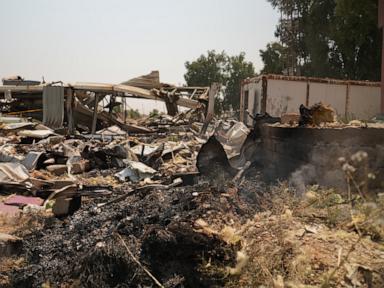
When Iran-aligned militias launch drone or missile strikes against regional infrastructure or coalition positions, the geopolitical cost is absorbed entirely by Baghdad. The retaliatory response by the United States and regional partners—such as recent joint strikes against militia positions—bypasses the theoretical sovereignty of the Iraqi state, converting its territory into an active theater of attrition.
The state's announced September deadline for militia disarmament and institutional integration faces an immovable structural barrier. Armed groups embedded within the parliamentary apparatus and municipal administration cannot be dismantled via administrative decree without triggering severe domestic fracture. The cost function of direct confrontation involves civil conflict and government collapse, forcing Baghdad to manage these factions through appeasement or precarious containment rather than outright suppression.
The Financial Vector and Monetary Asymmetry
Iraq’s economic architecture is bound to the United States Federal Reserve system, creating a profound structural vulnerability. Because the bulk of Iraq’s oil export revenues are held in accounts in New York, the Central Bank of Iraq depends entirely on access to physical U.S. dollars and electronic clearing mechanisms to stabilize its domestic currency and finance public expenditures.
This financial pipeline is vulnerable to compliance enforcement. U.S. regulatory pressure aimed at halting illicit dollar flows and currency smuggling to regional actors creates severe liquidity crunches inside Iraq, depreciating the dinar and driving inflation. Conversely, Iran relies on the Iraqi market as an economic outlet to bypass international sanctions, utilizing cross-border commercial networks, trade imbalances, and energy purchases to acquire hard currency.
Baghdad cannot decouple from the American financial clearinghouse without courting economic collapse, nor can it sever commercial ties with Tehran without triggering severe internal shortages. The resulting compromise is a managed dependency, where every tightening of Washington's regulatory screws directly degrades the Iraqi government's fiscal stability and public approval.
The Energy Vector and Resource Entanglement
Energy independence remains an elusive metric for a state sitting atop massive hydrocarbon reserves. Iraq historically relies on Iranian natural gas imports to fuel a significant portion of its domestic electricity grid. This reliance introduces a systemic vulnerability: any disruption in cross-border energy flows—whether caused by geopolitical sanctions waivers expiring, technical constraints, or regional warfare—plunges major Iraqi urban centers into acute power crises.
To mitigate this exposure, Baghdad has pursued infrastructure partnerships with U.S. firms aimed at capturing associated gas currently flared during oil extraction. However, the development timeline for these domestic gas-capture projects spans years, whereas the energy deficit is immediate. The structural mismatch between long-term infrastructure investment and short-term operational survival keeps Iraq tethered to Iranian energy supplies, ensuring that any escalation in the broader U.S.-Iran conflict immediately threatens domestic electricity generation and lights the fuse for civil unrest.
Strategic Execution Under Constraints
The operational reality for Baghdad leaves no room for absolute victories or clean geopolitical realignments. Because genuine neutrality is mathematically impossible under conditions of structural penetration, state survival requires optimizing within narrow boundaries.
The primary strategic play for the Iraqi administration is to accelerate domestic associated-gas capture projects to eliminate electricity dependence on Tehran, while concurrently utilizing economic partnership agreements with Western firms to anchor U.S. strategic interest in civilian development rather than military presence. Simultaneously, the state must replace direct kinetic confrontation with slow, institutional absorption of paramilitary networks—co-opting mid-level cadres through state employment while isolating rogue factions that invite foreign retaliation. Success is measured not by the elimination of external pressure, but by the avoidance of total state capture by either belligerent.


