International ultimatums rely on a fundamental miscalculation of state survival functions. When an external actor imposes a fixed time horizon on a sovereign power, the target state faces an immediate binary choice: capitulate and suffer a permanent loss of strategic autonomy, or absorb the friction of non-compliance while attempting to shift the baseline of the negotiation. The expiration of the sixty-day operational window governing the Islamabad Memorandum highlights the structural failure of arbitrary deadlines in high-stakes geopolitical conflicts. Rather than functioning as a catalyst for compromise, fixed-duration mandates routinely dissolve into mutual non-compliance because the underlying cost of concession eclipses the short-term cost of friction.
The Cost Function of Non-Compliance
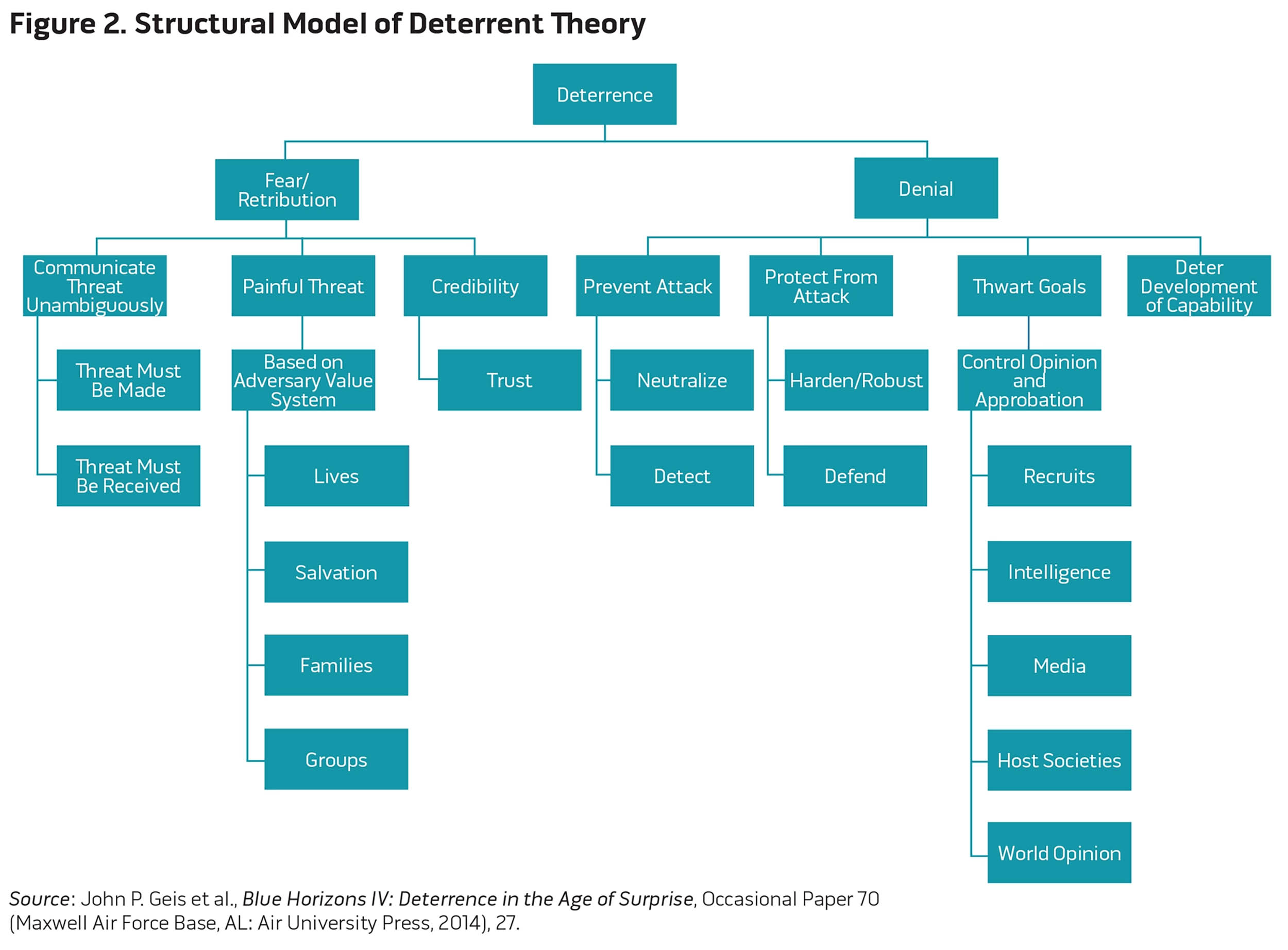
To understand why political entities reject external demands, one must evaluate the economic and security trade-offs governing sovereign decision-making. External pressure typically manifests through three distinct vectors: maritime blockades, targeted financial sanctions, and military posturing. Each vector exacts a measurable toll on the target state, yet state actors calculate risk through a lens of long-term regime preservation rather than quarterly economic performance.
When a government faces currency depreciation, supply chain constriction, and inflation, standard economic models predict rapid policy adjustment. However, these models frequently omit the state's internal security apparatus and its capacity to reallocate resources away from civilian sectors toward insulated state priorities. The preservation of political power supersedes macroeconomic optimization. If compliance with a foreign ultimatum signals domestic weakness or invites subsequent demands, the rational strategy for the target state is to absorb economic degradation rather than yield on core sovereignty issues.
The strategic interaction operates as a war of attrition where the primary variables are endurance and narrative control. By framing the deadline as an illegitimate coercive instrument, leadership within the targeted nation insulates itself from domestic backlash. The public is mobilized around resistance to foreign dictation, transforming economic hardship into a test of national resilience. This dynamic neutralizes the intended psychological impact of the ultimatum, converting pressure into a unifying political asset.
The Asymmetry of Strategic Leverage
A critical flaw in deadline-driven diplomacy is the assumption of symmetric leverage. Negotiating parties rarely possess equivalent control over the specific choke points defining the conflict. In contemporary standoffs involving maritime trade corridors, physical geography provides the local actor with localized dominance that external military superiority cannot easily neutralize without triggering catastrophic escalation.
Control over vital shipping lanes introduces a powerful counter-leverage mechanism. While an external power can enforce a distant blockade, the state adjacent to the chokepoint maintains operational proximity, enabling it to disrupt regional commerce and impose costs on global supply chains. This creates a stalemate defined by reciprocal vulnerability:
- The external actor risks economic drag, inflationary pressures, and the depletion of high-cost interceptor inventories.
- The local actor risks export revenues, structural infrastructure damage, and sustained monetary contraction.
Because these variables operate on different metrics, comparing them directly is analytically misleading. Financial metrics cannot easily be weighed against territorial control or sovereign jurisdiction over national waterways. Consequently, neither side can objectively calculate a winning matrix before the deadline elapses, rendering the timeline functionally obsolete.
The Mechanics of Institutional Friction
Diplomatic agreements forged under immediate military duress often contain deliberate ambiguities to secure an initial cessation of hostilities. These ambiguities function as structural time bombs. When an interim accord relies on open-ended phrasing regarding who administers critical infrastructure or collects transit fees, implementation mechanisms inevitably break down the moment the parties attempt to operationalize the text.
Institutional friction intensifies when domestic authority is fragmented. Foreign ministries may project willingness to engage, while security apparatuses and legislative bodies enforce rigid ideological boundaries. External powers frequently misinterpret tactical pauses or backchannel communications as strategic shifts toward capitulation, ignoring the internal veto players capable of nullifying any prospective compromise. When the implementation phase begins, these internal contradictions surface, turning minor procedural disputes into major diplomatic ruptures.
The expiration of a negotiation window rarely marks a clean transition to open conflict. Instead, it triggers a phase of prolonged ambiguity where both sides engage in partial economic warfare and low-intensity deterrence while avoiding total escalation.
Strategic Execution and Forward Posture
Managing protracted international friction requires abandoning the premise that artificial timelines can compel structural reform in sovereign states. Policymakers must shift from event-driven diplomacy to continuous risk management.
- Decouple long-term strategic objectives from short-term calendar milestones that create self-imposed credibility traps.
- Establish verifiable, incremental verification protocols rather than demanding comprehensive settlement packages within compressed windows.
- Factor the target state's domestic survival calculus into economic pressure models, recognizing that sanctions alone rarely induce strategic surrender without a clear, face-saving pathway for the adversary.
The resolution of such standoffs depends less on the pressure applied before a deadline than on the architecture of the exit ramps constructed after it collapses.