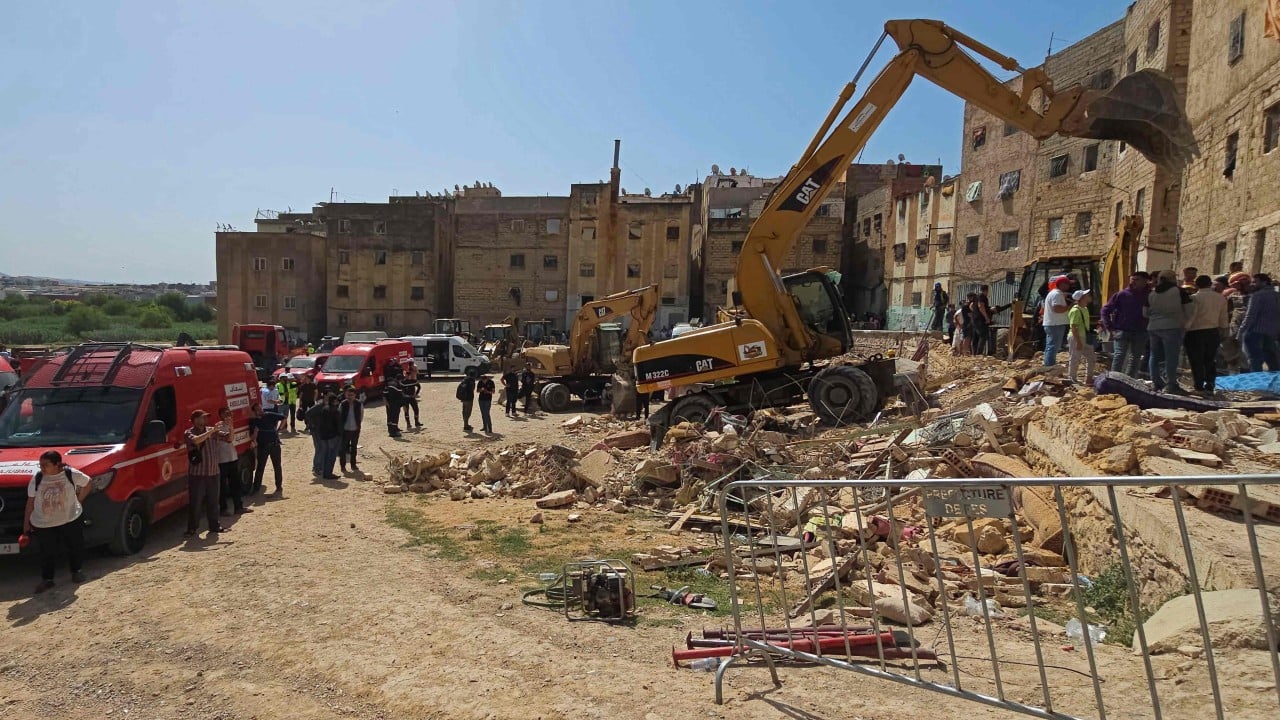
The failure of high-density residential structures in Morocco’s urban centers is not an isolated series of accidents but the predictable output of a fragmented construction ecosystem. When a building collapses in a district like Casablanca’s Sbata or the older quarters of Fez, the casualty count serves as a lagging indicator of systemic breakdowns in three specific areas: soil-structure interaction, material integrity, and the regulatory oversight gap. Understanding these disasters requires moving beyond the "unfortunate tragedy" narrative and dissecting the mechanical and bureaucratic variables that transform a shelter into a lethal kinetic event.
The Triad of Structural Failure
Structural stability in Moroccan urban environments rests on a tripod of geological stability, architectural adherence, and maintenance. If one leg fails, the load-bearing capacity of the entire system enters a state of critical equilibrium. If you enjoyed this piece, you might want to check out: this related article.
1. Soil and Foundation Destabilization
Morocco’s coastal cities, particularly Casablanca, sit on complex geological foundations where moisture infiltration is a primary antagonist. High water tables and aging sewage systems lead to the saturation of the substrate.
- The Capillary Effect: Moisture rises through porous foundation materials, weakening the binding properties of the concrete.
- Subsidence: As soil loses its shear strength due to saturation, the foundation settles unevenly. This creates differential settlement, where one side of a building sinks faster than the other, inducing shear stresses that the rigid concrete frame was never designed to withstand.
2. The Vertical Addition Crisis
The most frequent catalyst for collapse in Moroccan urban zones is the "unauthorized vertical extension." Owners often add third or fourth floors to buildings originally engineered for two. For another perspective on this development, see the recent update from The Washington Post.
- Dead Load Oversaturation: Every additional floor increases the static weight beyond the safety factor (usually 1.5 to 2.0) calculated by the original engineer.
- The Lever Arm Effect: Taller, narrower buildings in dense quarters have higher centers of gravity. During minor seismic tremors or even high winds, the lateral forces applied to the base are multiplied, leading to a catastrophic failure at the ground-floor pillars.
3. Material Degradation and Salinity
In coastal regions, "concrete cancer" or carbonation is an invisible killer. The salt-heavy air penetrates the concrete cover and reaches the steel reinforcement bars (rebar).
- Oxidation and Expansion: As the steel rusts, it expands. This expansion creates internal pressure that cracks the concrete from the inside out, a process known as spalling.
- Cross-Sectional Loss: Once the rebar loses significant cross-sectional area to rust, it can no longer provide the tensile strength required to keep the building upright during a load shift.
The Regulatory Gap and the Informal Economy
The technical causes of collapse are exacerbated by a regulatory environment where the "as-built" reality rarely matches the "as-designed" blueprint. This discrepancy stems from a specific economic bottleneck.
The Role of the "Tacheron"
In many Moroccan construction projects, the professional civil engineer is sidelined by the tacheron—an informal contractor who operates based on experience rather than structural calculations. While the law requires a technical controller and an architect, the high cost of these services leads many property owners to bypass them for renovations or extensions.
- The "Rule of Thumb" Fallacy: Informal builders often use standard rebar diameters and concrete mixes regardless of the specific load requirements of the site.
- Substandard Aggregates: To save costs, builders may use unwashed sea sand in concrete. The chlorides in sea sand accelerate the corrosion of the steel reinforcement, significantly shortening the building’s lifespan from 50 years to less than 15.
Oversight Fragmentation
Moroccan urban planning involves multiple layers of authority, from the local Moqadem (neighborhood authority) to the municipal technical committees. This fragmentation creates a "diffusion of responsibility" where unauthorized construction is ignored until a failure occurs. The lack of a centralized, digital building permit and inspection database means that a building can be flagged as dangerous in one department while another department fails to issue an evacuation order.
Quantifying Risk in the "Mina" and "Medina" Districts
The risk profile of a Moroccan building changes based on its historical context. We can categorize the danger into two distinct zones.
The Ancient Medinas
These structures are often centuries old and rely on traditional load-bearing walls made of stone or earth (pisé). The primary risk here is Structural Interdependence. Because these buildings are literally leaned against one another, the collapse of a single wall can trigger a domino effect across an entire block.
- Mechanism: The removal of a shared wall for a "modern" renovation removes the lateral support for the neighboring structure.
The Post-Independence "Béton" Expansion
Buildings constructed between 1970 and 1990 present the highest risk. This era saw a rapid transition to reinforced concrete without the rigorous building codes adopted in the early 2000s.
- The Soft Story Vulnerability: Many of these buildings have open ground floors for retail shops. This creates a "soft story" where the ground level is much less stiff than the floors above. In the event of a structural shift, the ground floor collapses first, pancaking the upper levels.
The Economic Barrier to Remediation
The challenge of preventing further collapses is not just technical; it is a problem of incentive alignment. For an inhabitant of a decaying building in Casablanca, the cost of structural reinforcement often exceeds the value of the property or their total liquid assets.
- Valuation Trap: Once a building is officially labeled "menaçant ruine" (threatening ruin), its market value drops to zero. This discourages owners from seeking professional inspections.
- Relocation Bottlenecks: Government-led social housing programs to rehouse residents of failing buildings often face a "location-income mismatch." Residents are moved to the outskirts of the city, far from their informal jobs, leading to resistance and a return to the dangerous structures.
Engineering a Solution through Sensor-Based Monitoring
To move from reactive disaster management to proactive risk mitigation, Morocco must integrate low-cost structural health monitoring (SHM) systems.
- Accelerometers and Inclinometers: Placing small, battery-powered sensors on flagged buildings can detect micro-shifts in a building’s tilt or vibrations that precede a collapse.
- Data Aggregation: This data must be fed into a centralized GIS (Geographic Information System) map that provides real-time risk heatmaps for municipal authorities.
The current strategy of "evacuation after cracks appear" is flawed because concrete failure in overloaded structures is often brittle and sudden. There is no "plastic deformation" phase to warn residents. By the time a crack is visible to the naked eye, the internal steel has likely already reached its ultimate tensile strength.
Strategic Priority: The National Building Audit
The immediate move is the implementation of a mandatory "Structural Health Certificate" for any building over 30 years old or any structure with more than three floors. This certificate should be decoupled from the municipal tax system to encourage compliance.
- Non-Destructive Testing (NDT): Using ultrasonic pulse velocity and Rebound Hammer tests to verify concrete strength without damaging the structure.
- Legalizing the Informal: Creating a fast-track, low-cost "Regularization Permit" that provides homeowners with government-subsidized engineering consultations to reinforce illegal extensions rather than just fining them.
- The Insurance Lever: Forcing commercial tenants on ground floors to carry structural liability insurance would shift the burden of inspection to insurance companies, who have a financial incentive to ensure the building does not collapse.
The structural integrity of Moroccan cities is currently a race between urban decay and the speed of regulatory reform. Without a shift from visual inspections to data-driven engineering audits, the "Lagging Indicator" of casualty counts will continue to be the primary metric of urban health. Success requires treating the city not as a collection of aesthetic facades, but as a mechanical system under constant, increasing stress.