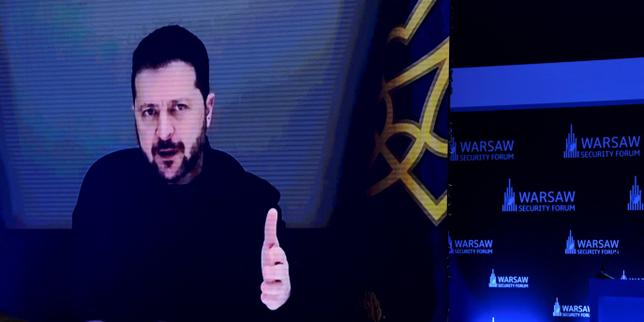
The convergence of external electoral pressures and high-intensity military conflict creates a unique institutional bottleneck. When international actors condition diplomatic alignment or security guarantees on the execution of democratic processes within a state under martial law, the friction between constitutional mechanics and kinetic reality becomes acute. The debate surrounding a single-day versus a prolonged operational pause for Ukrainian elections is less an argument over the logistics of voting and more a contest over military reconstitution windows and domestic legitimacy structures.
The Operational Logistics of Wartime Balloting
Organizing a national election requires an institutional infrastructure that active combat actively degrades. Under martial law, the administrative apparatus of a state is reoriented toward resource mobilization, air defense coordination, and logistical sustainment of the front line. Re-allocating this apparatus toward voter registration, domestic and diaspora polling station security, and ballot distribution introduces severe vulnerabilities. Discover more on a connected issue: this related article.
A single-day cessation of hostilities, as proposed by Russian state representatives, offers a stark mismatch against the time required to reverse these administrative shifts. Modern democratic elections require months of preparatory legal adjustments, candidate registration cycles, media access equalization, and secure supply chains for voting materials. A twenty-four-hour pause provides zero operational capacity to conduct a representative national vote; it merely creates an instantaneous kinetic freeze while leaving the underlying structural paralysis untouched.
Conversely, the Ukrainian administration's position—advocating for a sixty-day structural pause—stems from the logistical baseline required to demobilize portions of the electorate, secure voting integrity in frontline oblasts, and enable millions of displaced refugees and active-duty military personnel to cast ballots. Without this extended horizon, any election held under martial law risks severe disenfranchisement, which directly undermines the post-election government's domestic legitimacy and legal continuity. Additional analysis by USA Today delves into similar views on this issue.
The Asymmetric Cost Function of Ceasefires
For military planners, any cessation of hostilities functions as a resource redistribution mechanism. The strategic utility of a pause is evaluated through a strict asymmetry test: who benefits more from the temporal vacuum?
- Reconstitution and Attrition Management: Prolonged truces allow defending forces to rotate exhausted units, replenish depleted ammunition stocks, repair damaged armor, and fortify defensive depth. In protracted attritional conflicts, combatants operating under sustained aerial bombardment utilize pauses primarily to harden infrastructure and absorb replacement personnel.
- The Intelligence and Targeting Reset: A short-term
The Structural Mechanics of Ceasefire Diplomacy in Ukraine
news
Diplomatic friction points during protracted military engagements reveal structural rigidities that conventional political commentary routinely misinterprets as mere stubbornness or tactical posturing. When proposals for short-duration cessations of hostilities—such as a single-day pause to facilitate electoral validation—enter the negotiation space, they must be evaluated not through the lens of humanitarian goodwill, but via game-theoretic cost-benefit matrices. A superficial reading of a prospective twenty-four-hour ceasefire for democratic processes in Ukraine reduces a complex strategic dilemma to a headline-ready talking point. A rigorous structural breakdown exposes the deep incompatibilities between operational military logistics and political theater.
The primary impediment to short-duration operational pauses lies in the asymmetry of military replenishment cycles. Modern industrial-scale artillery and missile exchanges operate on continuous feedback loops. A twenty-four-hour suspension of kinetic activity does not freeze the operational environment; it merely shifts the variable of competition from force-on-force attrition to logistics staging, intelligence gathering, and defensive reorganization. The strategic actor holding the initiative calculates whether a temporary freeze provides a net advantage to the adversary's defensive hardening or structural recovery.
The Logistics Deficit of Short-Cycle Windows
Military mobility and logistical consolidation cannot be modulated on a micro-schedule. Moving heavy mechanized assets, securing supply lines, and redistributing counter-battery radar systems require contiguous periods of uninterrupted movement or fortified stasis. A single-day operational pause introduces high friction into command-and-control hierarchies.
- Information Asymmetry: During any ceasefire, both sides exploit the surveillance vacuum. Reconnaissance drones, satellite passes, and electronic intelligence-gathering operations intensify. The tactical benefit shifts entirely toward whichever force possesses superior real-time reconnaissance assets to map enemy repositioning.
- Reconstitution Friction: Troops entrenched in high-intensity combat zones cannot be rotated efficiently within a twenty-four-hour window. Attempting personnel rotation under a precarious, short-term ceasefire creates severe force-concentration vulnerabilities, presenting high-value targets for opportunistic strikes.
- Command Verification Failures: Monitoring compliance across a thousand-kilometer front line requires verifiable telemetry and neutral third-party observers. Without an established, robust verification architecture, localized violations are guaranteed, instantly triggering retaliatory spirals that nullify the diplomatic intent.
Electoral Validation Under Coercive Conditions
The intersection of democratic governance and active territorial defense produces a profound constitutional paradox. Elections require baseline conditions of civic safety, freedom of movement, media plurality, and secure voter registration databases. A twenty-four-hour window is structurally insufficient to execute a national ballot, yet proposing such a window serves a specific signaling function within the diplomatic arena.
When external actors float micro-duration ceasefires linked to democratic exercises, they are typically signaling compliance metrics to domestic constituencies rather than presenting an actionable operational plan. The functional utility of an election in wartime is its capacity to confer legitimacy. However, when conducted under the shadow of persistent artillery ranges and partitioned population centers, the resulting electoral output suffers from severe legitimacy deficits.
A vote cast under imminent threat of kinetic resumption does not measure popular sovereign will; it measures survival adaptation under duress.
The state apparatus cannot maintain secure polling stations across contested territories, occupied zones, and frontline administrative districts within a single day. The administrative overhead alone—distributing secure ballots, authenticating digital registers, and protecting election workers from targeted interdiction—requires weeks of sustained security guarantees. Consequently, any proposal truncating this timeline to twenty-four hours exposes a fundamental misalignment between political messaging and logistical reality.
The Strategic Calculus of Refusal
To understand why proposals for hyper-short ceasefires routinely stall or encounter immediate skepticism from defense planners, one must analyze the incentive structure governing protracted conflicts. Each belligerent evaluates proposals through the framework of path dependency. Accepting a disadvantageous tactical pause sets a dangerous precedent, inviting incremental pressure to accept subsequent, more restrictive frameworks.
The calculus is governed by three distinct variables:
- Resource Preservation: Does the pause allow the adversary to redeploy depleted reserves or clear supply bottlenecks?
- Information Advantage: Who gains a clearer picture of adversary force posture during the suspension of active fire?
- Narrative Control: Does rejecting the proposal impose a higher diplomatic penalty than accepting a strategically disadvantageous pause?
When the cost of compliance outweighs the diplomatic benefit of appearing cooperative, state actors consistently choose operational continuity over symbolic compliance. This explains the recurring pattern where dramatic diplomatic overtures dissolve upon contact with military staffs.
The Structural Deadlock
Protracted attrition conflicts do not resolve through punctuated equilibrium introduced by symbolic twenty-four-hour diplomatic interventions. The underlying structural incentives demand either total military exhaustion, a fundamental shift in external resource flows, or a comprehensive, enforceable political settlement that addresses territorial integrity, security guarantees, and economic reconstruction.
Proposals that isolate a single administrative requirement—such as voting—from the overarching security architecture ignore the indivisible nature of modern warfare. Until the primary drivers of military capability and territorial control are fundamentally altered, short-duration tactical pauses will remain instruments of diplomatic signaling rather than viable pathways to conflict resolution. Future diplomatic initiatives must abandon micro-scheduling illusions and focus instead on the systemic realignment of force incentives.