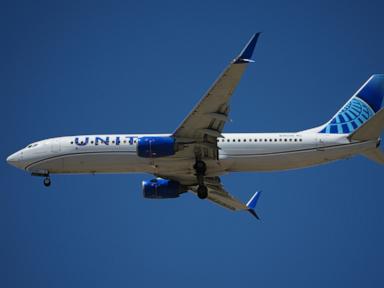
The ratification of the five-year collective bargaining agreement between United Airlines and the Association of Flight Attendants-CWA represents a fundamental recalibration of the industry’s labor-cost function. While headlines focus on the 31% top-line pay increase, the true strategic significance lies in the structural inclusion of "boarding pay"—a shift from a flight-hour-only compensation model to a comprehensive duty-period model. This change effectively internalizes the operational friction of ground operations into the airline’s variable cost structure, forcing a new level of synchronization between labor relations and gate efficiency.
The Triad of Value Redistribution
The contract’s economic impact is best understood through three distinct pillars of value: cumulative wage appreciation, the monetization of non-flying duty time, and retroactive equity.
Compounding Wage Appreciation: The 31% increase is not a flat adjustment but a stepped progression. This creates a rising floor for the airline’s fixed labor costs over the next 60 months. For the individual flight attendant, this moves the terminal rate of pay into a bracket that competes with high-skill service sectors, potentially reducing churn in a tight labor market.
Ground-Time Internalization (Boarding Pay): Historically, airline labor economics relied on a "block-to-block" system, where pay only accrued when the aircraft was in motion. By introducing pay for the boarding process, United is now pricing the most volatile part of the travel ribbon. This aligns the financial interests of the crew with the operational necessity of quick turns. If boarding is delayed, the marginal cost of that delay now includes a direct labor surcharge that did not exist under previous contracts.
Retroactive Settlement (Back Pay): The inclusion of retroactive pay acknowledges the "opportunity cost" lost during years of protracted negotiations. This serves as a one-time capital injection to the workforce to reset labor relations, but from a corporate treasury perspective, it represents a significant cash outflow that must be balanced against the long-term stability of a five-year peace treaty with the union.
The Operational Cost Function and Marginal Efficiency
The introduction of boarding pay alters the math of "on-time performance" (OTP). Under the old model, the airline paid the same labor rate for a 40-minute boarding process as it did for a 60-minute boarding process. The labor was essentially "free" until the door closed.
Under the new framework, the cost of inefficiency at the gate is quantified. This creates a feedback loop where the network operations center must optimize boarding sequences to minimize the "unproductive" spend during ground time. We can view the new cost function as:
$$Total Labor Cost = (Flight Hours \times Flight Rate) + (Boarding Time \times Boarding Rate) + Premiums$$
This equation demonstrates that total labor expense is no longer solely a function of network distance (miles flown) but is now heavily influenced by terminal velocity (how fast passengers move through the jet bridge).
Market Parity and the Delta Benchmark
United’s move is not occurring in a vacuum. It is a reactive and proactive response to the standard set by Delta Air Lines, which introduced boarding pay in 2022. In the airline industry, labor contracts typically follow a "pattern bargaining" logic. Once one major carrier concedes a structural benefit like boarding pay, it becomes the de facto floor for all subsequent negotiations at American Airlines, Southwest, and Alaska.
The risk for United is the "leapfrog" effect. While this contract achieves parity today, if subsequent negotiations at competitors result in higher rates or better work rules, United may find its "premium" contract quickly becoming the industry average, potentially leading to mid-contract friction or retention issues if inflation outpaces the 31% schedule.
The Capital Allocation Trade-off
For investors, the 31% increase in flight attendant wages represents a permanent shift in the break-even load factor. To maintain current margins, United must execute on one of the following levers:
- Yield Optimization: Passing costs to the consumer through higher base fares or increased "unbundling" (ancillary fees).
- Up-gauging: Moving more passengers per flight attendant to dilute the per-seat labor cost. This is reflected in United’s "United Next" strategy, which replaces smaller regional jets with larger mainline narrowbodies like the Boeing 737 MAX 10 and Airbus A321neo.
- Asset Utilization: Reducing the time aircraft spend on the ground. Ironically, while boarding pay makes ground time more expensive, it provides the incentive for the airline to invest in technology and gate infrastructure that speeds up the process.
Strategic Bottlenecks and Labor Relations Volatility
The five-year duration of the contract provides a window of operational certainty, yet it does not eliminate systemic risks. The primary bottleneck remains the "me-too" clauses and the expectations of other labor groups. Pilots, mechanics, and ground crews will view the 31% figure as a baseline for their own upcoming cycles.
There is also the matter of "Work Rule Rigidity." Large pay raises are often traded for flexibility in scheduling. If United secured the ability to more efficiently stage crews or reduce deadheading (positioning crews without passengers), the 31% cost increase could be partially offset by productivity gains. However, if the work rules remain static, the airline is simply paying more for the same unit of labor, which exerts downward pressure on the Return on Invested Capital (ROIC).
Long-term Structural Forecast
The ratification marks the end of the "low-cost labor" era for legacy carriers. The convergence of high inflation, a shortage of qualified aviation personnel, and strong union leverage has created a permanent step-change in the industry’s cost structure.
United’s management is betting that by securing this contract now, they can pivot their focus entirely to the "United Next" expansion without the threat of a strike or the "quiet quitting" that plagues demoralized workforces. The success of this 31% investment will not be measured by the payroll department, but by whether United can achieve its ambitious pre-tax margin targets while operating in a higher-cost environment.
The final strategic move for the airline is to aggressively accelerate the retirement of older, less-efficient aircraft. The increased labor cost per hour makes the fuel and maintenance inefficiency of older fleets untenable. Only by pairing high-cost labor with high-efficiency hardware can the airline maintain its competitive position against low-cost carriers who operate with leaner staffing models.
:max_bytes(150000):strip_icc()/iron-supplements-benefits-4178814-5c4e40cd46e0fb00014c370c.png)