The elimination of a head of state or a supreme ideological leader represents the ultimate stress test of international norms and Westphalian sovereignty. When conventional military engagements transition into the targeted neutralization of top-tier sovereign leadership—specifically within the context of the Iran-Israel-US triad—the shift is not merely tactical. It is a fundamental recalibration of the "Risk-Reward Equation" in asymmetric warfare. The decision to remove a figure of Ali Khamenei’s stature implies that the attacking parties have determined that the systemic instability caused by his presence now outweighs the kinetic and escalatory costs of his removal.
This analysis deconstructs the mechanics of such a high-stakes operation, evaluating the structural impact on command hierarchies, the erosion of deterrence thresholds, and the inevitable shift in regional power dynamics.
The Triad of Deterrence Erosion
To understand the gravity of targeting a Supreme Leader, one must apply a tripartite framework to state-level deterrence. Deterrence is not a static state but a fluctuating value derived from three specific variables:
- Perceived Will: The internal and external belief that a state will actually utilize its kinetic capabilities.
- Redline Credibility: The historical consistency of a state in enforcing its stated boundaries.
- Threshold Proximity: The distance between a "grey zone" provocation and a "total war" response.
By targeting the highest level of the Iranian clerical and military hierarchy, the US and Israel effectively signal that the "Threshold Proximity" has reached zero. In previous decades, international relations operated under an unwritten code where heads of state were generally insulated from direct physical liquidation to maintain a channel for eventual de-escalation. Removing this insulation converts the conflict from a manageable geopolitical rivalry into an existential zero-sum game.
The Institutional Vacuum and Succession Friction
The primary objective of targeted attrition at the executive level is to induce "Institutional Paralysis." However, the effectiveness of this strategy depends entirely on the rigidity or fluidity of the target’s succession model. Iran’s power structure is uniquely bifurcated between the Republican state apparatus (the President and Parliament) and the Revolutionary state apparatus (The Office of the Supreme Leader and the IRGC).
The Replacement Bottleneck
Unlike a corporate structure or a standard democracy, the role of the Supreme Leader (Vali-e Faqih) requires a rare intersection of religious credentialing and deep-state loyalty. The "Succession Friction" in this scenario is calculated by:
- The Legitimacy Gap: The time required for a successor to command the same level of religious and political fealty as a multi-decade incumbent.
- The Factional Multiplier: The degree to which internal groups (pragmatists, hardliners, and the IRGC) compete for influence during the transition.
When a leader is removed via external kinetic action rather than natural attrition, the "Factional Multiplier" spikes. The immediate result is not a collapse of the state, but a period of hyper-reactivity where subordinate commanders may act without centralized oversight to prove their "revolutionary' credentials. This creates a "Command and Control (C2) Fragmentation" risk, where the likelihood of accidental or unauthorized nuclear or ballistic escalation increases significantly.
The Economic and Kinetic Cost Function
State actors do not cross "new lines" without a rigorous cost-benefit analysis. The cost function of neutralizing a figure like Khamenei is expressed through three primary channels of retaliation:
1. Asymmetric Proximate Response
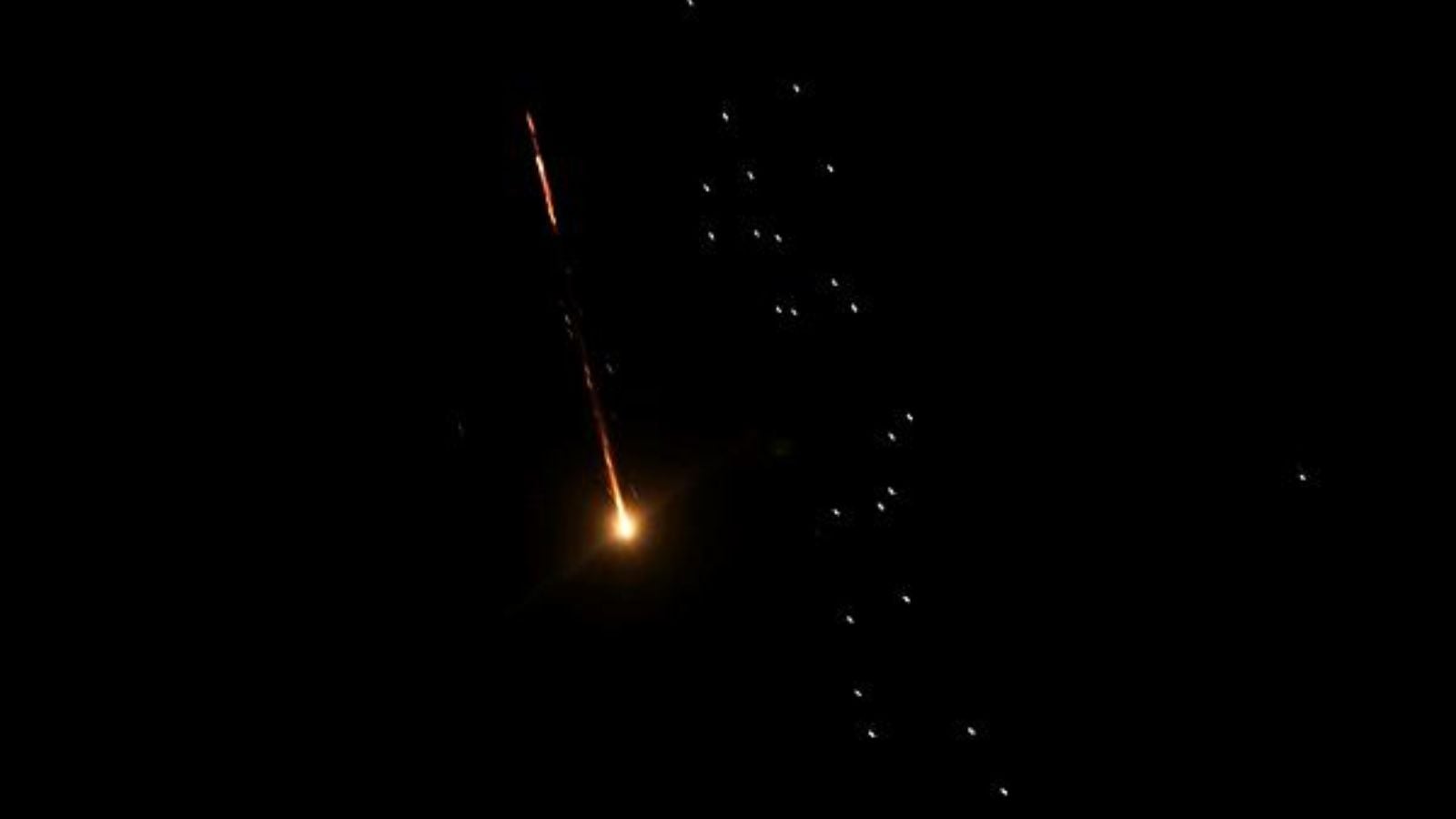
This involves the activation of the "Axis of Resistance." The calculus here is the saturation of missile defense systems (Iron Dome, David’s Sling, Arrow). If the cost of an interceptor missile is significantly higher than the cost of the incoming projectile, the defender faces an "Economic Attrition Trap."
2. Global Maritime Chokepoints
The Strait of Hormuz remains the most potent non-kinetic lever in the Iranian arsenal. A total or partial blockage increases the global Brent Crude spot price, creating a secondary "Inflationary Tax" on the attacking nations' domestic populations. This creates political pressure on the leadership that authorized the strike, effectively outsourcing the retaliation to the global markets.
3. Cyber-Kinetic Cascades
Modern warfare integrates digital disruption with physical destruction. A strike of this magnitude triggers a "Cyber-Kinetic Cascade," where critical infrastructure—water treatment, electrical grids, and financial clearinghouses—becomes the primary battlefield. The difficulty in attributing these attacks allows the retaliating party to bypass traditional "Proportionality Laws" in international conflict.
Technological Pre-requisites for Sovereign Neutralization
The execution of such an operation requires a level of "Intelligence Primacy" that renders traditional sovereignty obsolete. This involves:
- Signal Intelligence (SIGINT) Dominance: The ability to penetrate "air-gapped" communication networks used by high-value targets (HVTs).
- Human Intelligence (HUMINT) Penetration: The successful subversion of the target's inner security circle, often through long-term financial or ideological grooming.
- Persistent Loitering Capability: The use of low-observable (stealth) unmanned aerial systems (UAS) that can remain in contested airspace for extended durations without detection.
When these technologies are successfully deployed against a head of state, it proves that "Hard Sovereignty"—the physical protection of a leader within their own borders—is no longer a guaranteed defense against a technologically superior adversary.
The Strategic Realignment of Middle Eastern Alliances
The "New Line" referenced in geopolitical circles refers to the death of the "Containment Doctrine." For decades, the goal was to contain Iran's influence through sanctions and proxy management. A direct strike on the leadership signals a transition to the "Decapitation Doctrine."
This shift forces regional players (Saudi Arabia, UAE, Qatar) to reassess their "Hedging Strategies."
- The Abraham Accords Bloc: May see this as a definitive security guarantee, accelerating intelligence sharing and integrated missile defense.
- The Neutralist Bloc: Countries like Qatar or Oman, which traditionally act as mediators, may find their "Diplomatic Utility" zeroed out as the space for negotiation vanishes.
Mathematical Modeling of the Escalation Cycle
We can model the probability of a regional war ($P_w$) following such an event using a modified version of the Richardson Arms Race model, incorporating "Leader Loss" as a volatility constant:
$$P_w = \alpha(I_s) + \beta(R_c) - \gamma(D_v)$$
Where:
- $I_s$ = Intensity of the strike (Sovereign vs. Tactical)
- $R_c$ = Rapidity of the successor’s consolidation
- $D_v$ = Domestic vulnerability of the attacking state
- $\alpha, \beta, \gamma$ = Weighting constants based on historical escalation data
The data suggests that when $I_s$ targets the ideological core of a regime, the $\alpha$ variable grows exponentially, often overriding the $D_v$ cooling effect. This makes a "tit-for-tat" cycle nearly impossible to maintain, as both sides feel compelled to achieve "Finality" to ensure survival.
Long-term Structural Consequences
The precedent set by the neutralization of a Supreme Leader creates a "Contagion Effect" in international law. If the US and Israel can justify the removal of a sovereign leader based on "Pre-emptive Self-Defense," other global powers (Russia, China) will likely adopt this logic to justify similar actions in their respective spheres of influence. This marks the end of the "Executive Immunity" era that has defined post-WWII international politics.
The move from "Proxy War" to "Sovereign War" necessitates a complete overhaul of corporate and state risk assessments. Supply chains that rely on regional stability must now factor in "Black Swan" events with a much higher frequency.
The strategic imperative for any state observing this shift is to move toward "De-centralized Command." If the removal of a single individual can paralyze a nation's defense, the system is fundamentally flawed. Future state actors will likely prioritize "Distributed Ideological Leadership," making the neutralization of a single person a symbolic victory rather than a functional one.
Strategic planners must now operate under the assumption that no asset, regardless of sovereign status or geographic insulation, is beyond the reach of kinetic or digital liquidation. The "New Line" is not just a change in policy; it is the deletion of the final boundary in asymmetric competition.
Would you like me to analyze the specific economic impact of a Strait of Hormuz closure on the current 2026 global energy markets?