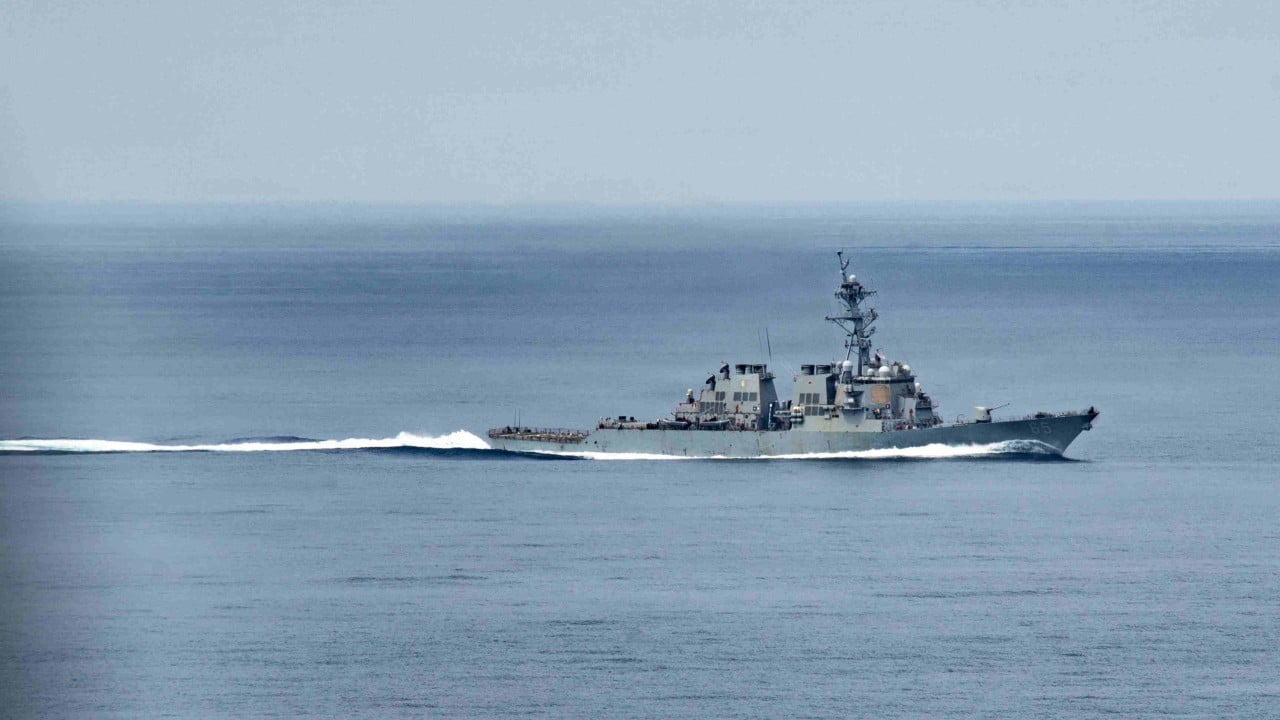
Operational tempo dictates military readiness, yet the friction points within high-stress naval deployments are rarely measured through the lens of industrial capacity limits. Recent incidents involving surface combatants in the South China Sea highlight a fundamental tension between sustained forward presence and the degradation of underlying logistical infrastructure. When a warship experiences mechanical failure far from home ports, observers frequently attribute the breakdown to isolated maintenance oversight or crew fatigue. This diagnosis mistakes a systemic constraint for an acute error. The core problem is the systematic over-allocation of reserve capacity across global naval fleets, creating a compounding deficit in operational readiness that mechanical failures merely manifest.
Naval strategy relies on a delicate balance between deployed assets, training pipelines, and depot-level maintenance cycles. When political demands require a continuous and visible deterrence posture in contested maritime zones, force planners often compress maintenance intervals and extend deployment durations. This operational model functions adequately in the short term by borrowing against future capacity. However, as the deficit compounds, the logistical pipeline experiences severe bottlenecks. Dry dock availability, specialized technician pipelines, and replacement part manufacturing operate under strict capacity constraints that cannot be expanded overnight simply through increased funding allocations.
The Mechanics of Operational Attrition
The degradation of naval hardware under high operational tempos follows predictable economic and physical laws. Operating a gas-turbine or steam-powered combatant in high-salinity, high-temperature environments accelerates mechanical wear exponentially compared to standard transit conditions.
- Thermal stress on propulsion systems increases when vessels operate at high speeds for extended durations to maintain presence or conduct freedom of navigation operations.
- Corrosive maritime atmospheres degrade electronics, radar arrays, and deck equipment faster than scheduled preventive maintenance routines can mitigate.
- Crew rotation schedules often outpace the institutional knowledge transfer required to maintain complex combat systems, leading to secondary and tertiary mechanical failures.
These factors interact to create an accelerated lifecycle curve. A warship designed for a thirty-year service life with standard utilization rates will experience structural and mechanical aging at a much faster rate when its annual operational hours are increased by fifty percent. The critical failure point is reached when the rate of wear outstrips the industrial base capacity to restore the system to baseline specifications during standard overhaul windows.
The Industrial Bottleneck
Reserve capacity is not merely a collection of idle ships sitting in port; it represents the entire supporting ecosystem required to sustain, repair, and surge a naval force. This ecosystem includes private shipyards, public naval shipyards, skilled labor pools, supply chains for rare metallurgical components, and specialized diagnostic equipment.
The industrial capacity available to major naval powers has contracted significantly over the past several decades. Consolidation within the defense-industrial base has left few yards capable of handling capital ships and complex surface combatants. Consequently, when a vessel requires depot-level intervention, it enters a queue.
[High Operational Tempo] ---> [Accelerated Mechanical Wear] ---> [Shipyard Queue Bottleneck] ---> [Reduced Reserve Capacity]
This queue is the primary indicator of depleted reserve capacity. If every available dry dock is operating at maximum capacity, a single unexpected breakdown cascades through the entire deployment schedule. The navy in question is forced to choose between extending the deployment of an already strained vessel or leaving a strategic gap in the theater of operations. Both options carry asymmetric risks.
Opportunity Costs of Sustained Forward Presence
Maintaining persistent presence in regions like the South China Sea exacts a hidden price in strategic flexibility. Every hull deployed forward is a hull unavailable for high-end tactical training, fleet exercises, or mid-lifecycle upgrades.
- Training Deficits: Crews focused on operational patrols miss critical multi-domain warfare exercises required to maintain proficiency in peer-level conflict scenarios.
- Deferred Modernization: Ships kept on the line cannot enter modernization programs, leading to a widening technological gap against rapidly advancing adversaries.
- Logistical Fragility: Extended supply lines stretching thousands of miles from domestic industrial bases leave combatants vulnerable to logistical disruption.
This dynamic creates a strategic paradox. The desire to demonstrate resolve through continuous deployment erodes the actual physical capability required to win a high-intensity conflict should deterrence fail. The metric of success shifts from warfighting readiness to mere physical presence, substituting quantitative tracking of ship days at sea for qualitative assessments of fleet lethality.
Strategic Realignment of Force Structures
Addressing the depletion of reserve capacity requires a fundamental shift in how naval power is projected and sustained. Continuing on the current trajectory guarantees an increase in unplanned mechanical failures, compounding maintenance backlogs, and diminished strategic optionality.
To break this cycle, defense planners must decouple political signaling from operational deployment rates. Establishing true operational reserves means accepting periods of visible absence in secondary theaters to ensure primary assets undergo rigorous, uncompromised maintenance cycles. Furthermore, dispersing logistical nodes and investing in expeditionary repair capabilities can reduce the dependency on centralized, backlogged domestic shipyards.
The metric of a dominant navy is not how many ships can be pushed into a contested zone simultaneously, but how rapidly the entire enterprise can absorb damage, execute repairs, and regenerate combat power at scale. Until procurement and maintenance strategies reflect this reality, mechanical breakdowns in the South China Sea will remain symptoms of a deeper structural deficit.
/https://tf-cmsv2-smithsonianmag-media.s3.amazonaws.com/filer_public/0c/c6/0cc687f8-3c16-477e-ae6f-b9357dcb3c81/gettyimages-181270907.jpg)