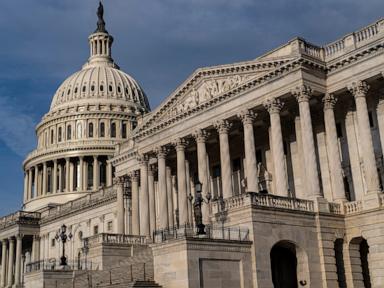
The fight for the Senate is rarely decided by the charisma of a single candidate or the cleverness of a late-October television ad. According to political analysts, election historians, and campaign strategists across the ideological spectrum, the battle for control of the upper chamber is dictated first and foremost by structural geography—a rigid six-year electoral calendar that regularly forces one party to defend a disproportionate number of vulnerable seats in states where national partisan trends work against them. While pundits often frame every two-year cycle as a referendum on the sitting president or a sudden shift in the national mood, the underlying reality is far more mechanical.
Look at the math. Every two years, roughly one-third of the 100-seat United States Senate faces the voters. Because that three-class rotation is fixed by the Constitution, the partisan composition of the map in any given election year is an accident of history rather than a reflection of current public opinion. When a wave election sweeps a party into power, that same party inherits a massive defensive burden six years later when those seats come back up for renewal.
The Architecture of an Asymmetric Map
To understand why the fight for the Senate feels like an existential crisis for Democrats in unfavorable map cycles, you have to look at how American political geography has sorted itself over the past three decades. Political scientists and election analysts, including researchers at the Pew Research Center and the Cook Political Report, have documented a steady decline in ticket-splitting—the practice of voting for one party for president and another for Senate.
In the 1970s and 1980s, it was routine for states to send split delegations to Washington or to back a presidential candidate from one party while electing a senator from the other. Voters evaluated Senate candidates largely as local figures who brought federal highway money and agricultural subsidies back home. That era is gone. Today, federal elections are thoroughly nationalized. A Senate candidate in a rural, conservative-leaning state cannot easily outrun the national brand of the Democratic Party, just as a Republican candidate struggles to overcome structural headwinds in states that reliably back Democratic presidential nominees.
Because the Senate awards two seats to every state regardless of population, the institution inherently amplifies the voting power of less populous, predominantly rural states. Analysts at FiveThirtyEight and academic political scientists have repeatedly noted that this constitutional design creates a persistent structural tilt. When the electoral calendar brings up a class of seats heavily concentrated in rural or industrial states that have drifted rightward in recent presidential cycles, Democrats face a defensive gauntlet. They are not merely trying to win new territory; they are fighting to hold ground in states where the baseline partisan lean favors their opponents before a single campaign dollar is spent.
The Death of the Incumbency Advantage
For decades, the standard playbook for surviving a hostile Senate map relied on the power of incumbency. Conventional wisdom held that sitting senators possessed insurmountable advantages in fundraising, name recognition, and constituent service. If an incumbent kept their head down, avoided major scandals, and delivered tangible local projects, voters would reward them regardless of national political winds.
That shield has cracked. Campaign finance data compiled by OpenSecrets and post-election analyses from university political science departments show that while incumbents still raise enormous sums of money, their margin of overperformance relative to the presidential baseline has shrunk dramatically. In hyper-polarized environments, massive fundraising yields diminishing returns. Once every voter in a state has seen hundreds of negative advertisements, an additional ten million dollars in the final weeks of a campaign rarely persuades undecided voters—largely because the pool of genuinely undecided voters has evaporated.
Consider a hypothetical example to see how this dynamic plays out on the ground. Imagine a three-term Democratic senator representing a state that voted for the Republican presidential nominee by eight percentage points in the previous two elections. Twenty years ago, that senator could rely on endorsements from local business chambers, split-ticket moderate voters in the suburbs, and long-standing personal goodwill to win reelection by five points. In the current environment, national party committees pour tens of millions of dollars into the race to tie that incumbent directly to the national party leadership in Washington. Local distinctions blur. The race ceases to be a referendum on the senator's local record and becomes a proxy war over national cultural and economic grievances. Under those conditions, even a popular incumbent faces an uphill climb to survive.
Money, Outside Groups, and the Nationalization Machine
The financial architecture of modern Senate campaigns reinforces this nationalization. Following the Supreme Court's Citizens United decision and subsequent campaign finance rulings, outside spending by Super PACs and dark-money groups has surged to match or exceed the spending of the candidates themselves.
Strategists from both parties acknowledge that these outside groups operate with a fundamentally different incentive structure than local campaigns. While a candidate's internal team might want to focus on hyper-local issues—water rights, regional manufacturing, or veteran healthcare facilities—national Super PACs test messages across dozens of states and deploy whatever attacks move the needle fastest in national polling. Usually, those messages revolve around national hot-button issues: immigration, inflation, judicial appointments, abortion rights, and federal spending.
This dynamic strips away the localized nuance that once allowed minority-party senators to survive in hostile territory. Furthermore, small-dollar online fundraising platforms like ActBlue and WinRed have transformed how campaigns are financed. Candidates no longer rely primarily on in-state donors who expect moderation and bipartisan dealmaking. Instead, a Senate candidate in Montana, Ohio, or Texas can raise tens of millions of dollars from partisan donors in New York, California, and Florida. Those out-of-state donors are not giving money to reward a senator for crossing the aisle; they are investing in a national partisan battle for control of the chamber floor.
The Stakes Beyond Legislation
When political observers describe a Senate cycle as a once-in-a-generation test, they are rarely talking solely about the passage of routine bills. Under modern Senate rules—specifically the 60-vote threshold required to overcome a legislative filibuster—major policy initiatives already struggle to pass unless one party commands a massive, historically rare supermajority.
The real prize in the fight for the Senate is institutional control, which operates entirely on a simple majority of 51 votes. As congressional scholars at the Brookings Institution and the Bipartisan Policy Center frequently emphasize, the majority party controls the Senate floor, the committee gavels, and the confirmation pipeline.
Judicial confirmations represent the most consequential and permanent exercise of that power. Federal district and appellate judges, along with Supreme Court justices, serve lifetime appointments. A president whose party controls the Senate can reshape the federal judiciary for decades, influencing legal interpretations on everything from environmental regulation and labor law to voting rights and corporate liability. Conversely, a president facing a Senate controlled by the opposition party sees judicial nominations stall or fail outright, effectively halting their ability to fill vacancies on the federal bench.
Committee control carries equally potent, if less visible, authority. Committee chairs decide which bills receive hearings, which executive branch officials are hauled before cameras for oversight investigations, and which subpoenas are issued. Losing the majority does not merely mean losing votes on the floor; it means surrendering the investigative and agenda-setting machinery of the upper chamber.
The Counter-Argument Why Maps Alone Do Not Decide Elections
It is easy to look at partisan baselines, voter registration trends, and historical midterm penalties and conclude that the outcome of a difficult Senate map is predetermined. Veteran operatives warn against that fatalism. History offers plenty of reminders that structural models measure probabilities, not certainties.
Candidate quality remains the most significant wildcard in any Senate cycle. When a party enjoys a favorable structural map, primary voters frequently nominate ideological hardliners or political novices who struggle to appeal to general election swing voters. Strategic missteps, extreme rhetoric during primary campaigns, or personal scandals can squander a structural advantage overnight. In recent cycles, Republican strategists have openly lamented losing winnable Senate seats because primary electorates selected flawed nominees who alienated independent voters in states that should have been competitive.
Turnout differentials also complicate simple partisan math. Midterm elections and presidential elections draw fundamentally different electorates. Historically, the party holding the White House suffers a drop-off in enthusiasm during midterm cycles, while the opposition party benefits from a surge in motivated voters. However, shifts in the educational and demographic coalitions of both parties have scrambled traditional turnout models. High-propensity voters—those who vote reliably in every election regardless of whether the presidency is on the ballot—have increasingly realigned toward the Democratic Party in suburban districts, while the Republican coalition has gained ground among working-class voters who turn out at much higher rates during presidential years than in off-year contests.
This demographic sorting means that a state's presidential lean does not always translate cleanly into a midterm or down-ballot outcome. When high-propensity suburban voters show up in force while irregular voters stay home, Democrats can outperform their structural baseline even in states that appear out of reach on paper.
The Structural Dilemma Moving Forward
Even when a party survives a brutal map through superior fundraising, disciplined messaging, or opponent missteps, the victory is often temporary. That is the fundamental trap of the modern Senate. Because the underlying demographic and geographic sorting of the American electorate shows no signs of reversing, each successive six-year cycle forces Democrats to defend territory that has grown structurally more conservative over time, while narrowing the list of realistic offensive targets in Republican-held states.
For decades, parties treated unfavorable Senate maps as cyclical storms to be weathered until the calendar rotated back in their favor. Strategists now recognize that the problem is deeper than a single election cycle. Without a way to rebuild competitive appeal outside major metropolitan areas and affluent suburbs, holding a Senate majority requires running the table in nearly every swing state while simultaneously pulling off upsets in states that routinely back Republican presidential candidates. That margin for error leaves almost no room for a bad national environment, an unpopular president, or a single flawed campaign.
Every two years, billions of dollars are spent, millions of doors are knocked, and thousands of hours of cable news airtime are dedicated to analyzing the daily fluctuations of the polls. Yet beneath the noise of the campaign trail, the math of the map sits unchanged—an immovable constitutional grid that rewards geographic breadth over raw population and forces one party to climb a steeper hill every single time the calendar turns.