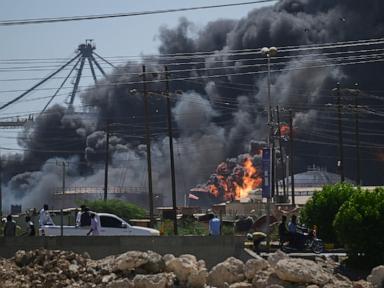
April 2026 marks exactly three years since the first shots rang out in Khartoum. While the rest of the world looks at other headlines, Sudan has quietly turned into the largest humanitarian disaster on the planet. It’s not just a civil war anymore; it’s a systematic dismantling of a nation’s future. If you think you’ve seen bad, look at the numbers coming out of Darfur and Kordofan right now. They’re staggering.
We’re talking about 34 million people in need of aid. That’s more than half the country. When the fighting started between the Sudanese Armed Forces (SAF) and the Rapid Support Forces (RSF) in 2023, the world expected a brief power struggle. Instead, we got a three-year descent into what the UN calls an "atrocities laboratory."
The birth of a generation in the dark
One of the most haunting statistics I’ve seen this year is that three babies are born every minute into this war. Since April 2023, roughly 5.6 million children have entered a world where the primary sound they know is the buzz of a drone or the crack of artillery. These aren't just numbers; they’re human lives starting out in overcrowded shelters or on the run.
Most of these kids won't see a doctor in their first year. About 37% of health facilities across all 18 states are completely non-functional. In conflict zones, that number jumps to nearly 80%. Hospitals aren’t safe havens either. Just last month, the El-Daein Teaching Hospital in East Darfur was hit by a drone strike. It killed 64 people, including children and medical staff. It was the main facility in the area. Now, it’s a shell.
Living on the move
Sudan is currently the world’s largest internal displacement crisis. Period. Over 11.5 million people have been forced from their homes. Think about that. That's like the entire population of Belgium suddenly having to pack a bag and run.
- 7.2 million are displaced within Sudan's borders.
- 4.2 million have crossed into neighboring countries like Chad, South Sudan, and Egypt.
- In places like Renk, the main transit center in South Sudan, facilities are operating at four times their capacity.
People are sleeping in the open. Water is so scarce that families are surviving on five liters a day. If you’re lucky, you share a latrine with 70 other people. It’s a recipe for the cholera and hepatitis E outbreaks that are currently ripping through the camps.
The hunger statistics that should keep you up
If the bullets don’t get you, the hunger might. We’re looking at 21.2 million people facing acute food insecurity. Famine has already been confirmed in several regions, including North Darfur and South Kordofan. In some areas like Um Baru, the Global Acute Malnutrition rate has hit 53%. That is an insane number. It means every second child you see is literally starving.
The "lean season" used to be a tough time for farmers. Now, it’s a death sentence. The fighting has decimated agricultural production and blocked supply chains. Even when food is available in local markets, inflation has made it impossible to buy. If you don't have cash—and most don't because the banking system is a wreck—you don't eat.
A war on women and health
The violence isn't just "collateral damage." It's targeted. Reports of sexual violence have surged by 350% since the start of the war. It’s being used as a weapon, plain and simple. Meanwhile, the maternal mortality rate has climbed to 295 deaths per 100,000 live births. In 2026, women are dying during childbirth because they can't find a midwife or a clean room.
The health system has seen over 700 attacks since 2023. Doctors are being arrested, clinics are being looted, and ambulances are being hijacked. It’s a deliberate attempt to break the spirit of the people by taking away their means of survival.
What actually needs to happen
Honestly, the international response has been embarrassing. The humanitarian appeal for 2026 requires $4.2 billion, but history shows we’ll be lucky to see half of that funded. Money isn't the only issue, though. We need safe corridors.
- Demand unhindered access. Aid convoys are being blocked by red tape and literal roadblocks. Pressure needs to be put on both the SAF and RSF to let food and medicine through.
- Fund the local responders. Often, it’s the "Emergency Response Rooms"—local Sudanese volunteers—who are doing the heavy lifting while big NGOs are stuck in Port Sudan. They need direct support.
- Stop the drone flow. The recent spike in civilian deaths is tied directly to the increased use of drones. International actors need to stop fueling this fire with new tech.
The situation in Sudan is a damning political failure. It’s easy to look at these millions of displaced and starving people and feel overwhelmed, but ignoring it only makes the eventual bill higher. Whether it's the spread of disease across borders or the total collapse of a strategic region, the world is going to deal with Sudan one way or another. It’s better to do it now with bread and medicine than later with even more expensive interventions.