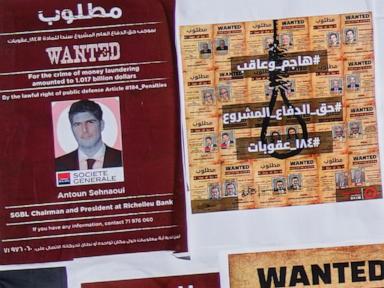
Everyone loves a good villain story. Take a high-profile banker, drop a photograph of them shaking hands with a controversial foreign leader, and watch the outrage machine spin into overdrive. Lebanese lawyers recently decided to file a formal legal complaint against a prominent financial figure simply for sitting across a table from Benjamin Netanyahu. The public response was swift, predictable, and entirely detached from how actual power operates.
People want a simple narrative. They want heroes, villains, and clean moral boundaries. But real estate, capital markets, and cross-border finance do not care about your moral purity tests.
Here is the lazy consensus I am tired of reading: that a banker holding a meeting is an act of high treason or a direct betrayal of national sovereignty. It sounds great on a placard during a street protest. It makes for compelling evening news segments. It is also fundamentally illiterate regarding how money moves across borders during geopolitical friction.
I have watched executives panic and throw millions of dollars at public relations firms just to scrub a photo from the internet, acting as if optics dictate solvency. They do not.
Let us strip away the emotional noise and look at the structural mechanics of what is actually happening when finance intersects with geopolitics.
The Myth of the Neutral Balance Sheet
The core misconception poisoning public discourse right now is the belief that financial institutions operate as moral agents of the state. They do not. Banks are clearinghouses for risk, liquidity, and debt.
When a financier meets with a political figure from an adversarial state, the naive observer screams about betrayal. The institutional realist recognizes a basic truth: capital talks to power, regardless of flags. If you think international banking operates on patriotism, you are looking at the wrong ledger.
Every single day, trillions of dollars flow through shell companies, offshore accounts, and correspondent banking networks that bypass state-level animosity entirely. Money has no flag. It only has a cost of capital and a risk premium.
Imagine a scenario where a nation is facing severe economic collapse, currency devaluation, and structural insolvency. The political class is busy shouting slogans into microphones, securing their own exit strategies, and blaming outside forces. Meanwhile, the financial operators are the ones desperately trying to keep the lights on by negotiating liquidity lines, restructuring sovereign debt, or keeping correspondent banking channels open.
If you cut off every line of communication because the optics look dirty to a prosecutor or a populist politician, you do not punish the adversary. You starve your own economy of the oxygen it needs to survive.
Why Legal Complaints Are Just PR Stunts
Let us look closely at the legal mechanics of filing complaints against bankers for political meetings.
In jurisdictions with weak judicial independence or deep political polarization, courts are routinely weaponized as theaters of political performance. Lawyers file motions not because they expect a watertight criminal conviction under established international jurisprudence, but because it generates headlines. It keeps their names in the news cycle. It feeds the base.
From a strict evidentiary standpoint, meeting with a political leader—even an adversary—rarely crosses the threshold of actionable criminal conspiracy unless there is a direct transfer of illicit funds, violation of explicit domestic boycott laws, or material support for recognized terrorist organizations. Merely sitting in a room and discussing economic stabilization, asset protection, or regulatory compliance is protected under standard professional advisory duties.
Yet, the court of public opinion operates on a completely different standard. Guilty until proven innocent, and guilty even if the accusation has no basis in statute.
I have seen institutions implode not because their balance sheets were toxic, but because they buckled under the weight of bad PR driven by legal theater. Executives make the fatal mistake of trying to appease a crowd that cannot be satisfied. Once you apologize for doing your job, you invite executioners into your boardroom.
The Uncomfortable Reality of Cross-Border Pragmatism
Let us address the elephant in the room. Why do these meetings happen in the first place?
Small economies locked in perpetual regional conflict rely on a very narrow bridge of financial intermediaries to stay afloat. When a nation's central bank reserves are bleeding out, someone has to talk to the entities holding the keys to global liquidity. Those entities are rarely friendly. They are often tied to the very geopolitical forces causing the regional distress.
Pragmatism looks ugly. It requires shaking hands with people your citizens despise. It requires negotiating terms with governments actively hostile to your sovereignty. But the alternative is total economic blackout.
If you criminalize communication, you do not stop the deals from happening; you simply drive them further underground into opaque, unregulated channels where corruption thrives without oversight. Transparency requires exposure, and exposure requires awkward, uncomfortable conversations in rooms where cameras shouldn't be, but are.
What Should Happen Instead
If we want to fix how society reacts to these intersections of finance and geopolitics, we need to stop treating corporate executives like elected officials.
Stop expecting banks to act as moral arbiters. They are risk managers. If a banker breaks actual laws—such as money laundering, sanctions evasion, or fraud—prosecute them with hard evidence in a court of law. But do not waste judicial resources and public bandwidth on nuisance lawsuits designed to score cheap political points.
The next time a photograph drops showing an elite financier breaking bread with a geopolitical rival, ignore the noise. Look at the balance sheet. Look at the debt maturities. Look at the liquidity flows.
That is where the real story is written. The lawsuits are just ink on cheap paper, fading by the time the next scandal hits the timeline.
Stop buying the theater. Start watching the capital.