In a small, sun-drenched apartment in Springfield, Ohio, a woman named Marie—let’s call her that to protect the fragile peace she has built—keeps a small blue suitcase under her bed. It is not there for a vacation. It has been there for years, a silent witness to a life lived in three-year increments. Every time she hears a car door slam too loudly outside or sees a political headline flash across her phone, her eyes drift toward the floorboards. She is one of roughly 300,000 Haitians living in the United States under Temporary Protected Status (TPS), a designation that is supposed to be a lifeline but often feels like a tether.
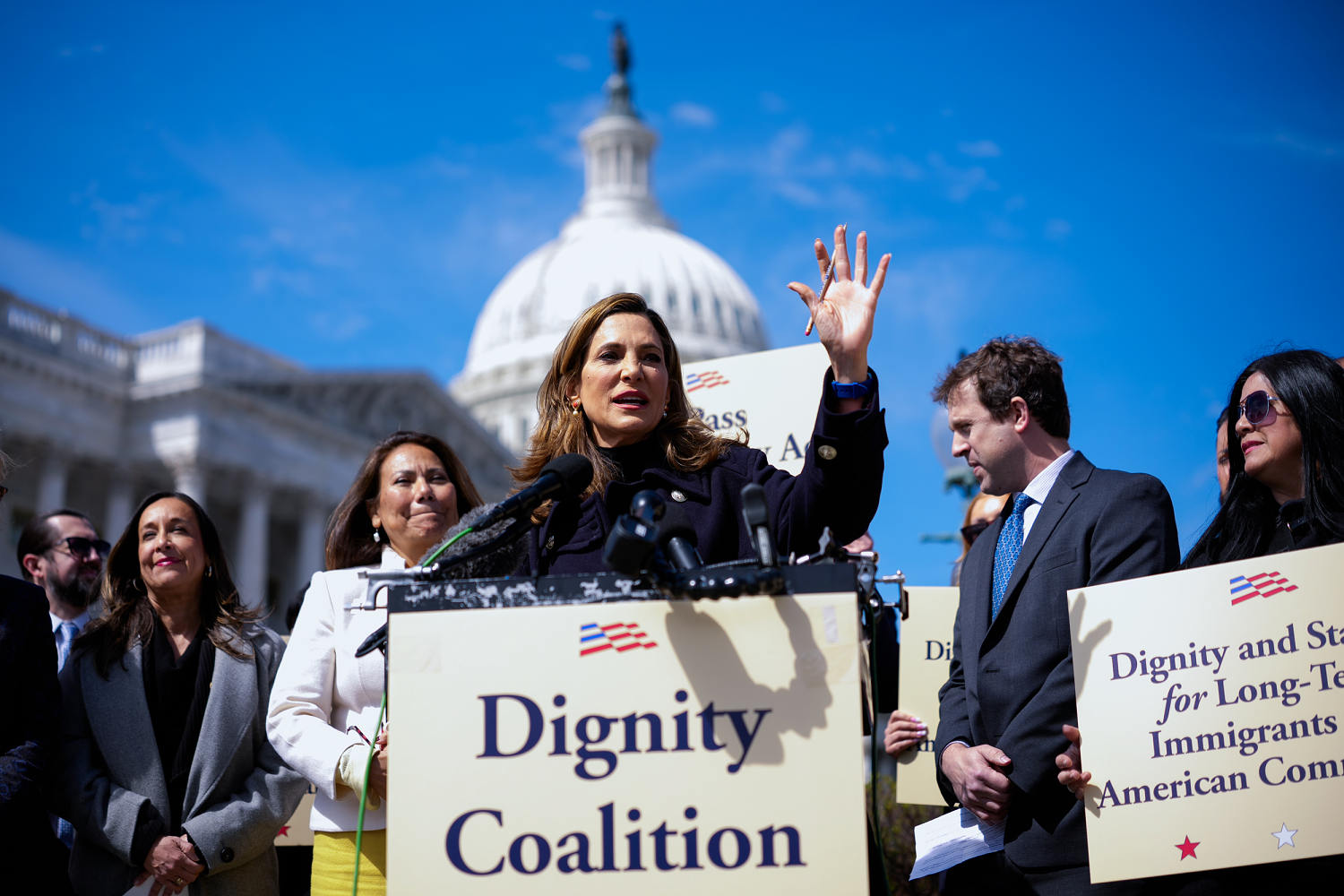
The news from Washington arrived this week like a sudden break in a long fever. The House of Representatives moved to pass a bill specifically designed to shield people like Marie, a direct legislative middle finger to the looming threats of mass deportation. To the pundits, it is a "defiance of executive rhetoric." To Marie, it is the difference between a grocery list and a getaway plan. Also making waves lately: The Weight of a Shared Horizon.
The Geography of Fear
For decades, Haiti has been a country defined by its resilience and its tragedies. If it isn't an earthquake that levels the cathedrals, it is a hurricane that washes away the topsoil. If it isn't nature, it is the man-made vacuum of power. Currently, the capital of Port-au-Prince is less a city and more a chessboard for gangs that control the ports, the fuel, and the very air people breathe.
Consider the logistics of a forced return. Imagine being told you must go back to a place where the hospitals have no bandages and the police have surrendered the streets. This isn't about "policy." It is about the visceral reality of a mother being told she must take her American-born children to a landscape where kidnapping is the primary industry. More insights into this topic are detailed by The Guardian.
The bill moving through the House isn't just paper. It is a barrier. It seeks to codify protections that have historically been at the whim of whoever sits behind the Resolute Desk. For years, TPS has been a legal pendulum. One administration grants it because a country is literally on fire; the next tries to revoke it because they want to project "strength" on the border.
The House’s recent move is an attempt to stop the swinging. By advancing legislation that reinforces the legal standing of Haitian immigrants, lawmakers are trying to turn a "temporary" status into something resembling a foundation. They are arguing that you cannot ask a person to integrate, pay taxes, and raise families for a decade, only to pull the rug out because the political winds shifted.
The Invisible Economy of the Neighborhood
The rhetoric often ignores the person standing behind the counter at your local pharmacy or the nurse changing a relative's IV bag. In cities like Miami, Boston, and Springfield, the Haitian community isn't just "present." They are the skeletal structure of the service and healthcare industries.
If you remove 300,000 people from an economy overnight, the result isn't a "restoration of order." It is a collapse. We are talking about billions of dollars in lost GDP and, more importantly, the sudden evaporation of thousands of small businesses. These are people who have bought homes. They have mortgages. They have credit scores. They have roots that have pushed deep into American soil, even if the law refuses to acknowledge how deep those roots go.
Critics of the bill argue that "temporary" should mean exactly that. They claim that by extending these protections, the government is creating a back door to permanent residency. But this logic ignores the reality of the ground in Haiti. You cannot return a person to a house that no longer exists in a country that cannot guarantee they will survive the first week.
Logically, the House is betting on stability. They are betting that it is better to keep a productive, tax-paying population where they are than to engage in a multi-billion dollar logistical nightmare of deportation that solves nothing and shatters local communities.
The Sound of the Gavel
The legislative process is usually a dull affair of subcommittees and markups. But when this bill moved forward, the atmosphere was different. There was a sense of urgency, a feeling that the window was closing. The "defiance" mentioned in the headlines refers to the specific political pressure from the former president’s camp, which has made the removal of Haitian immigrants a centerpiece of a broader campaign strategy.
Politics, at its worst, treats people as abstractions. It turns Marie’s blue suitcase into a data point. It turns her fear into a campaign slogan.
But the law is also a shield. By advancing this bill, the House is asserting that the legislature has a say in who gets to stay and who is cast out. It is a check on the idea that a single person’s ideology should determine the fate of hundreds of thousands of lives.
The bill still faces a gauntlet. It has to survive the Senate. It has to survive the inevitable court challenges. It has to survive the court of public opinion, which is currently being flooded with misinformation about what these immigrants are doing in our towns.
The Weight of the Wait
Waiting is a physical sensation. It is a tightness in the chest. For the Haitian community, the last few years have been a masterclass in the endurance of waiting. They waited for the earthquake relief that never quite fixed the roads. They waited for the elections that never happened. Now, they wait for a vote in a city that often feels like it's on a different planet.
The irony is that Marie and her neighbors are doing exactly what the American Dream asks of them. They are working the shifts nobody else wants. They are sending their kids to school with sharpened pencils and high expectations. They are contributing to the "tapestry"—if we must use such a tired word—but doing so with the knowledge that the thread could be pulled at any moment.
Actually, scratch that. It isn't a tapestry. It's a bridge. A bridge built by people who left a crumbling shore and are trying to reach something solid. The House bill is an attempt to finally bolt that bridge into the bedrock.
The Choice in the Mirror
We often talk about immigration as if it’s a problem to be solved, like a leaky faucet or a budget deficit. We forget that the "problem" is actually a collection of human wills. The will to survive. The will to provide. The will to belong.
If this bill fails, the blue suitcase under the bed stays packed. The fear remains. The economy takes a hit, but the human spirit takes a bigger one. If it succeeds, it marks a rare moment where policy aligns with the reality of the human heart. It acknowledges that once you invite someone in to help build your house, you don't get to kick them out into a storm just because you don't like the look of the clouds.
Marie watched the news of the House vote on a small TV in her kitchen. She didn't cheer. She didn't cry. She just went back to work. She has a shift starting in an hour at the nursing home. There are people there who need her. They don't care about her immigration status; they care that she is the only one who knows how to make them laugh while she checks their vitals.
The suitcase is still there. But for the first time in a long time, the dust on top of it is starting to settle.