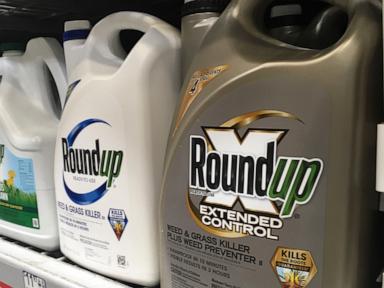
The corporate courtroom doors just slammed shut for thousands of cancer patients. In a sweeping 7-2 decision, the Supreme Court ruled that Bayer, the massive agrochemical conglomerate that bought Monsanto in 2018, is legally shielded from state-level lawsuits alleging it failed to warn consumers that its Roundup weedkiller causes cancer.
If you or a loved one filed a lawsuit against Bayer claiming Roundup triggered your non-Hodgkin lymphoma, this ruling completely alters your legal strategy. It effectively guts the primary argument that plaintiffs' attorneys have used for nearly a decade to secure billions of dollars in jury verdicts. By deciding that federal regulations override state civil laws, the high court just fundamentally rewrote the rules of corporate liability in America.
Federal Law Trumps State Juries
The core legal issue in Monsanto Co. v. Durnell centers on a concept known as federal preemption. Under the Federal Insecticide, Fungicide, and Rodenticide Act (FIFRA), a federal law dating back to 1947, the Environmental Protection Agency (EPA) has the ultimate authority over pesticide sale and labeling.
Because the EPA has repeatedly analyzed the active ingredient glyphosate and concluded it is "not likely to be carcinogenic to humans when used as directed," the agency approved a product label for Roundup that does not include a cancer warning. Justice Brett Kavanaugh, writing for the 7-2 majority, made it clear that a manufacturer cannot be forced by state courts to use a label that is "in addition to" or "different from" what federal law mandates.
Essentially, if the EPA says a warning label is not required, a state jury cannot penalize a company for omitting it. This ruling cuts the legs out from under the vast majority of the estimated 100,000 active and pending claims nationwide.
The case that brought this to a head involved John Durnell, a St. Louis, Missouri resident who spent more than 20 years serving as his neighborhood association’s volunteer "spray guy," coating local parks in Roundup. When he contracted non-Hodgkin lymphoma, a state jury agreed that Monsanto failed to warn him of the dangers, awarding him $1.25 million in 2023. The Supreme Court's ruling explicitly wipes out that verdict.
The Massive Political Rift Inside Washington
While this decision is a massive financial relief for Bayer—sending its stock soaring nearly 18 percent immediately following the news—it exposes a fascinating, messy political battle within the current administration.
The Department of Justice actively intervened on Bayer’s behalf, arguing that federal regulatory uniformity must be protected. Yet, this legal victory stands in direct opposition to the powerful Make America Healthy Again (MAHA) movement, a highly influential wing of voters and activists who have aggressively pushed to restrict pesticide use, linking glyphosate to rising cancer rates, metabolic dysfunction, and gluten intolerance.
High-profile wellness advocates expressed outrage over the decision. Activist Vani Hari publically stated that the message of the ruling is highly dangerous, signaling that as long as a corporate entity secures a stamp of approval from a federal agency, it is effectively insulated from being held accountable when everyday consumers get sick.
Conversely, large-scale agricultural organizations celebrated the outcome. Farming groups like the Modern Ag Alliance argue that without regulatory clarity, manufacturers would be forced to pull vital agricultural tools from the market. They insist that allowing a patchwork of differing state court judgments would cause chaos in the American food supply chain and drive up crop production costs for families already struggling with inflation.
What This Means for Existing Payouts and Future Lawsuits
If you have a live claim or are considering filing, you need to understand that the legal landscape changed overnight. This does not mean Bayer walks away entirely free, but it heavily restricts how lawyers can fight these cases moving forward.
The $7.25 Billion Settlement is Still on the Table
Despite winning legal immunity from failure-to-warn claims, Bayer announced it still intends to move forward with its proposed $7.25 billion nationwide class-action settlement. The company previously set aside $16 billion total to handle the litigation onslaught. This newer settlement, currently facing a review process in a Missouri state court, is designed to create a long-term compensation program for current and future plaintiffs suffering from non-Hodgkin lymphoma. If approved, individual payouts under this fund are projected to range anywhere from $6,000 to $165,000 based on age, exposure duration, and cancer severity.
Defective Design Lawsuits Offer an Alternative Route
While the Supreme Court effectively killed "failure-to-warn" arguments, it did not entirely ban lawsuits based on design defects. Plaintiffs can still theoretically argue that Roundup is an inherently dangerous product due to its chemical formulation, independent of what the label says. However, proving a design defect is legally much harder than proving a company failed to provide an adequate warning label.
Immediate Legal Action Steps for Affected Users
If you have used Roundup heavily in the past and are dealing with a cancer diagnosis, you cannot rely on the old legal playbook. You must adapt your strategy immediately.
First, contact your legal representation to see how your specific case is structured. If your lawsuit relies solely on state-level failure-to-warn claims, your attorney will need to quickly pivot the legal theory to focus on design flaws or determine how to formally participate in the pending $7.25 billion class settlement.
Second, obsessively preserve your documentation. To qualify for any remaining legal avenues or settlement payouts, you must have rock-solid proof of both medical diagnosis and product exposure. Gather all medical records detailing your non-Hodgkin lymphoma diagnosis. Track down receipts, employment records, landscaper invoices, or neighborhood association logs that prove you personally handled or sprayed the chemical for an extended duration.
The standard for civil liability just shifted heavily toward federal regulatory agencies. The focus now turns to the EPA, which is scheduled to conduct another formal review of glyphosate's environmental and human health impacts. Until that federal assessment changes, the courthouse doors remain firmly locked for standard warning-label claims.