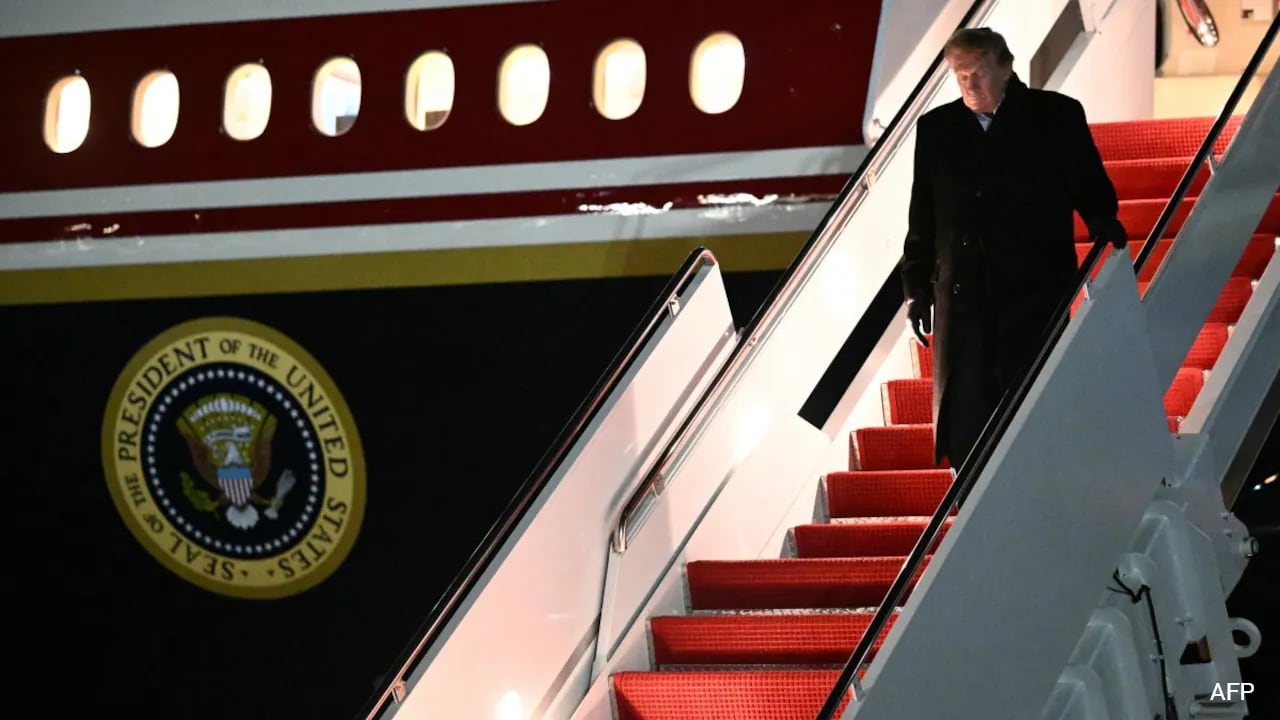
Everyone panicked when reports surfaced that journalists traveling on Air Force One were asked to hand over the phones they used during trips to China.
The mainstream press treated it like a Cold War spy thriller. Pundits gasped about authoritarian overreach, press freedom violations, and hardware implants hidden inside charging cables.
They missed the point entirely.
Asking reporters to surrender devices after they have already connected to networks in Beijing, synced with cloud accounts, and boarded a secure aircraft is not elite counterintelligence. It is reactionary security theater. If a sophisticated state-backed actor wanted onto those devices, the damage was done the second the phone hit a local cellular tower or hotel Wi-Fi.
The Lazy Consensus on Cross-Border Device Security
The standard media narrative frames device confiscation upon return from China as either a heavy-handed assault on journalism or a decisive masterstroke of operational security. Both takes rely on a fundamental misunderstanding of how modern mobile exploitation works.
According to cybersecurity researchers and former intelligence officials who regularly brief traveling press corps, the threat environment in China is uniquely aggressive. State-affiliated groups do not wait for you to leave your phone unattended in a hotel room to install spyware. They operate at the carrier and infrastructure level.
When a foreign journalist lands in Beijing or Shanghai, their device immediately negotiates with local telecommunications infrastructure. Through SS7 vulnerabilities, rogue base stations (IMSI catchers), or man-in-the-middle attacks on unencrypted traffic, an adversary can fingerprint the device, intercept SMS messages, and attempt zero-click exploits before the traveler even clears customs.
By the time a White House security official asks for that phone on the tarmac for Air Force One, the device is already a potential vector. Worse, if the journalist used that phone to message sources, access corporate email, or authenticate into newsroom Slack channels while in-country, the compromise has already migrated off the hardware and into the cloud.
Confiscating the physical glass and aluminum slab on the return flight does nothing to revoke session tokens sitting on servers in New York or Washington.
What Actually Happens Inside High-Risk Travel Protocols
I have watched major media organizations and Fortune 500 executives burn hundreds of thousands of dollars on executive protection consulting, only to watch their principals take their primary personal iPhones straight into Shenzhen because they could not bear to be separated from their family group chats.
Here is the brutal reality of operational security (OpSec) in high-surveillance jurisdictions: clean-room provisioning is the only model that works.
When intelligence agencies, defense contractors, and serious investigative outlets send personnel into China, Russia, or Iran, they do not plan on "cleaning" or "surrendering" devices afterward. They operate under the assumption that every byte transmitted inside the border is captured and every device powered on inside the country is permanently burned.
Proper travel OpSec follows a strict, non-negotiable lifecycle:
- Zero-Trust Hardware Provisioning: Travelers are issued brand-new, factory-sealed burner devices and fresh SIM cards purchased with cash or unlinked corporate accounts.
- Isolated Identity Architecture: The burner device never logs into the user's primary Apple ID, Google account, or password manager. It gets a dedicated, single-use email address and a freshly generated messaging account with zero historical contacts.
- Ephemeral Communications: All reporting and correspondence happen through end-to-end encrypted apps configured with disappearing messages, routed over vetted virtual private networks or satellite links where legally and technically viable.
- Physical Destruction Upon Exit: When the trip ends, the device does not go into an evidence bag for IT to inspect. It goes into a physical shredder or an e-waste incinerator before the traveler steps back into a secure facility.
Asking journalists to hand over their personal or work-issued daily drivers after a trip proves that no real protocol was enforced before the trip.
Addressing the Real Questions Nobody Is Asking
When stories like this break, the public searches for simple answers to complex threat models. Those questions usually start from a flawed premise.
Can the government legally seize a journalist's phone on Air Force One?
This misses the operational context. Air Force One is not a commercial airliner; it is a flying military command post operated by the Presidential Airlift Group. Boarding it requires consenting to strict security screening enforced by the Secret Service and White House Military Office. While the First Amendment protects newsgathering, it does not grant immunity from counterintelligence protocols aboard a military aircraft carrying the President of the United States. The real question is why the White House press office allows unvetted personal devices into that environment in the first place instead of mandating sanitized loaners prior to departure.
Does turning off Wi-Fi and Bluetooth protect your phone in China?
No. Modern smartphones maintain baseband processor activity even when user-facing radios are toggled off in the control center. Furthermore, cellular modems operate independently of the main application processor. If your phone has a SIM card inserted—or even an active eSIM profile—it is actively communicating with local cell towers. Airplane mode reduces the attack surface, yet sophisticated nation-state actors have repeatedly demonstrated the ability to exploit baseband firmware and NFC/Bluetooth chips that remain partially powered even when the OS claims they are disabled.
If they take the phone, can forensic teams actually find nation-state spyware?
Rarely, and never with 100% certainty. Tools like Pegasus, Predator, or bespoke Chinese APT implants are designed to live entirely in volatile memory (RAM). The moment the device reboots, the malicious payload vanishes, leaving zero forensic artifacts on the flash storage. A forensic sweep by government technicians might catch sloppy, off-the-shelf stalkerware, but it will miss an advanced persistent threat every single time. Relying on post-trip forensic inspection is like checking for poison by licking the spoon.
The Counter-Intuitive Truth About Press Freedom and OpSec
Civil liberties advocates rightly worry whenever government officials demand access to reporters' devices. A confiscated phone contains source lists, unpublished drafts, location history, and confidential tips. Handing that over to the state—even to protect against a foreign adversary—creates an unacceptable risk to source protection.
Yet the solution is not letting reporters carry compromised hardware onto secure government transports. The solution is total decoupling.
Newsrooms must stop treating cybersecurity as an IT helpdesk ticket and start treating it like physical body armor. If a bureau chief sends a correspondent to a war zone without a flak jacket, that is gross negligence. Sending a White House correspondent to Beijing with the same phone they use to text anonymous Pentagon sources is the digital equivalent.
Security researchers at organizations like Citizen Lab and Amnesty International's Security Lab have spent years documenting how state-sponsored spyware targets journalists globally. Their findings consistently show that once an attacker compromises a journalist's primary device, the fallout extends to every source in that reporter's contact book. Protecting sources means keeping their identities physically separated from hardware that enters hostile territory.
The Downside of Total Burner Discipline
Adopting a strict burner-and-destroy policy is not painless. It slows down breaking news workflows. Reporters lose instant access to their historical archives, verified social media accounts, and two-factor authentication apps tied to their primary numbers. Logistics coordinators have to manage hardware procurement, provisioning, and secure disposal for dozens of travelers on tight deadlines.
It is expensive, frustrating, and inconvenient.
That inconvenience is the exact price of genuine security. Everything else—especially collecting phones on an airplane after the flight has already taken off—is just theater designed to make officials look like they are in control of a threat they failed to contain on the ground.
If you carry your real digital life into a high-surveillance state, no security team on earth can scrub the risk clean when you fly home. Leave the primary phone in a Faraday bag in Washington, or accept that your sources are already exposed.


