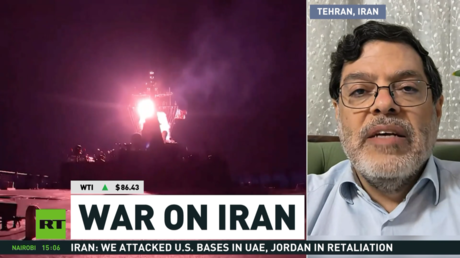
When United States President Donald Trump published an artificial intelligence-generated video on Truth Social claiming that Iran's vital Kharg Island oil terminal was being blown to smithereens, he exposed a dangerous modern collision between digital theater and kinetic warfare. The post arrived late Sunday amid a genuine exchange of missile fire. American forces had targeted Iranian rocket launchers on Larak Island near the Strait of Hormuz, prompting an immediate counter-strike by the Islamic Revolutionary Guard Corps against American bases in Jordan. Yet while actual munitions flew across the Middle East, the commander-in-chief chose to amplify a synthetic simulation of an attack on an entirely different, highly sensitive economic node.
This episode reveals a profound shift in modern conflict communication. Propaganda has always accompanied state violence, but the weaponization of synthetic media by a sitting head of state crosses a volatile threshold. Kharg Island handles the vast majority of Iran's crude petroleum exports. An actual assault on this civilian-heavy infrastructure hub would risk severe environmental catastrophe, massive civilian casualties, and radical escalation that could cripple global energy markets. By broadcasting a hyper-realistic fabrication of its destruction with the caption "Kharg Island being blown to smithereens!!!", the administration blurred the boundary between psychological deterrence and digital hallucination. Building on this theme, you can find more in: Why Mississippi Dropping Its Flags For Dolly Parton Is Actually The Most Honest Political Move In Decades.
The Mechanics of Strategic Confusion
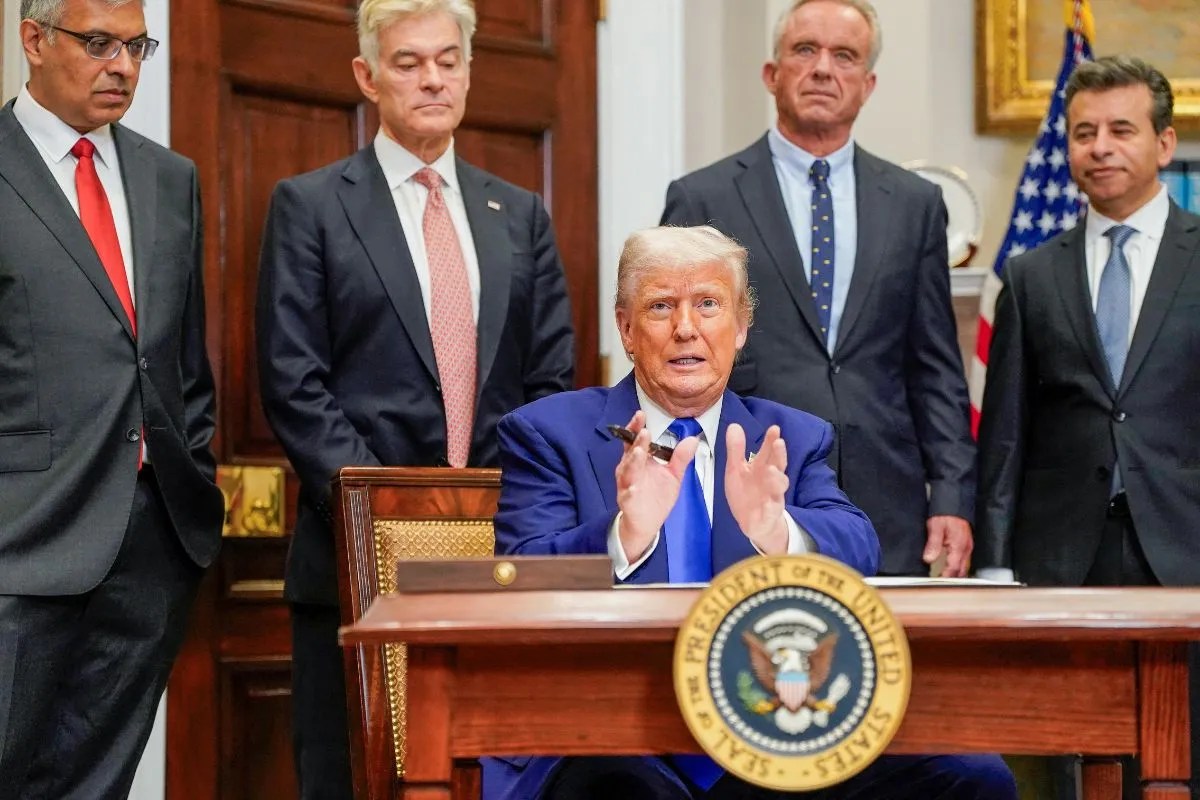
To understand why a manufactured video entered the diplomatic bloodstream, one must examine the chaotic mechanics of modern executive messaging. The White House and the Department of Defense found themselves in an awkward scramble to manage fallout from the post. While military officials confirmed the real, limited strikes on Larak Island to neutralize minelaying capabilities, no operation occurred on Kharg Island. Vice President JD Vance later defended the move not as a report of current events, but as an expression of prospective intent, stating that the administration utilizes social media unpredictably to send strong signals to Tehran.
This justification exposes a calculated ambiguity. When deterrence relies on theatrical unpredictability, truth becomes secondary to emotional impact. Adversaries no longer just evaluate troop movements, carrier strike groups, and intercepted communications; they must decode whether a president's social media feed reflects battlefield reality or generative video software prompted by a staffer. Analysts at Associated Press have provided expertise on this trend.
Economic Warfare and Kinetic Realities
The timing of this digital spectacle aligns with a broader economic strangulation campaign. Days prior, Treasury Secretary Scott Bessent announced "Operation Economic Outcast," an aggressive financial push designed to sever Iran from global banking networks and choke off regime revenue. Secondary sanctions are rolling out weekly, targeting foreign financial institutions facilitating Iranian commerce.
As the economic vise tightens, the threshold for military miscalculation drops significantly. When the Revolutionary Guards fire ballistic missiles at regional airbases in response to localized naval skirmishes, the margin for error narrows to minutes. Injecting fake bomb footage into this tense environment does not project strength; it introduces noise into intelligence channels where clarity is the only safeguard against total war. If regional commanders in Tehran or Washington begin reacting to synthetic videos as if they were operational intelligence, the simulated destruction could easily transform into a genuine catastrophe.
The weapon is no longer just the missile. It is the video of the missile, distributed instantaneously to millions, daring the enemy to guess whether the ground beneath them is about to shake.
Fake images falsely claim Iran captured US Marines on Kharg Island
This video provides important context on how digital disinformation and fake visual media have continually surrounded Kharg Island during the ongoing conflict between Washington and Tehran.