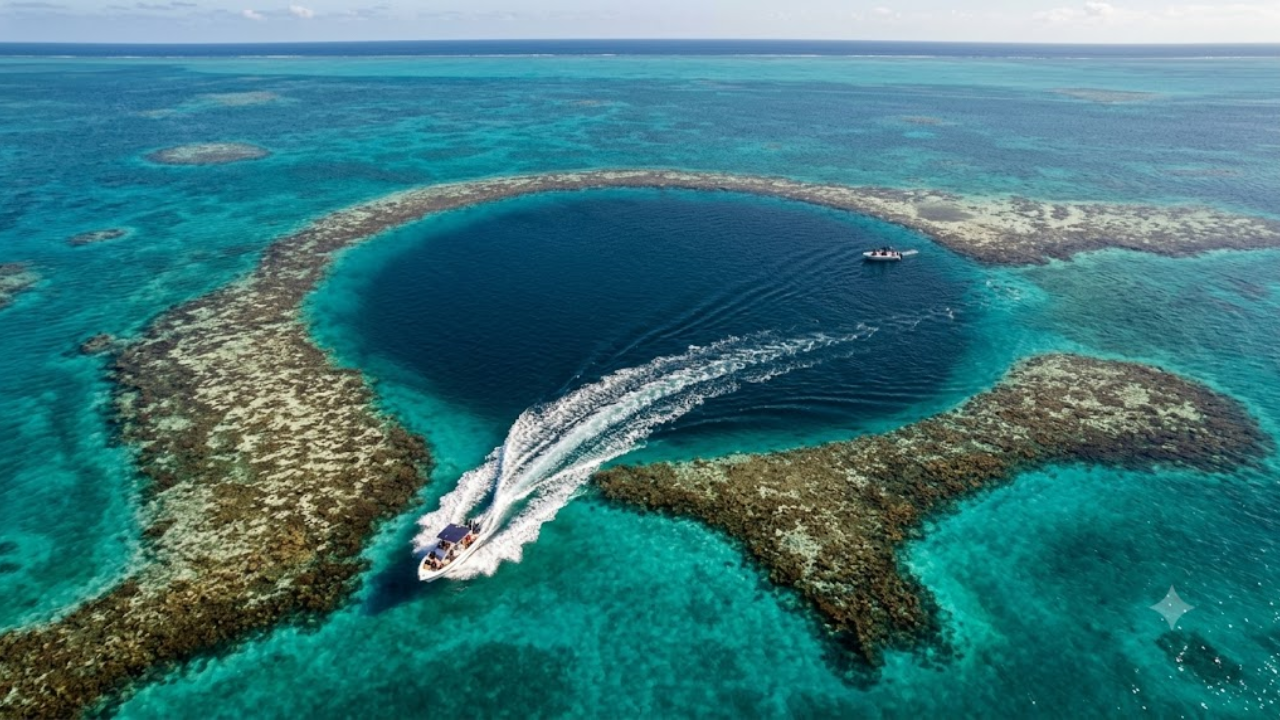
The catastrophic failure of a recreational diving expedition in the Maldives, resulting in five fatalities at a depth of approximately 50 meters, exposes a lethal intersection of physiological limits, equipment dependency, and operational oversight. While initial reports focus on the emotional weight of the loss, a structural analysis reveals that deep-water fatalities are rarely the result of a single isolated error. Instead, they represent the culmination of a "error chain" where environmental stressors amplify minor mechanical or human deviations into unrecoverable life-threats. To understand how five divers perished simultaneously, one must deconstruct the physics of gas density, the economics of dive tourism safety margins, and the specific failure points inherent in deep-air profiles.
The Physics of Nitrogen and Carbon Dioxide at 50 Meters
At a depth of 160 feet (approximately 48.7 meters), a diver experiences six times the atmospheric pressure found at sea level. This physiological environment fundamentally alters how the human body processes breathing gases. The incident’s severity suggests a breakdown in one of three critical physiological pillars:
- Gas Density and Work of Breathing: As pressure increases, the air a diver breathes becomes denser. This creates a massive increase in "work of breathing" (WOB). At 50 meters, the effort required to move air through a regulator and into the lungs can lead to CO2 retention. If a diver panics or exerts themselves, CO2 levels spike, leading to "hypercapnic triggers" that cause gasping—a physiological impossibility at that depth that leads to immediate drowning.
- Nitrogen Narcosis and Cognitive Collapse: The partial pressure of nitrogen at 160 feet exerts a potent anesthetic effect. Known as "the martini effect," this impairment degrades reaction times and executive function. In a group setting, if the lead diver or instructor becomes narced, the collective decision-making capability of the entire unit dissolves.
- Oxygen Toxicity Thresholds: While the partial pressure of oxygen ($PPO_2$) in standard air at 50 meters is roughly $1.26$, which is below the widely accepted $1.4$ limit for active diving, any deviation in gas blending or prolonged exposure at that depth nears the threshold for Central Nervous System (CNS) oxygen toxicity, which manifests as unheralded seizures.
The Failure of the Buddy System and Group Cohesion
The fact that five individuals died together suggests a "cascading rescue failure." In high-risk environments, the buddy system is designed to provide redundancy. however, in deep-water scenarios, a struggling diver often becomes a "biological anchor" for their rescuer.
The mechanics of a multiple-fatality event usually follow a predictable trajectory: one diver experiences an issue—likely a regulator free-flow or a buoyancy compensator (BC) failure. Under the influence of narcosis, the second diver attempts a rescue but fails to manage their own buoyancy. This triggers a collective "untethered ascent" or a "weighted descent." If the group was linked or in close proximity, the panic of one individual can physically compromised the others, leading to a situation where the group exceeds their "no-decompression limits" (NDL) or exhausts their gas supply in a frantic attempt to stabilize.
Operational Risk Parameters in the Maldives Tourism Sector
The Maldives diving industry operates on a high-volume model that occasionally creates a "safety-competence gap." Professional dive operations are governed by two distinct sets of standards: the internal standards of the certifying agency (such as PADI or SSI) and the local maritime regulations of the Maldivian authorities.
The launch of a police probe typically investigates three specific operational breaches:
- Gas Quality and Contamination: If the air compressors on the dive vessel were poorly maintained, carbon monoxide (CO) could have been introduced into the tanks. CO is tasteless and odorless, but its affinity for hemoglobin increases under pressure, potentially rendering an entire group unconscious simultaneously.
- Guide-to-Client Ratios: At depths exceeding 30 meters, the "span of control" for a single instructor narrows significantly. If the ratio exceeded 1:4, the instructor's ability to monitor the subtle signs of narcosis or gas consumption in four different clients is mathematically compromised.
- Equipment Maintenance Cycles: Deep diving places extreme stress on first-stage regulators. A high-pressure seat failure at 50 meters results in a massive loss of gas. If the rental equipment provided to the tourists had not undergone documented hydrostatic testing or internal servicing within the last 12 months, the liability shifts from "accidental" to "negligent."
The Logistics of Deep Recovery and Evidence Preservation
The recovery of bodies from 160 feet requires specialized technical diving teams (TEC) using trimix—a gas blend of helium, nitrogen, and oxygen—to avoid the very narcosis that likely killed the victims. Forensic investigators will prioritize the "black box" data contained within the victims' dive computers.
Modern dive computers log depth, time, and—in air-integrated models—breathing rates every few seconds. By overlaying the data from all five computers, investigators can determine who spiked their heart rate first, who began an uncontrolled ascent, and whether there was a catastrophic "down-current" (a vertical movement of water that can pull divers into deeper water faster than they can swim up).
Structural Vulnerabilities in Recreational "Deep Air" Limits
The industry standard for recreational diving is 40 meters (130 feet). Pushing tourists to 50 meters (160 feet) moves the dive from "recreational" into "technical" territory, often without the requisite technical training or equipment redundancy (such as redundant gas sources or "pony bottles").
The margin for error at 160 feet is essentially zero. A diver breathing 20 liters of air per minute at the surface will consume 120 liters per minute at 50 meters. A standard 12-liter tank, which might last an hour at the surface, is exhausted in less than 10 minutes at that depth. If the group was not strictly monitoring their Manifold Pressure (SPG), they likely reached a "low air" state simultaneously, leading to a panicked, unmanaged ascent that resulted in arterial gas embolisms or drowning.
Strategic Mitigation for Deep-Water Expeditions
To prevent the recurrence of a five-victim fatality, dive operators must move beyond checklist compliance and adopt a high-reliability organizational (HRO) framework. This requires the implementation of "hard floors" for recreational tourists, regardless of their perceived experience level.
- Mandatory Use of Nitrox or Trimix: For any profile exceeding 30 meters, the use of helium-based mixes should be mandatory to eliminate the cognitive variable of narcosis.
- Redundant Gas Requirements: Every diver on a deep-water profile must carry an independent "bailout" bottle. The reliance on a "buddy's" octopus regulator is a theoretical safety measure that frequently fails in high-stress, high-depth environments.
- Electronic Monitoring: Real-time surface monitoring of diver depth and gas via acoustic modems would allow surface support to identify a "down-current" or "rapid descent" event before it becomes fatal.
The Maldives incident serves as a brutal reminder that the ocean at 50 meters is not a leisure environment; it is a life-support-dependent vacuum. The transition from a successful excursion to a mass fatality is governed by the rigid laws of partial pressures and gas volumes. Safety in this sector is not found in the "probe" after the event, but in the aggressive reduction of depth-induced variables before the first diver enters the water.