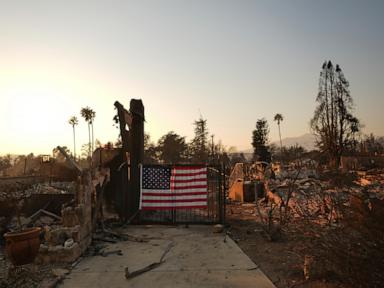
The financial recovery for wildfire survivors is fundamentally compromised by a misalignment between the legal definition of a "settlement" and the tax code’s definition of "income." While a payout from a utility company or insurance provider is framed as a restoration of pre-disaster status, the Internal Revenue Service (IRS) often treats these funds as taxable windfalls unless specific, rigid criteria for property basis and emotional distress are met. This creates a liquidity trap where survivors must choose between rebuilding their lives and settling massive, unforeseen tax liabilities. The net recovery is rarely the gross settlement; it is the gross amount minus legal fees, minus the tax on "gain" over property basis, and minus the nondeductibility of personal losses.
The Tripartite Tax Trap
To understand why a $1,000,000 settlement can dwindle to less than 40% of its value in net utility, we must examine the three primary mechanisms of value erosion.
1. The Cost Basis Conflict
The IRS treats a settlement as a sale of property interests. If a homeowner purchased a property for $200,000 twenty years ago and receives a $600,000 settlement for its destruction, the tax code views this as a $400,000 capital gain.
- The Basis Problem: Many survivors lack the documentation to prove "adjusted basis" (the original cost plus improvements). Without this proof, the IRS may assume a basis of zero, taxing the entire settlement.
- Section 1033 Involuntary Conversion: Survivors can defer these gains if they reinvest the money in "similar or related" property within a strict window—usually two to four years. However, in a post-disaster economy where construction costs have spiked, the settlement often fails to cover the cost of a comparable new build, leaving the survivor with a tax bill on money they have already spent.
2. The Legal Fee Paradox
Before the Tax Cuts and Jobs Act (TCJA) of 2017, plaintiffs could deduct attorney fees as a miscellaneous itemized deduction. Under current law, this deduction is suspended for most personal injury cases that do not involve physical sickness or physical injury.
In a wildfire settlement:
- A survivor is awarded $1,000,000.
- The attorney takes 33% ($333,000).
- The IRS taxes the survivor on the full $1,000,000, not the $667,000 they actually received.
This creates an effective tax rate that can exceed 50% of the actual cash in hand, as the survivor is paying taxes on money that flowed directly to a law firm.
3. The Physical vs. Emotional Distinction
The taxability of a settlement hinges on IRC Section 104(a)(2), which excludes damages received on account of "personal physical injuries or physical sickness."
Wildfire settlements often include compensation for "emotional distress" or "loss of enjoyment of life." If these claims are not linked to a visible physical injury (e.g., a burn or respiratory damage), the IRS classifies the payout as taxable ordinary income. The psychological trauma of losing a home is, perversely, a taxable event, whereas a broken arm is not.
The Geometry of Net Recovery
The actual utility of a settlement follows a specific cost function. Let $S$ represent the gross settlement, $L$ the legal fees, and $T$ the tax liability. The net recovery $R$ is defined by:
$$R = S - L - T$$
However, $T$ is not a simple percentage of $S$. It is a function of the Character of the Gain.
- Replacement Cost Disparity: If the cost to rebuild ($C$) exceeds the settlement ($S$), the survivor faces a "recovery deficit." Even if the tax is deferred via Section 1033, the survivor is forced into higher debt loads to achieve their previous standard of living.
- The Punitive Damage Multiplier: Any portion of a settlement labeled "punitive" to punish a utility provider's negligence is 100% taxable as ordinary income, regardless of physical injury status.
Strategic Failure of Legislative Remedies
There are ongoing attempts to pass the Federal Disaster Tax Relief Act and similar "fix" bills. These pieces of legislation seek to classify wildfire settlements as "qualified disaster relief payments" under Section 139.
The current bottleneck remains the distinction between "relief" and "compensation." Section 139 was designed for small-scale grants and immediate aid, not multi-million dollar tort settlements. By attempting to shoehorn massive utility payouts into a code designed for FEMA vouchers, the government creates a grey area that prevents survivors from making long-term financial commitments.
The lack of a permanent, structural exemption for wildfire-related involuntary conversions means that every survivor's recovery is subject to the prevailing political winds and the speed of a gridlocked Congress.
Tactical Realities for Settlement Distribution
Survivors and their counsel must pivot from "total award" thinking to "after-tax yield" thinking. This requires three specific operational shifts:
Detailed Allocation in Settlement Agreements
Generic settlement language is a liability. Agreements must explicitly allocate funds to specific categories.
- Priority 1: Allocation to physical injury/sickness (tax-free).
- Priority 2: Allocation to property basis recovery (tax-free up to basis).
- Priority 3: Allocation to emotional distress stemming from physical injury (potentially tax-free).
The Involuntary Conversion Timeline Extension
Given the labor and material shortages in disaster zones, the standard two-year replacement window is often impossible to meet. Taxpayers must proactively file for extensions under Section 1033. Failure to do so triggers an immediate capital gains event on the settlement, even if the money is sitting in an escrow account earmarked for a foundation that hasn't been poured yet.
Cost Segregation of Personal Property
A house is not just a structure; it is a collection of assets. Survivors should document the loss of "contents" (furniture, electronics, vehicles) separately. Payouts for contents are generally not taxable unless the insurance or settlement amount exceeds the original purchase price of the items—a rare occurrence given depreciation. This creates a "tax-free bucket" that should be maximized during negotiations.
The Economic Aftermath of Settlement Taxation
When the federal government taxes a wildfire settlement, it is effectively a transfer of wealth from a local disaster-stricken economy to the federal treasury. This reduces the capital available for local reconstruction, dampens the local tax base, and increases the likelihood of "disaster gentrification," where original homeowners are forced to sell their land to developers because they cannot afford both the tax bill and the cost of rebuilding.
The financial "second blow" is not an accident of the system; it is a direct result of applying a 20th-century tax code to 21st-century climate realities. Until the tax code recognizes that a home's value is more than its 1994 purchase price, the settlement process will remain a flawed mechanism for restoration.
Survivors should immediately engage a tax professional specializing in IRC Section 1033 and Section 104 before signing any release of claims. The moment the check is cut, the ability to structure the tax treatment diminishes significantly. The goal is to transform the gross settlement from a liability-heavy windfall into a protected fund for reconstruction through aggressive basis documentation and rigorous allocation of damages.