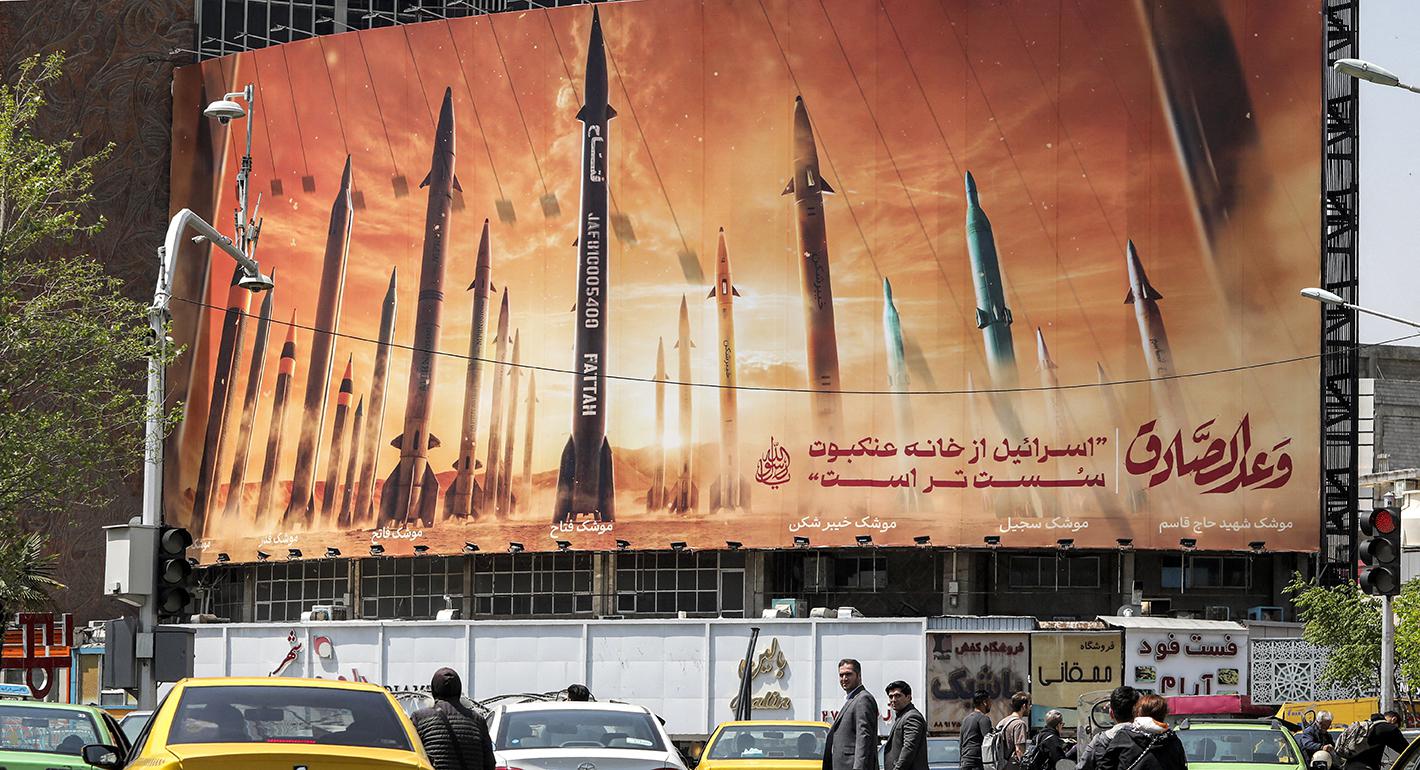
The air in a Tehran tea house does not smell like diplomacy. It smells of cardamom, heavy tobacco smoke, and the sharp, metallic anxiety of a currency that loses its value while you wait for your change. For the man sitting in the corner, a retired teacher named Abbas, the news flickering on the wall-mounted television isn’t about geopolitics or "maximum pressure." It is about the price of the heart medication he can no longer find and the future of a grandson who dreams of a world beyond the grey concrete of sanctions.
On the screen, the scrolling headlines announce a "review." The Iranian government is currently weighing a proposal from the United States, a document crafted under the shadow of a returning Donald Trump. To the analysts in Washington and the clerics in the capital, this is a game of high-stakes chess. To Abbas, it is a matter of whether the walls of his life will finally stop closing in.
The proposal sits on a desk in Tehran like a live wire. It is a draft born of a unique, jarring momentum. Donald Trump has made it clear that he wants a deal, and he wants it quickly. His approach is not the slow, rhythmic dance of traditional statecraft. It is a blunt-force demand for a resolution to the shadow war that has defined the Middle East for decades. The "deal to end war" sounds like a miracle in a region that has forgotten what a quiet Tuesday feels like. But in the halls of power, peace is rarely a gift; it is a purchase.
The math of the conflict is brutal. Iran is currently navigating a labyrinth of internal economic strife and external military pressure. The "proposal" isn’t just a list of nuclear centrifuges or regional proxies. It is a question of survival. If Tehran accepts, they risk the appearance of total surrender. If they refuse, they face a US administration that has already shown it is willing to bypass every established norm to get what it wants.
Consider the weight of that choice.
Most people view international relations as a series of press releases. In reality, it is a psychological battle. The Iranian leadership is looking at a map of a region on fire. From the ruins of Gaza to the scorched borders of Lebanon, the old certainties are gone. Their allies are battered. Their oil revenue is a trickle compared to what it could be. They are staring at a document that offers a way out, but the exit door is narrow and requires them to leave behind the very ideologies that have sustained the revolution for forty years.
Donald Trump represents a variable that Tehran struggles to calculate. He is the man who tore up the previous agreement, yet he is also the man who claims he can strike a "grand bargain" that no one else could imagine. This isn't about the fine print of uranium enrichment percentages. It is about the ego of giants. Trump wants the win. He wants the photograph, the handshake, and the historical footnote that says he ended the "forever war." Tehran knows this. They are trying to decide if his desire for a legacy is something they can use to salvage their own future.
But let’s step away from the mahogany tables.
The invisible stakes are found in the marketplaces of Isfahan. They are found in the eyes of the young tech entrepreneurs in Tehran who have the skills to change the world but are trapped behind a digital and financial iron curtain. When the news says "Iran is reviewing the proposal," it means a whole generation is holding its breath. They are waiting to see if they will be allowed to join the 21st century or if they will be relegated to the history books as a cautionary tale of what happens when a nation chooses pride over its people.
The tension is a physical thing. It’s a low hum in the streets. People don’t talk about the "Joint Comprehensive Plan of Action" anymore. They talk about the "Agreement." It has become a mythical object, a talisman that could magically lower the price of meat or open the borders.
There is a deep, biting irony in the current situation. The very man who was once viewed as the ultimate antagonist by the Iranian state is now the one holding the keys to the pressure valve. This creates a paralyzing friction within the Iranian government. To deal with Trump is to acknowledge that the old ways of resistance have hit a ceiling. To ignore him is to invite a storm that the Iranian economy likely cannot weather.
The proposal itself is rumored to be expansive. It doesn’t just ask Iran to stop; it asks Iran to change. It demands a recalibration of how the nation interacts with its neighbors and how it projects power. For the hardliners, this is an existential threat. For the pragmatists, it is the only logical path forward. The debate is not happening in a vacuum. It is happening while the shadow of a larger regional war looms, with Israel and Iran having already traded direct blows. The "deal to end war" isn't a hyperbolic title. It is a literal description of the alternative.
What does it feel like to be a nation under review?
It feels like a long, restless night. You look at the statistics—the inflation rate, the oil barrels per day, the military spending—and you realize they are just different ways of measuring human misery. The "proposal" is a mirror. It forces the leadership to look at what their country has become and what it could be if they were willing to blink.
The pressure from Trump is a specific kind of gravity. It is unpredictable. It doesn't follow the scripts written by the State Department or the Iranian Foreign Ministry. It operates on the logic of the "art of the deal," where the goal is to make the opponent feel that the current situation is so unbearable that any alternative is a relief. For the average Iranian, the situation is already unbearable. The question is whether the leaders feel the same heat that the citizens do.
Abbas finishes his tea. He watches the news anchor speak with a practiced, neutral tone about "sovereignty" and "national interest." He knows those words are often used to justify the suffering of people like him. He stands up, his knees aching, and walks out into the cool evening air.
The sun is setting over the Alborz mountains, casting long, purple shadows over a city that has survived empires, revolutions, and wars. Tehran is a city of layers, where the ancient and the modern are constantly at odds. As the call to prayer echoes through the streets, it mingles with the sound of traffic and the quiet murmurs of people discussing the price of bread.
The proposal remains on the desk. The reviewers are still reading. The world is watching the clock, waiting for a signal, a white puff of smoke, or a tweet that changes everything. But in the quiet neighborhoods, away from the cameras, there is only the waiting. It is a heavy, suffocating kind of silence. It is the silence of a people who have been told for years that the dawn is coming, only to find themselves perpetually trapped in the hour just before it.
The pen is hovering over the paper. The ink is dry, for now. Every second that passes without a signature is a second where the old world continues to crumble and the new one remains a ghost. The tragedy of the "deal to end war" is that by the time it is signed, the world it was meant to save might already be unrecognizable.
A single poster on a crumbling brick wall depicts a martyr from a war decades old, his eyes fixed on a horizon he never reached. Beneath the poster, a young girl in a bright headscarf laughs as she chases a stray cat, her joy a sudden, sharp contrast to the gravity of the headlines. She is the human element. She is the invisible stake. She is the reason why a "review" can never just be about politics.
If the deal fails, the girl keeps running, but the path ahead of her gets darker, steeper, and more riddled with thorns. If it succeeds, the path opens up. It is that simple. It is that terrifying. The architects of the proposal are playing for history, but the people in the tea houses are just playing for tomorrow.
The ink is still in the well. The paper is still white. The world waits to see if the men in the high rooms will choose the future or the past.