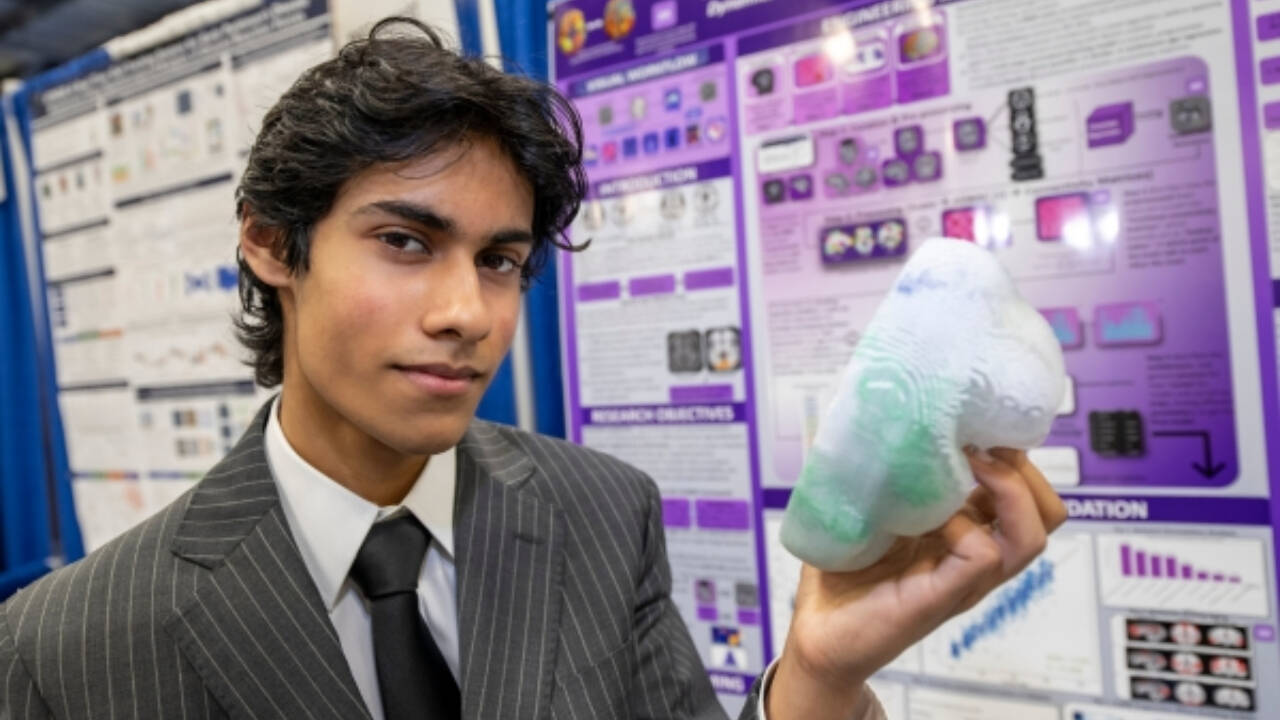
Every few months, tech journalism produces a predictable miracle. A teenager working out of a suburban bedroom builds a budget neural interface out of spare parts, Arduino boards, and off-the-shelf machine learning libraries. The headlines write themselves: a high school kid just solved paralysis, cured muteness, and democratized neurotechnology for less than the price of a used Honda Civic. Venture capitalists salivate. The mainstream media swoons.
Everyone loves the plucky genius narrative. It sells clicks, feeds our collective addiction to youth-obsessed tech mythology, and makes for a heartwarming morning show segment.
It is also complete nonsense.
I have watched companies burn through millions of dollars chasing these garage-built novelties, mistaking high school science fair engineering for clinical viability. We are romanticizing consumer-grade hobbyism while ignoring the brutal biological realities of the human central nervous system. When a 17-year-old splices together surface electroencephalography sensors and a classification script to guess spoken words, they have not invented a medical device. They have built an expensive party trick wrapped in a press release.
If we want to actually restore speech to people who have lost it, we need to stop worshipping low-cost novelty and look at why these cheap consumer hacks fail every single time they hit a real clinical ward.
The Surface Sensor Fallacy
Let us start with the core engineering delusion: the belief that you can read internal speech from outside the skull using cheap, non-invasive electrodes.
Surface sensors, whether we are talking about consumer electroencephalography or commercial electromyography bands slapped onto the jawline, measure aggregate electrical noise through layers of bone, skin, and cerebrospinal fluid. By the time a signal from the motor cortex or the Broca area reaches a scalp sensor, it has been filtered, smeared, and degraded into an unintelligible mess.
Proponents of cheap brain-reading rigs point to machine learning as the great equalizer. Just train a deep neural network on the noisy data, they argue, and the algorithm will clean up the mess. That is not how signal processing works. Garbage in still means garbage out, no matter how many hidden layers your transformer model has.
Imagine a scenario where you are trying to listen to a whispered conversation inside a crowded, heavy-metal concert from three blocks away using a tin can and a piece of string. That is essentially what surface-level speech decoding attempts to do. The signal-to-noise ratio is so catastrophically low that the system is not actually decoding neural intent; it is finding statistical patterns in random muscle twitches, blinking artifacts, and ambient noise.
When a system relies on muscle artifacts around the mouth or throat rather than direct cortical firing, it is not a brain-reading system. It is an expensive facial gesture recognizer. If a patient cannot move their mouth or vocal cords due to severe amyotrophic lateral sclerosis or locked-in syndrome, those surface muscle signals do not exist anyway. The entire premise collapses the moment it encounters a patient who actually needs help.
The Chasm Between Demo Day and Clinical Reality
There is a vast, unbridgeable chasm between a system that works under controlled laboratory conditions for a healthy teenager and a device that can be deployed on a deteriorating patient in a clinical setting.
In a high school science project, calibration is easy. The subject sits upright, concentrates intensely on a limited vocabulary of fifty pre-selected words, and happily retrains the model when it fails. Real patients with speech impairments experience fatigue, spasticity, fluctuating cognitive states, and progressive neurological decline. A system that requires twenty minutes of pristine calibration and absolute stillness before it can recognize three basic phrases is entirely useless in the chaotic environment of a real hospital room.
True neural restoration requires invasive, high-density cortical arrays—precision hardware like Utah arrays or ECoG grids placed directly on or in the brain tissue. These devices are expensive, carry surgical risks, require specialized neurosurgical teams, and take years of rigorous clinical trials to clear regulatory hurdles.
We do not like admitting this because it lacks cinematic appeal. A story about a multi-year FDA trial, biocompatible electrode degradation, and institutional review boards does not go viral on social media. But medical breakthroughs are not born from hacking together a headset with a hot glue gun and a Python script. They are forged through agonizingly slow, deeply expensive, highly regulated clinical science.
What the Data Actually Tells Us
Look past the hype cycle and examine the peer-reviewed literature on invasive brain-computer interfaces coming out of institutions like Stanford, UC San Francisco, and BrainGate. These researchers are achieving remarkable decoding rates of up to 60 to 80 words per minute with low word error rates.
How do they do it? They use surgically implanted microelectrode arrays that record single-unit neural action potentials directly from the cortical surface. They process massive streams of high-fidelity data using sophisticated language models constrained by phonetic probabilities.
Notice what is missing from those setups: cheap consumer components.
The hardware costs tens of thousands of dollars. The decoding pipelines require dedicated computing rigs. The surgical procedures demand elite neurosurgeons. There is no garage-built shortcut around the physics of neurophysiology. When we pretend that an 1,800 dollar consumer headset can achieve comparable results through the magic of software optimization, we are lying to patients and families who are desperately searching for genuine therapeutic options.
False hope is a cruelty disguised as optimism. Every time a breathless news report highlights a low-cost amateur project as the future of medicine, it draws oxygen and funding away from rigorous, methodical clinical research that is actually moving the needle.
The Real Problem We Should Be Solving
The fundamental bottleneck in neurotechnology is not a lack of clever teenagers writing machine learning scripts. It is the lack of durable, biocompatible, long-term neural interfaces that can sit inside the human body for decades without provoking an immune response or degrading in signal quality.
The biology always wins. The human body treats foreign objects inside the skull as invaders, encapsulating electrodes in glial scar tissue that eventually chokes off the electrical signal. Solving that requires advanced materials science, neurochemistry, and long-term animal and human trials.
If you want to make a real dent in this field, stop trying to bypass the skull with cheap consumer sensors. Stop pretending that high school science projects are disrupting medical device giants.
Support the boring, expensive, highly regulated science. Fund the materials research that stops scar tissue formation. Streamline the regulatory pathways for safe, invasive clinical trials without compromising patient safety.
Stop looking for shortcuts in a domain where shortcuts do not exist.