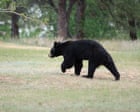
Record numbers do not happen by accident. They are the accounting of failed policy, shifting climate realities, and a public that treats wild carnivores like campground entertainment until blood stains the nylon.
When a sleeping teenager and an occupied camper are violently targeted in separate incidents within the same jagged mountain geography, the narrative of accidental human-wildlife encounters shatters. Colorado bear attacks have officially surged to historic highs, exposing a systemic breakdown in how western states manage the volatile intersection of booming human populations and apex predators stripped of their traditional foraging horizons.
For thirty years covering wildlife conflicts across the American West, I have watched state agencies hide behind comforting generalizations. They call these spikes anomalies. They blame trash management in isolated mountain towns while ignoring the broader ecological desperation driving bears out of high-country timber and straight into tent vestibules. The numbers from the Colorado Parks and Wildlife division tell a brutal story. Encounters are no longer confined to October hoarding phases or drought years. They are happening earlier, ending later, and ending with physical trauma that permanently alters human lives.
To understand why a black bear bypasses a cooler full of hot dogs to shred a tent flap inches from a human head, we have to look past the standard boilerplate warnings about securing garbage cans. Trash is merely an introductory drug for an animal whose natural food web is unraveling under the weight of warming winters and fragmented migration corridors.
The Shifting Ecology of Hunger
Bears do not wake up with an innate desire to hunt humans. They wake up hungry, and their biological imperative is caloric survival.
Historically, autumn hyperphagia—the frantic feeding frenzy before winter denning—relied on mast crops. Acorns, serviceberries, chokecherries, and pinon nuts provided the dense fats needed to sustain a massive animal through months of dormancy. But climate volatility across the southern Rockies has thrown these botanical lifelines into chaos. Late spring frosts freeze blossoms before they can set fruit. Summer droughts bake hillsides into dust, turning lush berry patches into barren gravel.
When the wild pantry goes bare, evolution dictates that an animal expands its search radius. Unfortunately, that radius now intersects directly with luxury mountain cabins, sprawling subdivision fringes, and backcountry campsites crowded with novices who treat the wilderness like an open-air hotel.
Consider the mechanics of a tent invasion. To a bear navigating by scent, a nylon tent is not a wall; it is a permeable membrane leaking the rich, intoxicating smells of dehydrated camping meals, toothpaste, sunscreen, and human sweat. When a sub-adult bear—typically a two-or-three-year-old male recently kicked out of its home range by a dominant sow—smells protein-rich calories trapped inside a thin fabric wall, it investigates with its teeth and claws.
The sleeping teenager in Colorado did not trigger an unprovoked assault. They were simply caught in the path of a desperate omnivore following its nose toward a high-calorie reward in an ecosystem that has stopped providing natural sustenance.
The Myth of the Problem Bear
Wildlife management agencies love the phrase lethal removal. It sounds clinical, objective, and necessary. When a bear attacks a human or repeatedly raids human infrastructure, wildlife officers track it down and shoot it.
This is a reactive shell game.
Killing a habituated bear solves nothing if the underlying ecological vacuum immediately attracts another bear to the exact same spot. We are treating symptoms while the disease spreads unchecked. Every time a resort town expands its footprint into critical winter range or migration funnels, it creates a permanent urban-wildlife interface. We pave over historical foraging grounds, replace them with Kentucky bluegrass and fruit trees, and then express shock when a native carnivore treats the suburb like a seasonal buffet.
The public bears equal blame, though accountability is rarely enforced. Despite decades of public service campaigns, millions of weekend visitors still fail to grasp basic backcountry hygiene. They leave coolers in truck beds. They toss apple cores out car windows. They store scented items inside tents because they fear mice more than they respect ursids.
In the backcountry, ignorance is a vector for violence. A bear that successfully scores a bag of marshmallows from a nylon tent learns a dangerous lesson: human spaces equal high-yield calories with minimal risk. Once that cognitive threshold is crossed, the animal is functionally doomed. It transitions from a wild predator avoiding human scent to an urban scavenger treating humans as obstacles to be bypassed or swatted aside.
Anatomy of an Encounter
The media cycle surrounding these attacks follows a predictable, toxic pattern. First comes the sensational headline detailing the gore and the hospital transport. Then comes the mandatory quote from a wildlife official urging visitors to Be Bear Aware. Finally, a trap is set, the offending animal is destroyed, and the public breathes a sigh of relief until the next emergency broadcast lights up local phones.
Missing from this cycle is any serious discussion of prevention that goes beyond telling campers to hang their food from a branch.
True coexistence requires structural redesigns that western states have historically resisted due to cost and tourism pushback. It requires mandatory bear-resistant waste infrastructure across entire counties, not just select municipal parks. It requires zoning laws that restrict residential development in high-density wildlife corridors. Above all, it requires shifting our cultural relationship with predators from passive toleration to active, disciplined avoidance.
When an apex predator loses its fear of humans, the resulting danger is absolute. A black bear is not a territorial grizzly, but a startled or food-conditioned black bear possesses enough raw strength to crush a human skull with a single swipe. Treating these encounters as isolated tragedies rather than systemic warnings guarantees that the record books will be rewritten again next season.
The tent zipper is not a lock. The nylon wall is not a shield. Until we accept that we are guests in a contested landscape rather than masters of it, the blood on the canvas will keep flowing, and the bears will continue to pay the ultimate price for our collective refusal to adapt.