The reports emerging from Tehran regarding a missile strike targeting former President Mahmoud Ahmadinejad represent more than a localized assassination. If confirmed, this marks the most significant internal breach of Iranian security since the 2020 killing of nuclear scientist Mohsen Fakhrizadeh. The strike hit a fortified district of the capital, a feat that requires a level of intelligence penetration that suggests the Islamic Revolutionary Guard Corps (IRGC) is no longer a monolithic entity.
Ahmadinejad was a political ghost. Long sidelined by the Supreme Leader and barred from recent elections, he nonetheless commanded a populist base that made the current administration nervous. His death does not just remove a former leader; it eliminates a specific brand of Iranian populism that bridged the gap between the religious hardliners and the frustrated working class. The immediate fallout involves a frantic hunt for the mole within the security apparatus, as no foreign actor could execute a precision strike in the heart of Tehran without local logistical support. You might also find this related story insightful: Strategic Asymmetry and the Kinetic Deconstruction of Iranian Integrated Air Defense.
Intelligence Failures and the Myth of the Iron Dome
Tehran has long projected an image of an impenetrable fortress. That image died today. To hit a high-value target in a residential but heavily guarded area like Narmak, the attackers needed real-time telemetry. This was not a random drone strike. It was a surgical operation.
The Iranian air defense network is designed to stop large-scale aerial incursions, but it remains notoriously vulnerable to low-altitude, high-speed munitions and localized sabotage. We saw this vulnerability during the "war of the cities" decades ago, and we are seeing it again in a more refined, technological form. The failure is not just technical; it is human. When a missile finds its way to a former president's residence, the message is clear: the state can no longer guarantee the safety of its own elite. As highlighted in recent articles by The New York Times, the effects are worth noting.
The Mossad Shadow
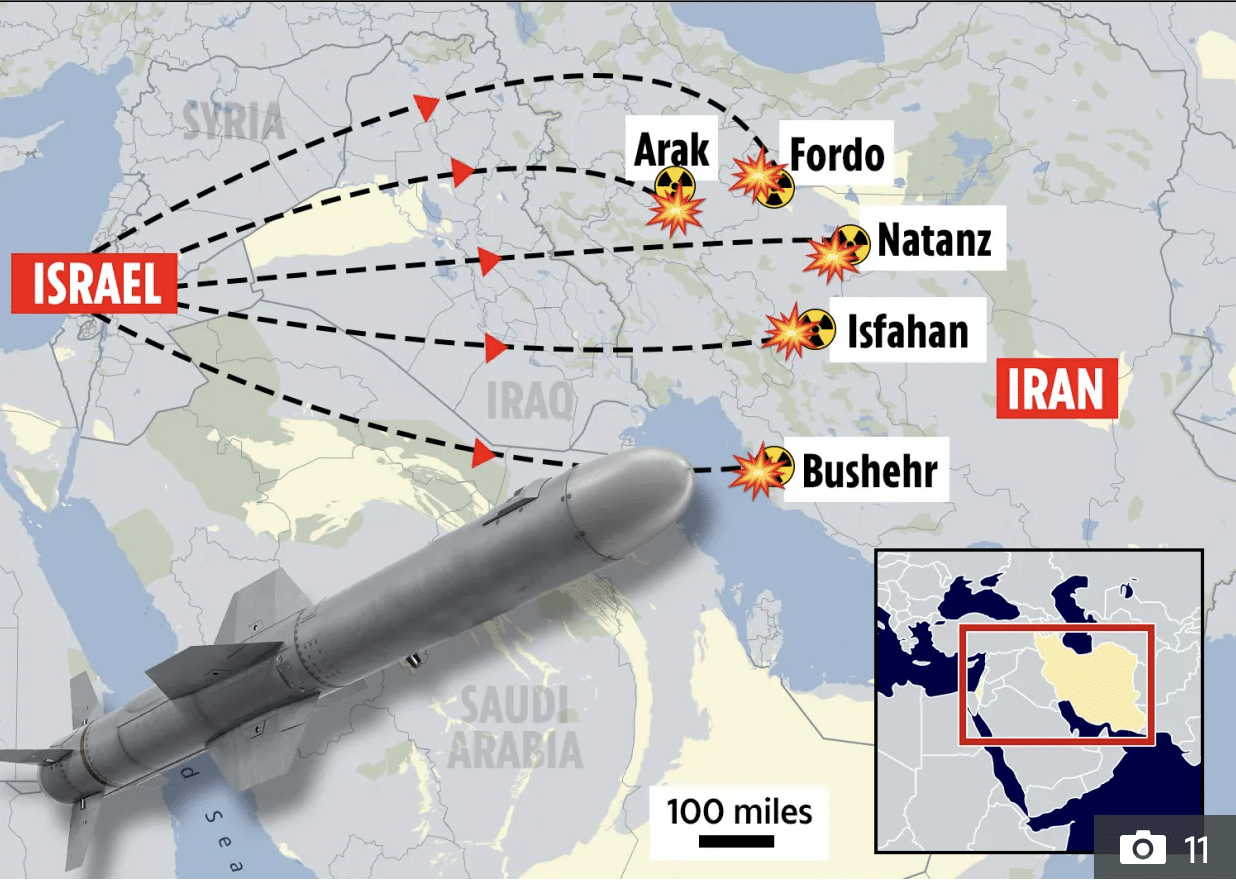
Speculation naturally turns toward Israel. The track record of the Mossad within Iranian borders is extensive, ranging from the theft of the nuclear archives to the remote-controlled assassination of Fakhrizadeh. However, the timing of this strike suggests a different calculus. Traditionally, Israel targets active threats—scientists, generals, or logistics coordinators. Ahmadinejad was a retired firebrand with no current military standing.
If this was an external hit, it was a psychological operation. Killing a former president signals that no one is untouchable. It forces the current leadership into a defensive crouch, suspicious of their own shadows and their own bodyguards. This creates a paralysis in decision-making that is more valuable than the death of any single politician.
The Internal Power Struggle
We cannot ignore the possibility of a "house cleaning" within the Iranian regime. Ahmadinejad had become an increasingly vocal critic of the clerical establishment. He wrote letters to world leaders, criticized the lack of transparency in the electoral process, and hinted at the corruption within the IRGC.
The Iranian political landscape is currently dominated by the transition plan for a post-Khamenei era. In this high-stakes environment, wildcards are dangerous. Ahmadinejad was the ultimate wildcard. He possessed the name recognition and the populist rhetoric to ignite a movement that could complicate a managed succession.
- Populist Appeal: He remained popular among the rural poor who felt abandoned by the urban technocrats.
- Insurgent Rhetoric: His recent interviews suggested he was willing to break the unspoken rules of the Islamic Republic to stay relevant.
- Security Ties: Despite his fallout with the Supreme Leader, he still had loyalists within the lower ranks of the Basij militia.
Removing him under the cover of a foreign strike or a mysterious explosion solves a massive domestic headache for the hardliners currently holding the levers of power.
Geopolitical Shockwaves and the Oil Market
Markets hate uncertainty. The moment news of the explosion broke, Brent crude futures spiked. While Iran’s oil infrastructure remains intact, the threat of an escalating shadow war in the Middle East puts every tanker in the Strait of Hormuz at risk.
The regional implications are equally severe. If the Iranian leadership blames a foreign power, they are obligated to retaliate to save face. This leads to the "escalation ladder"—a series of tit-for-tat strikes that can easily spiral out of control. We are looking at a scenario where proxy forces in Lebanon, Iraq, and Yemen are activated to provide a "deniable" response, further destabilizing a region already on the brink of a broader conflict.
The Role of Regional Proxies
Hezbollah and the Houthi movement do not act in a vacuum. They rely on the prestige and the logistical backing of Tehran. If the "head of the snake" is seen as vulnerable, the proxies may feel the need to lash out to prove their own strength. This creates a feedback loop of violence that is difficult to dampen once the first missile has been fired.
The Technology of Modern Assassination
The era of the simple car bomb is over. Today’s high-value assassinations utilize a blend of signal intelligence (SIGINT) and autonomous systems.
To track a target like Ahmadinejad, an operative would need to monitor encrypted communications and physical movements over weeks. The use of a precision missile suggests a weapon system capable of terminal guidance—likely utilizing a combination of GPS and optoelectronic sensors to identify the target's specific window or vehicle.
"In the modern theater of war, the most dangerous weapon is not the missile itself, but the data that tells it where to land."
This level of precision is typically the hallmark of a state actor. It requires satellite access, local surveillance teams, and a delivery mechanism that can bypass radar. If the missile was launched from within Iran, it points to a terrifying level of infiltration. If it was launched from a standoff distance, it points to a total failure of the national early warning system.
Social Unrest and the Digital Crackdown
Following the strike, reports of internet outages in Tehran began to surface. This is a standard operating procedure for the Iranian government during times of crisis. By cutting off the flow of information, they aim to prevent the organization of protests and the spread of "unofficial" narratives.
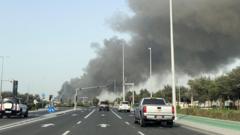
However, the Iranian public is digitally savvy. They use VPNs and mesh networks to bypass these restrictions. The images of smoke rising over the city were on social media before the state news agencies could even draft a press release. This information gap creates a vacuum filled by rumors, which in many cases are more damaging than the truth.
The death of a figure like Ahmadinejad, who styled himself as a "man of the people," could act as a catalyst for those already disillusioned with the current economic situation. High inflation, unemployment, and social restrictions have created a tinderbox. A missile strike in the capital might be the spark that ignites it.
The Succession Crisis
The most critical factor in this story is the health of the Supreme Leader, Ali Khamenei. As he ages, the battle to succeed him intensifies. Every power center—the IRGC, the clergy, and the merchant class—is jockeying for position.
Ahmadinejad was a relic of a different era, but he was a relic that still had a voice. His removal changes the math for the succession. It narrows the field and signals that the path to power will be paved with absolute loyalty to the current structure. There is no room for reformers, and there is certainly no room for rogue populists.
Security Reorganization
Expect a massive purge within the Iranian intelligence services in the coming days. The IRGC’s intelligence wing and the Ministry of Intelligence will likely turn on each other, as each tries to deflect blame for the security breach. This internal friction further weakens the state’s ability to respond to external threats.
The irony is that the more the regime tries to secure itself through purges and crackdowns, the more it alienates the very people it needs to maintain stability. A state that fears its own citizens is a state that cannot effectively defend itself from outside enemies.
Historical Precedent and the Future of the Republic
Iran has a long history of political assassinations, both successful and attempted. From the 1981 bombing of the Prime Minister's office to the more recent hits on nuclear experts, the country's leadership has always operated under a cloud of paranoia.
What makes this event different is the profile of the victim. Ahmadinejad was a global face of the Iranian Revolution for eight years. His rhetoric defined an era of confrontation with the West. Whether you viewed him as a hero of the Global South or a dangerous demagogue, his influence was undeniable.
His end—not through a quiet retirement or a natural death, but through high-tech violence—underscores the brutal reality of Iranian politics. It is a system that consumes its own.
The focus now shifts to the response. Does Tehran choose to escalate against a foreign foe to distract from internal failings, or does it retreat into a period of isolation to clean its own house? Neither path offers much hope for regional stability. The missile that hit Tehran didn't just kill a man; it shattered the illusion of control that the Iranian state has spent decades trying to build.
Look for the Iranian state to announce a "conspiracy" involving multiple foreign intelligence agencies. This allows them to avoid admitting that a single entity—or a small group of internal dissidents—could so easily pierce their defenses. It also provides the legal cover for the coming wave of arrests. The investigative trail will likely "find" evidence linking the strike to a combination of Western and regional rivals, regardless of the actual origin of the missile.
The reality is that the security of the Iranian leadership is now a question mark. If a former president can be liquidated in a high-security zone, the current leadership is living on borrowed time. The next few weeks will reveal whether this was an isolated incident or the opening salvo of a new, more violent chapter in the struggle for the future of the Middle East.
Monitor the movement of IRGC assets toward the borders. If we see a redistribution of missile batteries and specialized units, it indicates that the regime expects a follow-up strike or is preparing its own. The silence from official channels is the most telling sign of all; it is the silence of a government that is genuinely blindsided and deeply afraid.