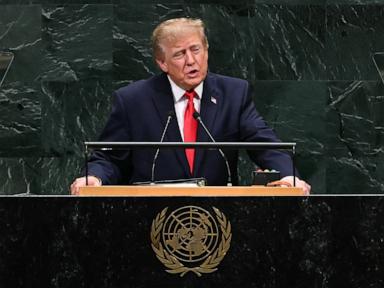
Donald Trump’s recent declaration that Tehran faces a stark choice between forging a comprehensive accord or enduring absolute annihilation is vintage transactional diplomacy. For decades, foreign policy commentators have tried to categorize Middle Eastern geopolitics through ideological lenses, permanent alliances, and rigid doctrinal frameworks. Trump operates under a different architecture entirely. He views statecraft as a high-stakes real estate negotiation where every opponent can be backed into a corner until they accept terms. The phrase "make a deal or face annihilation" is not merely campaign hyperbole or spontaneous rhetoric. It represents a calculated escalation designed to collapse the middle ground, forcing regional adversaries and domestic critics alike to reckon with the raw mechanics of unchecked American coercion.
When a former commander-in-chief and current political figure frames nuclear diplomacy as an absolute binary, the international community scrambles to separate posturing from doctrine. Yet history shows that dismissing these statements as mere bluster is a dangerous analytical error. During his initial term in office, Trump dismantled the Joint Comprehensive Plan of Action—the JCPOA—with the exact same absolutist logic. The withdrawal was followed by an aggressive maximum pressure campaign designed to starve the Iranian economy of oil revenue, isolate its banking sector, and trigger internal regime collapse through sheer financial exhaustion. That strategy did not produce a negotiated surrender. Instead, it accelerated Tehran’s nuclear enrichment program, drove the regime closer to Beijing and Moscow, and intensified proxy warfare across the entire region. Understanding the true weight of this new ultimatum requires examining the operational reality of how maximum pressure actually functions when pushed to its logical extreme.
The Mechanics Of Transactional Coercion
Diplomacy typically relies on incremental concessions, face-saving measures, and bureaucratic slow-walking. Trump rejects this entirely. His preferred method is sudden, high-decibel shock. By framing the conflict as an existential showdown, he compresses the timeline for decision-making. Tehran is given no room for ambiguous diplomatic maneuvers or strategic delay.
This approach treats foreign adversaries like corporate debtors facing bankruptcy. The assumption is that economic strangulation and military intimidation will inevitably override ideological commitment. Iranian leadership operates under a rigid clerical hierarchy where institutional survival and revolutionary legitimacy supersede economic pragmatism. When confronted with ultimatums demanding total capitulation, hardliners inside the Islamic Revolutionary Guard Corps do not view surrender as a viable option. They view it as a totalizing defeat that would unravel the ideological foundation of the state.
Therefore, the transactional model crashes directly into an immovable object. Coercion works best when the target believes compliance preserves their core interests. When the demand is framed as a binary choice between submission and total destruction, the target often doubles down, calculating that survival depends on defiance rather than capitulation. Historical precedent across the region demonstrates that external pressure applied without an off-ramp invariably produces siege mentalities rather than cooperative reform.
The Economic Dead End Of Maximum Pressure
To evaluate the viability of Trump's ultimatum, one must look closely at the financial architecture of the Iranian state and how it has adapted since the first maximum pressure campaign. Between 2018 and 2020, Washington levied thousands of primary and secondary sanctions against Iranian entities, targeting everything from shipping networks to the central bank. The objective was straightforward: reduce Iranian oil exports to zero and starve the treasury.
The policy succeeded in inflicting severe economic pain. Inflation skyrocketed, the national currency collapsed, and public protests erupted across several Iranian cities over fuel prices and currency devaluation. But the expected political collapse never materialized. Instead, Tehran executed a series of structural workarounds. Illicit oil shipments found buyers through shadowy maritime networks, primarily directed toward independent refineries in China that operated outside the purview of Western financial oversight. Bilateral trade agreements with Russia and regional actors provided financial lifelines that cushioned the blow.
Furthermore, the sanctions regime inadvertently hardened the security state. With traditional economic channels severed, the Islamic Revolutionary Guard Corps expanded its economic monopolies, absorbing vast sectors of domestic commerce, construction, and telecommunications. The financial squeeze did not force Tehran back to the negotiating table on Western terms. It simply empowered the most hardline elements within the regime, who used the state of permanent siege to justify domestic repression, suppress dissent, and accelerate military spending.
The Weight Of Revolutionary Ideology
To understand why simple threats fail to move Tehran, one must examine the foundational ethos of the 1979 Islamic Revolution. The ruling clerical class derives its legitimacy precisely from standing up to American hegemony. Anti-imperialism is not a secondary talking point; it is the core narrative that legitimizes their grip on power.
When an American president threatens absolute annihilation unless Tehran signs a deal, the regime frames the demand through the lens of its foundational mythology. Backing down becomes synonymous with national betrayal. The aging clerical establishment calculates that weathering external economic and military pressure—no matter how severe—carries a lower political cost than capitulating to Washington's demands.
This ideological rigidity is frequently underestimated by analysts who view governance purely through spreadsheets and cost-benefit ratios. In Tehran, survival is measured in terms of revolutionary purity and resistance against external dictation. Financial hardship is absorbed as a sacrifice for the greater ideological cause, rendering traditional deterrents far less effective than Western policymakers anticipate.
The Regional Chessboard And Proxy Realities
An ultimatum issued from Washington does not exist in a vacuum. It reverberates across a complex network of regional actors, asymmetric warfare doctrines, and proxy forces. Iran’s primary deterrent against direct military confrontation has never been its conventional military hardware, which remains outdated due to decades of arms embargoes and technological isolation. Its true power lies in the Axis of Resistance—a sprawling network of allied militias, political movements, and armed groups spanning Lebanon, Iraq, Syria, Yemen, and the Gaza Strip.
When American pressure intensifies, Tehran rarely responds by conceding at the negotiating table. It responds symmetrically and asynchronously through its regional proxies. Commercial shipping in vital waterways faces heightened disruption. American military installations in Iraq and Syria become targets for sustained rocket barrages and drone attacks. Regional energy infrastructure risks severe sabotage.
Trump’s promise of annihilation assumes that the United States can impose its will without triggering a catastrophic regional conflagration. That assumption ignores the reality of asymmetric entanglement. An all-out military campaign against Iran would not resemble a targeted surgical strike. It would destabilize global energy markets, trigger massive refugee crises, and draw in nuclear-armed competitors like Russia and China who have deep strategic interests in preventing the total collapse of the Iranian state.
The Domestic Political Utility Of Absolute Rhetoric
Beyond international relations theory and economic metrics, this type of rhetoric serves an immediate domestic purpose. In American politics, toughness on foreign adversaries is a reliable rallying cry. It projects strength, decisiveness, and an unwillingness to engage in the endless, inconclusive diplomatic loops that characterized decades of previous foreign policy orthodoxy.
For Trump’s base, the rejection of multilateralism and the embrace of stark ultimatums signal authenticity. It cuts through the bureaucratic double-speak of the State Department and presents international conflict in stark, comprehensible terms. America wins, the adversary submits, or the adversary is crushed.
Yet this political utility masks the absence of a viable day-after strategy. Demanding that an adversary choose between a favorable deal and annihilation creates an immediate communications victory, but it leaves zero room for diplomatic maneuver if the adversary calls the bluff. If Tehran refuses to capitulate—as historical precedent suggests it will—Washington is left with a grim choice: initiate a devastating military conflict that breaks every traditional foreign policy constraint, or back down and absorb the domestic political cost of a failed ultimatum.
The Nuclear Threshold
The most dangerous variable in this high-stakes game of coercion is the current state of Iran's nuclear program. When the JCPOA was abandoned, Tehran was roughly a year away from producing sufficient fissile material for a nuclear weapon. Years of subsequent escalation have eroded that breakout timeline down to a matter of weeks, if not days.
This structural reality changes the calculus of annihilation entirely. A country on the absolute threshold of nuclear capability does not view threats of military force through the same lens as a non-nuclear state. The fear of catastrophic retaliation creates a dangerous dynamic of mutual escalation. Iranian strategists calculate that accelerating their nuclear enrichment activities is the only foolproof deterrent against American or Israeli military intervention.
Consequently, the ultimatum to make a deal or face destruction collides directly with a regime that views the nuclear threshold as its ultimate insurance policy. Offering a deal under the threat of total annihilation does not compel compliance when the alternative—giving up the nuclear hedge—is perceived as an existential surrender.
The Reality Of Coercive Limits
Foreign policy doctrine often assumes that every problem has a diplomatic or military solution if applied with sufficient force. But the modern Middle East is defined by resilient, highly ideological actors who have spent decades surviving under conditions of severe international isolation. They have built deep underground enrichment facilities, established decentralized proxy command structures, and insulated their leadership cadres from the direct impacts of conventional economic sanctions.
A transactional ultimatum relies entirely on the premise that the opponent shares the same valuation of costs and benefits. When an adversary values ideological survival and regional dominance above economic stability and civilian well-being, traditional levers of coercion lose their mechanical power.
The upcoming decisions facing American leadership will not be solved by sharp rhetoric or binary ultimatums. They will be ground down by the unyielding realities of geography, nuclear physics, and the stubborn persistence of regional actors who have proven entirely willing to endure immense economic hardship rather than bow to external dictation.
The illusion of absolute control persists because it plays well on a campaign stage. But in the messy, interconnected architecture of global geopolitics, threats of total annihilation rarely produce surrender. They merely lock both sides into an escalating spiral where the margin for miscalculation vanishes entirely.


