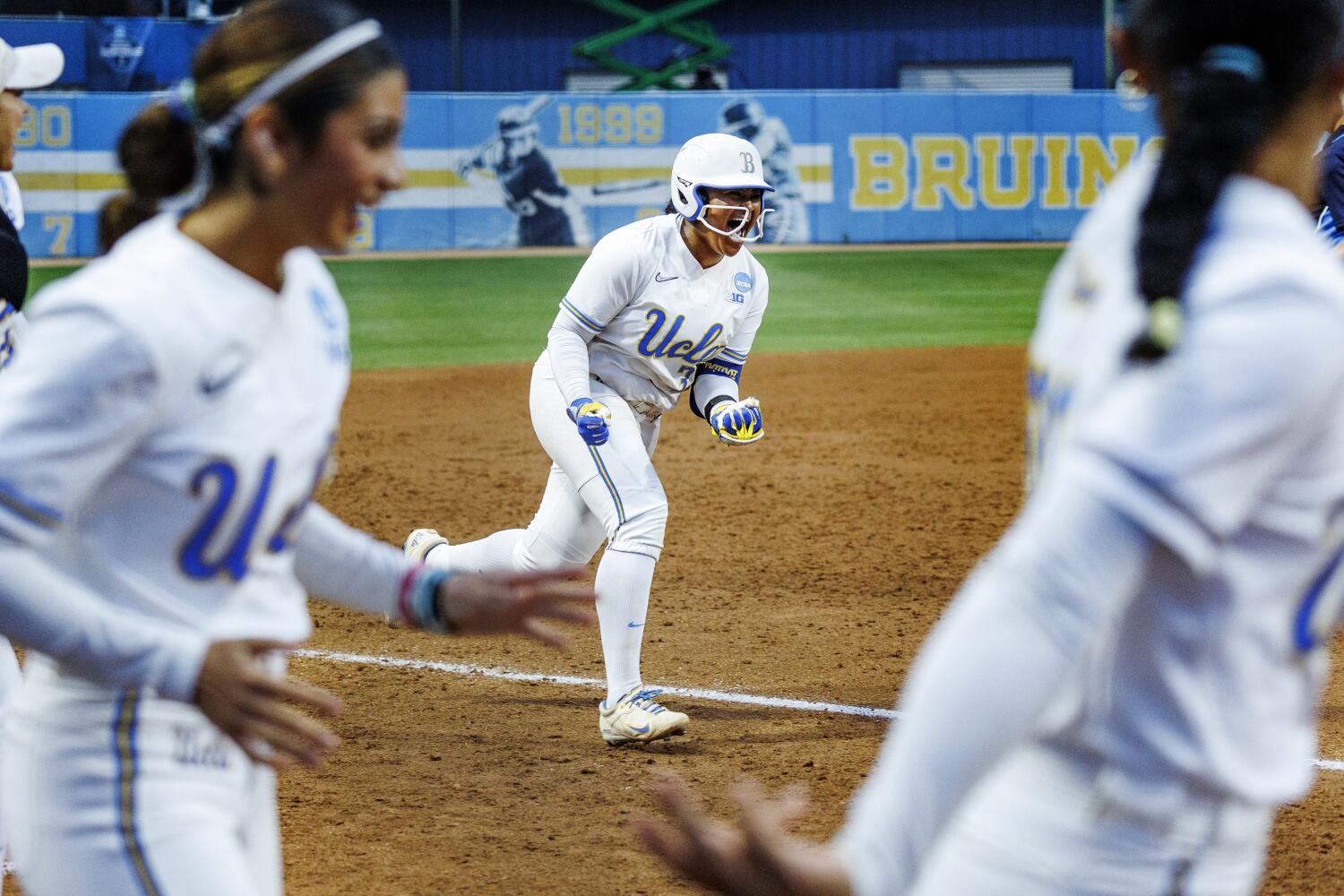
The final score of an NCAA Super Regional opener rarely functions as a structural indictment of an entire sport, but UCLA 9-1 victory over Central Florida on Friday night at Easton Stadium was an exception. On paper, UCF entered Los Angeles as a dangerous, battle-tested modern program. They had just marched into Tallahassee and bounced ninth-seeded Florida State on their own dirt. They boasted a pitching staff that ranked in the top thirty nationally for earned run average and featured an ace in Isabella Vega who surrendered just over five hits per seven innings.
Then they encountered the metric anomaly that is the 2026 UCLA Bruins batting order.
What unfolded over five brief innings was not merely a hot hitting streak or a collection of defensive lapses by an underdog. It was the clinical execution of a strategic paradigm shift in college softball. The Bruins did not just win; they triggered their 29th run-rule victory of the single season, extending an institutional record that defies modern athletic parity. To understand how a program ruthlessly shortens postseason games against elite competition, one must look past the simple geometry of the home run and examine the deeper, systemic pressures this specific lineup exerts on opposing pitching circles.
The Extinction of Pitcher Leverage
The conventional formula for an underdog upset in the postseason relies on a high-spin, high-velocity ace who can navigate a lineup three times by changing eye levels and utilizing chasing pitches out of the strike zone. UCF freshman starter Ava Stuewe attempted this exact blueprint. For three innings, she successfully walked a tightrope, keeping the ball low and matching the Bruins' early aggression with precise location.
The problem with modern UCLA is that their lineup contains no mathematical relief for a pitcher. Entering Friday night, Kelly Inouye-Perez's squad led the United States in on-base percentage at a staggering .494 clip. They paired that with a national-best .836 slugging percentage. When an entire roster reaches base in nearly half of their collective plate appearances, traditional pitching strategy collapses.
http://googleusercontent.com/image_content/204
A pitcher cannot afford to waste pitches setting up batters when every slot in the opposing order hits over .326. This reality manifested brutally in the fourth inning. Stuewe, having thrown high-stress pitches to survive the first three frames, blinked. She yielded back-to-back leadoff walks. That slight loss of command did not just put runners on; it fundamentally shifted the game's leverage. Vega took the circle in relief, but the structural damage was done. A sacrifice bunt, a routine groundout, and a sharp double down the left field line by Ramsey Suarez quickly transformed a tight duel into a 3-0 deficit.
The Anatomy of a Five Inning Avalanche
High-end investigative analysis of softball data reveals that the most destructive aspect of the UCLA offense is not their raw power, but how they utilize structural stress to create explosive, multi-run bursts. They do not score in increments of one; they wait until the dam breaks.
UCF briefly threatened to change the narrative in the top of the fifth. Sierra Humphreys launched a solo home run off Bruin ace Taylor Tinsley to cut the lead to 3-1. For a moment, the Knights possessed historical momentum, holding the energy of a team that refused to capitulate.
What followed in the bottom of the fifth was a masterclass in psychological and tactical erosion. The sequence did not begin with a majestic blast. It began with two pitches that drifted too far inside, striking Aleena Garcia and Bri Alejandre.
UCLA Fifth Inning Sequence:
1. Hit by Pitch (Garcia)
2. Hit by Pitch (Alejandre)
3. Three-Run Home Run (Bragg) -> Score: 6-1
4. Single / Advanced on Error
5. Three-Run Home Run (Slimp)  -> Score: 9-1 (Run-Rule Clinched)
When an offense refuses to chase bad pitches, defenders and pitchers feel forced to challenge the inner half of the plate. This creates a cascading failure mechanism. Sophomore infielder Kaniya Bragg stepped into this exact environment. Knowing the pitcher had to throw a strike with two runners aboard, Bragg sat on a predictable location and drove her 18th home run of the year deep into the trees behind Easton Stadium.
Once the score reached 6-1, the game ceased to be a tactical contest and became a race against the scoreboard. The Knights' defense, under immense psychological pressure to make perfect plays, committed a costly throwing error following a single. Minutes later, Rylee Slimp ended the evening early by launching another three-run shot over the right field wall. Five hits yielded nine runs. The efficiency was terrifying.
Institutional Trust versus the Transfer Era
While rival programs have spent the last three seasons using the transfer portal to patch roster holes with transient veterans, UCLA has quietly double-downed on organic development and strategic continuity. This roster features eight different players with double-digit home runs this season. That depth is not bought; it is built.
Following the victory, Inouye-Perez noted that after fall ball, she explicitly informed her young core that they were no longer freshmen or sophomores—they were Bruins. This comment underscores a deeper culture of immediate accountability and tactical indoctrination. Players like Alejandre, who hit her 23rd home run of the season in the second inning, play with a technical discipline that usually takes three seasons to mature.
The numbers suggest this is the most potent offensive collective in the history of the sport, surpassing even the legendary 2021 Oklahoma roster. UCLA has already established an NCAA single-season record with 1,313 total bases. They sit just ten runs shy of tying the all-time scoring record of 638.
For opponents like UCF, the tactical problem remains unsolved. If you pitch around superstars like Megan Grant or Jordan Woolery, the bottom half of the order possesses the metric profile of cleanup hitters. If you challenge them, you risk giving up historic longballs. Game one proved that trying to survive against this lineup by counting on them to chase pitches is a mathematical fallacy. UCF must find a way to generate swings and misses in the zone during game two, or their historic postseason run will end precisely where the Bruins planned: short of the final inning.


