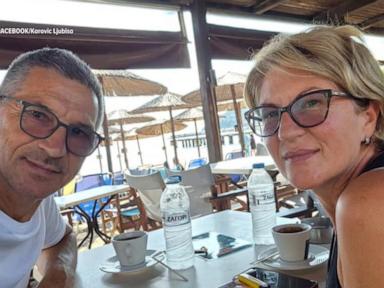
Imagine dozing off ten minutes into a routine morning flight from Greece to Germany. Suddenly, a sound like a tire bursting tears through the cabin. Before you can even process the noise, freezing wind rushes past you, oxygen masks drop, and you look over to see your husband's head and shoulders entirely outside the plane.
This isn't a scene from a Hollywood disaster movie. It's the exact nightmare Svetlana Grković lived through when a passenger window shattered on Ryanair flight FR5085, operated by its subsidiary Malta Air.
Her husband, 61-year-old Ljubisa Karović, was partially sucked out of the cabin at thousands of feet in the air. As she desperately held onto his legs, one thought raced through her mind: "If we die, we die together." style
While initial statements from Ryanair calmly noted that a "passenger window dislodged in flight," the reality inside the cabin was pure, unadulterated terror. The details of this mid-air emergency reveal critical lessons about cabin safety, the physical reality of rapid decompression, and the one split-second decision that ultimately saved a man's life.
What Actually Happened Inside Flight FR5085
On Friday, July 10, 2026, the flight departed from Thessaloniki, Greece, bound for Memmingen, Germany. Ten minutes into the climb, while passing through 9,000 feet, disaster struck.
Preliminary assessments suggest the right engine suffered a failure, sending debris flying outward. A piece of this metal shrapnel struck the acrylic passenger window directly next to Karović, instantly shattering it.
Because the air pressure inside the cabin was much higher than the thin air outside, the pressure difference acted like a massive vacuum. Karović was instantly pulled headfirst through the broken window frame. He was stuck outside the aircraft up to his chest for nearly two minutes, battling extreme wind resistance and freezing temperatures.
"I immediately reacted and grabbed his legs," Grković recalled in an interview with Serbian media. She wasn't alone. A female passenger sitting next to him grabbed his arm, and an Albanian passenger rushed across the aisle to help drag his body back into the aircraft.
While the passengers fought to save Karović, the cabin descended rapidly back toward Thessaloniki. Passengers on board reported that the extreme decompression made it incredibly difficult to breathe, and Karović lost consciousness multiple times from shock and lack of oxygen.
The Unsung Hero that Saved His Life
When you look at the physics of rapid decompression, Karović should not have survived. The forces pulling an adult body through a small opening at high speeds are incredibly violent.
So, what kept him from being entirely lost to the sky? His seatbelt.
Even though he was dozing off and the flight had already cleared its initial takeoff phase, Karović kept his seatbelt fastened tightly. That low-tech strap of fabric kept his lower body anchored to the seat frame, giving his wife and fellow passengers enough leverage to hold onto him and pull him back inside.
Many travelers unbuckle the very second the seatbelt sign turns off, viewing it as a minor annoyance. This incident is a stark reminder that clear-air turbulence, engine failures, and structural anomalies happen without warning. Keeping your belt fastened whenever you are seated isn't just a recommendation; it's a basic survival tactic.
The Physical Toll of Decompression
While Karović survived, his recovery will be long and painful. He remains hospitalized in Greece with severe physical injuries and psychological trauma.
- Friction Burns and Cuts: Hanging out of an aircraft means facing the slipstream—air moving at hundreds of miles per hour. This causes severe friction burns, lacerations, and impact injuries from flying debris.
- Hypoxia: At high altitudes, the lack of oxygen leads to rapid unconsciousness. Karović passed out three times before being pulled back inside.
- Severe Shock: His wife reported that days after the incident, he was still unable to communicate effectively or remember the details of the event.
Critical Crew Dynamics and Passenger Heroism
One of the most telling aspects of Grković's account is her description of the crew during the chaos. She noted that while passengers were screaming and struggling to pull her husband back in, the flight attendants remained at the front of the aircraft wearing their oxygen masks.
This might sound like a failure of duty, but it actually highlights standard aviation safety protocols. During a rapid decompression, flight crew are trained to immediately don their own oxygen masks and secure themselves. If a flight attendant passes out from hypoxia, they cannot help anyone.
Because the crew had to secure themselves, it fell on the passengers to act as immediate first responders. The quick thinking of the unnamed Albanian passenger and the woman sitting nearby prevented this terrifying emergency from becoming a fatal tragedy.
What This Means for Your Next Flight
Air travel remains the safest form of transit, but freak accidents do happen. You don't need to fear flying, but you do need to fly smart.
Next time you board an aircraft, take these three simple precautions:
- Keep the belt buckled. Even when the "seatbelt sign" is off, keep it snug around your hips. It is the single most important piece of safety equipment on the plane.
- Know who is next to you. In an emergency, flight attendants might not be able to reach you instantly. The people in your immediate row are your survival team.
- Pay attention to the briefing. Know exactly where your oxygen mask is and how to pull it down. In a decompression event, you have mere seconds of useful consciousness to get that mask on before you pass out.


