The ink on the dispatch had not yet dried when the word reached the courtyard.
It was mid-afternoon in Paris, the kind of pale, watery sunlight that does little to warm the stone of the Elysee Palace. Inside, corridors smelled faintly of floor wax and old paper, the bureaucratic hush where decisions are shaped by men in dark wool suits who have never tasted dust from a collapsed ceiling. Emmanuel Macron stood near a tall window, looking out toward the manicured gardens, listening to reports that had become too heavy to hold. For another perspective, see: this related article.
For months, the cadence of diplomacy had grown rhythmic, almost mechanical. A conference in Geneva. A resolution drafted in New York. A diplomatic cable flashing red across a secure terminal in Jerusalem, Cairo, and Washington. It was an endless loop of meetings held behind frosted glass, where diplomats sipped lukewarm coffee from porcelain cups while miles away, the sky tore open with a roar that nothing could muffle.
Then came the phrase that broke the diplomatic decorum. Related analysis regarding this has been published by The New York Times.
A spectacle. That was what he called it. A spectacle that shames us all.
He did not choose the words to soothe. He chose them because the machinery of international talks had turned into something resembling an elaborate stage play. Actors enter from stage left. Lines are delivered with solemn gravity. Pledges of humanitarian aid are announced with flashing cameras. Yet, beneath the hot glare of the spotlights, the script remains unchanged. The actors bow. The curtain falls. The real tragedy continues offstage, unscripted and uninterrupted.
Consider what it actually looks like to live inside that script.
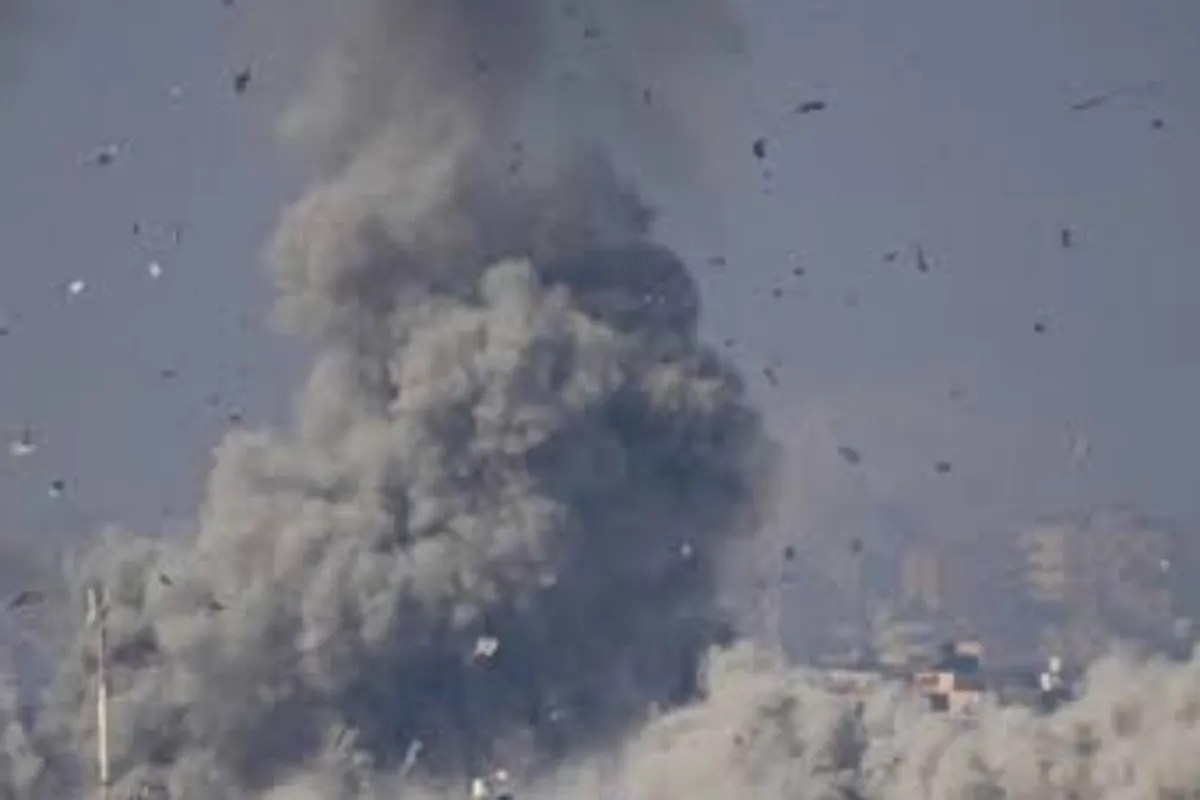
Imagine a room in Khan Younis. The walls are not concrete anymore; they are gray powder, pulverized brick mixed with drywall and dust. A mother sits on a mattress dragged onto a patch of open pavement because the roof is gone. Her youngest child, a boy of four, holds a plastic bottle filled with brackish water. He does not ask when the war will end. Children do not understand ceasefires or vetoes in the Security Council. They understand the sound of an incoming drone, the way the floor vibrates before the blast, and the strange, heavy silence that follows when the smoke drifts away.
Now, contrast that silence with the vast, ornate chambers thousands of miles away.
In those chambers, delegates adjust their microphones. They debate the syntax of a resolution. They argue over whether a humanitarian corridor should be open for six hours or twelve, whether the term used should be cessation of hostilities or permanent truce. Every comma is fought over with the tenacity of an army defending a ridge. Hours tick by. Days turn into weeks.
To the mother on the pavement, those debates are invisible, weightless things. They do not stop the wind from blowing through the gaps in her makeshift tent. They do not bring back the pharmacy down the street where insulin was once stacked neatly on white shelves.
This is the core disconnect at the heart of modern geopolitics. The distance between the drafting table and the ground is measured not in miles, but in human suffering.
When a leader of a major Western power steps outside the traditional script to call out the proceedings for what they are, it is not merely a rhetorical flourish. It is an admission of failure disguised as frustration. It is the sound of a system hitting its own limits. For decades, the international community has relied on the architecture built after 1945—the United Nations, the international courts, the network of bilateral treaties and emergency summits. That architecture was designed to prevent the world from sliding back into total war.
Yet, when applied to asymmetric urban conflicts, where civilian populations are caught in the gears of total destruction, that machinery often grinds to a halt. It becomes an alibi.
Leaders can say, We are working on it. We are negotiating. We have made our concerns clear to all parties.
The statement satisfies the press corps. It checks the box on the evening news broadcast. It creates the comforting illusion that action is being taken simply because words are being spoken. But words, when they are not backed by leverage or political courage, become a form of camouflage. They hide the inaction behind a blizzard of press releases.
History is littered with the ghosts of diplomatic facades. Think of the League of Nations in the 1930s, passing stern resolutions while the map of Europe was violently redrawn. Think of the endless conferences held during other humanitarian crises, where the participants expressed profound dismay while grain silos sat empty and medical supplies rotted on tarmacs due to bureaucratic paralysis.
We have seen this pattern repeat with the grim predictability of a metronome.
First, the crisis erupts. The shock wave ripples outward.
Second, the emergency summits are convened. Emergency flights are chartered. Statements of deep concern are issued in three languages.
Third, the diplomatic stalemate sets in. One side insists on absolute security; the other insists on immediate relief. Both positions are absolute, leaving no room for the messy compromises that save lives.
Fourth, the fatigue takes over. The cameras move to a new disaster. The original tragedy settles into a chronic, forgotten hum in the background of global consciousness.
Macron’s intervention disrupted that fourth stage. By naming the diplomatic process a spectacle, he pulled back the curtain on the entire charade. He suggested that holding meetings for the sake of looking busy is worse than doing nothing at all, because it offers false hope to the desperate and provides political cover to the indifferent.
Why does this happen? Why do sophisticated diplomats, men and women of high intelligence and deep experience, find themselves trapped in a theater of impotence?
The answer lies in the nature of modern power. True leverage is difficult to wield. It requires offending allies, risking economic fallout, and spending political capital that leaders prefer to hoard for domestic elections. It is much easier to issue a communiqué than to impose an arms embargo. It is much safer to express outrage on television than to break off trade relations or use real diplomatic muscle at the negotiating table.
Consequently, diplomacy is reduced to performance art.
Watch a press conference following a high-level summit on the Middle East. The body language is always the same. The handshake is firm for the cameras. The statements are balanced, carefully calibrated not to tilt the delicate scales of regional alliances. Every sentence is scrubbed of raw truth until it gleams like polished chrome, completely detached from the blood and rubble it purports to address.
When a system prioritizes diplomatic etiquette over human survival, the shame is not abstract. It belongs to every government that has the capacity to intervene and chooses instead to hide behind procedural delays.
The mother in Khan Younis does not care about diplomatic etiquette. She cares about clean water. She cares about whether her children will wake up tomorrow morning to the sound of birds or the screech of a missile. She cares about whether the world remembers that she exists, or whether she has been reduced to a statistic scrolling across the bottom of a cable news screen while a panel of experts analyzes the geopolitical fallout.
To look away from that reality is easy. To pretend that a strongly worded resolution is equivalent to a truckload of flour crossing a border is comforting. But comfort is a luxury reserved for those who are not living under the fallout.
When the French president spoke of a spectacle that shames us all, he was not just talking about foreign policy. He was talking about the moral hazard of modern governance. When leaders convince themselves that talking about a catastrophe is the same as stopping it, they become complicit in its continuation.
The room in Paris grew darker as the autumn afternoon faded into evening. The lights along the Seine began to blink on, casting long golden reflections across the water. Inside the palace, the staff cleared away the tea cups and folded the briefing papers. Tomorrow, there would be another meeting. Another draft resolution would be circulated. Another round of talks would begin in a neutral European city, behind closed doors, far away from the dust and the sirens.
The machinery would start up again. The actors would take their places on the stage. The lights would flare.
And somewhere in the dark, beneath a shattered ceiling, a child would pull a blanket a little tighter around his shoulders, waiting for a world that talks endlessly about his survival, yet leaves him to face the night alone.